

WeVote

Bill

Bill

HR 6386

Ensuring Predictable and Reliable Water Deliveries Act of 2025

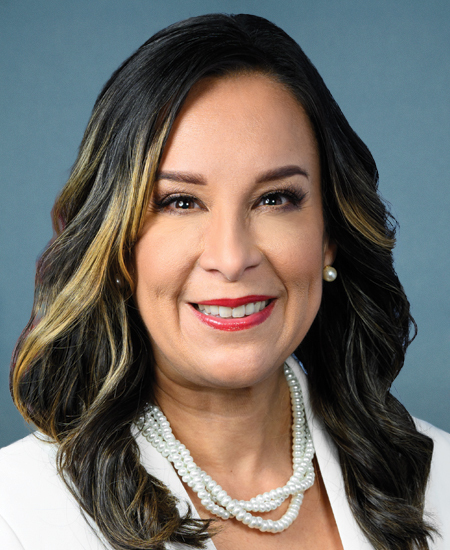
119th Congress Introduced by Monica De La Cruz and 1 co-sponsor

The act ties U.S.-Mexico engagement to Mexico delivering specified water under the 1944 treaty, enabling restrictions and emergency exemptions with annual Congressional reporting.

Introduced in House
0
WeVote Research Nonpartisan
Bill Summary · HR 6386

Summary of H.R. 6386 (119th Congress, 1st Session)

Title

Ensuring Predictable and Reliable Water Deliveries Act of 2025

Purpose

To limit engagement with the Government of Mexico unless Mexico provides water to the United States pursuant to its obligations under the 1944 Treaty relating to the Utilization of Waters of the Colorado and Tijuana Rivers and of the Rio Grande.

What the bill does (Key provisions)

  • She S Short title:

    • Establishes the bill as the “Ensuring Predictable and Reliable Water Deliveries Act of 2025.”
  • Section 2: Limitation on engagement with Mexico until water obligations are met

    • (a) Report required
    • The Secretary of State must, no later than 180 days after enactment and annually thereafter, provide a report to the appropriate Congressional committees about Mexico’s water deliveries under the 1944 Treaty between the United States and Mexico.
    • The report must include:
      • (A) Whether Mexico delivered at least 350,000 acre-feet of water to the United States in the preceding calendar year.
      • (B) An assessment of Mexico’s capacity to deliver 1,750,000 acre-feet of water by the final year of the five-year cycle described in the Treaty.
      • (C) Identification of significant economic sectors or activities in Mexico that rely on irrigation districts that benefit from water delivered by the United States or from the Rio Grande tributaries covered by the Treaty.
    • (b) Limitation on engagement
    • (1) If the Secretary’s report contains a negative determination on the 350,000 acre-feet criterion, the President must:
      • (A) Deny all non-Treaty requests by Mexico.
      • (B) May limit or terminate engagement with the Mexican government related to the identified sectors/activities (except engagement related to countering fentanyl, fentanyl precursors, xylazine, and other synthetic drugs entering the United States).
    • (2) Exception to limitation
      • The limitation on non-Treaty engagement does not apply to a non-Treaty request if, within 120 days after the report submission (and every 120 days thereafter), the Secretary provides a certification to the appropriate committees that:
      • (A) Water delivered through the channels will be used exclusively to address an ongoing ecological, environmental, or humanitarian emergency and will not be used for:
        • (i) municipal purposes;
        • (ii) industrial purposes;
        • (iii) normal water supply needs;
        • (iv) water infrastructure deficiencies; or
        • (v) maintenance work.
      • (B) Fulfilling the request is vital to U.S. national interests.
    • (c) Definitions
    • (1) “Appropriate committees of Congress” means the Senate Foreign Relations Committee and the House Foreign Affairs Committee.
    • (2) “Non-Treaty request” means an emergency request for special water deliveries under any current or future Minute of the International Boundary and Water Commission (IBWC), including principles from Minute No. 240 (Emergency Deliveries of Colorado River Waters for Use in Tijuana, 1972) and amended by Minute No. 327 (January 28, 2022).

Timing and procedural notes

  • Introduction date: December 3, 2025.
  • Referral: Committee on Foreign Affairs (House).
  • Reporting cadence: Annually, with the first report due within 180 days of enactment, and then every year.
  • Certification window for exceptions: Non-Treaty exemptions require a biannual (every 120 days) certification from the Secretary to Congress.

Who/What is affected

  • U.S. government actors:
    • Secretary of State (responsible for annual water delivery reports and certification in exceptions).
    • President (responsible for implementing engagement limitations based on report findings).
  • Mexico:
    • Engagement with the United States could be limited or conditioned on Treaty-compliant water deliveries.
    • Non-Treaty water delivery requests may be restricted unless a certification is provided justifying emergency use for national interests and environmental/humanitarian emergencies.
  • Sectors/activities:
    • Economic sectors in Mexico that are irrigation-dependent and rely on water deliveries from the United States or Rio Grande tributaries identified in the Treaty.

Potential impact

  • Creates a framework tying U.S.-Mexico engagement to Mexico’s compliance with water deliveries under the 1944 Treaty.
  • Introduces annual reporting to Congress and a mechanism to restrict or condition non-Treaty cooperation with Mexico if targets are not met.
  • Allows exceptions for urgent, non-Treaty water requests if specific and stringent criteria are met, focusing on emergencies and U.S. national interests.
  • Aims to enhance predictability and reliability of water deliveries by leveraging diplomatic engagement.

Compiled from official sources — confirm details with the bill’s official record.

Sign in to ask a question.