

WeVote

Bill

Bill

HR 8978

Enhancing Mental Health and Suicide Prevention Through Campus Planning Act

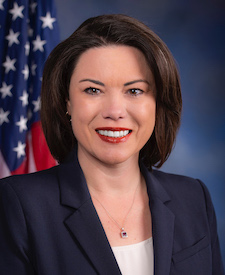
119th Congress Introduced by Angie Craig and 2 co-sponsors

Encourages colleges to develop and implement evidence-based campus mental health and suicide prevention plans through federal coordination and voluntary adoption.

Introduced in House
0
WeVote Research Nonpartisan
Bill Summary · HR 8978

Overview

HR 8978, the Enhancing Mental Health and Suicide Prevention Through Campus Planning Act, would amend the Higher Education Act of 1965 to encourage colleges and universities to develop and implement evidence-based campus mental health and suicide prevention plans. The bill focuses on fostering collaboration, aligning with federal programs, and reporting progress to Congress, without imposing new statutory requirements or granting new regulatory authority.

Main purpose and intent

  • Promote comprehensive, evidence-based mental health and suicide prevention planning on college campuses.
  • Encourage institutions to adopt plans that address student mental health needs and suicide prevention strategies.
  • Facilitate coordination among federal agencies, existing federal programs, nonprofits, and community organizations to support campus mental health efforts.

Key provisions and changes

  • Section designation: The bill would redesignate Section 826 as 827 and add a new Section 826 titled “Encouraging Campus Comprehensive Mental Health and Suicide Prevention Plans.”
  • General purpose ( subsection (a) ):
    • The Secretary of Education is tasked with encouraging institutions of higher education to develop and implement comprehensive campus mental health and suicide prevention plans that are evidence-based.
    • Coordination with the Department of Health and Human Services (specifically the Assistant Secretary for Mental Health and Substance Use) is required.
    • Alignment with:
    • The Suicide Prevention Resource Center’s suggested approaches.
    • Programs and authorities in several federal laws and programs, including:
      • Section 9032 of the 21st Century Cures Act.
      • Sections 520C, 520E, 520E-1, 520E-2, and 549 of the Public Health Service Act (42 U.S.C. 290bb-34 et seq., 290ee-4, etc.).
    • Consideration of existing federal and state efforts addressing campus mental health and suicide prevention.
    • Potential collaboration with nonprofit organizations, community-based organizations partnering with higher education institutions, and other experts and stakeholders in campus mental health and suicide prevention.
  • Reporting requirements ( subsection (b) ):
    • The Secretary must report to:
    • The House Committee on Education and the Workforce.
    • The Senate Committee on Health, Education, Labor, and Pensions.
    • Timing:
    • Not later than one year after enactment.
    • Three years after enactment.
  • Non-regulatory intent ( subsection (c) ):
    • The Act explicitly states that nothing in the section creates new statutory requirements for institutions of higher education or grants the Secretary new regulatory authority.

Who/what would be affected

  • Institutions of higher education (colleges and universities) are the primary focus, as the bill aims to encourage them to develop and implement mental health and suicide prevention plans.
  • The Secretary of Education, in coordination with the Secretary of Health and Human Services (Assistant Secretary for Mental Health and Substance Use), would lead federal encouragement and alignment efforts.
  • External partners may include nonprofit organizations, community-based organizations that partner with colleges, and other experts in campus mental health and suicide prevention.
  • Congress would receive periodic progress reports detailing federal efforts under the act.

Procedural and timeline aspects

  • Introduction date: May 21, 2026.
  • Referral: House Committee on Education and Workforce.
  • Reporting: Two mandated reports to Congress:
    • Within 1 year of enactment.
    • Within 3 years of enactment.
  • The section is designed to be stimulative and collaborative rather than prescriptive; it does not impose new binding requirements or grant new regulatory authority to the Secretary.

Potential impact and considerations

  • Benefits:
    • Encourages a standardized, evidence-based approach to campus mental health and suicide prevention.
    • Promotes coordination across federal agencies and alignment with established programs and resources.
    • Could enhance sharing of best practices and resources among institutions.
  • Limitations:
    • The bill explicitly avoids creating new statutory requirements or regulatory authority, so uptake depends on voluntary adoption by institutions.
    • The effectiveness hinges on how actively the Secretary engages with institutions and how well programs align with the referenced federal resources.
  • Data and accountability:
    • Required reporting to Congress provides a mechanism for transparency and potential future legislative consideration.

Overall, HR 8978 seeks to galvanize higher education institutions to adopt comprehensive, evidence-based mental health and suicide prevention plans through federal encouragement, collaboration, and periodic reporting, without imposing mandates or new regulatory powers.

Compiled from official sources — confirm details with the bill’s official record.

Sign in to ask a question.