

WeVote

Bill

Bill

S 4559

Energy Cost Fairness and Reliability Act of 2026

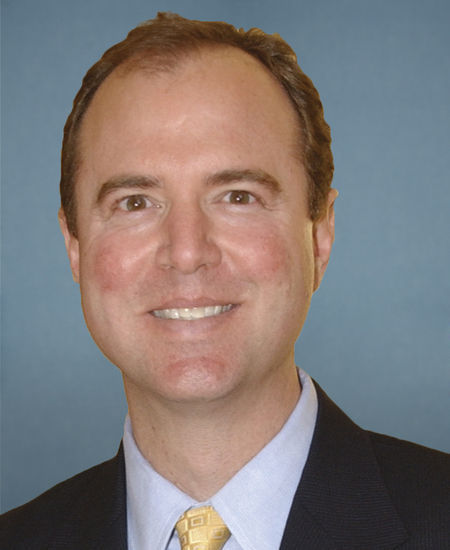
119th Congress Introduced by Adam Schiff

The bill creates a standardized, faster interconnection process for large loads (like data centers), requiring 100% of network upgrade costs borne by the large load, enhanced relia

Introduced in Senate
0
WeVote Research Nonpartisan
Bill Summary · S 4559

Overview

  • Bill: S.4559 (Energy Cost Fairness and Reliability Act of 2026)
  • Sponsor: Senator Adam Schiff (intro. May 18, 2026); co-sponsor listed as Schiff
  • Purpose: Amend the Federal Power Act to require the Federal Energy Regulatory Commission (FERC) to issue a final rule establishing a standardized interconnection process for large load facilities (e.g., data centers) seeking to connect to the interstate transmission system, with comprehensive provisions on cost allocation, reliability, queue management, and related data collection and demonstration requirements.

Main purpose and intent

  • Address rapid growth of large load facilities interconnecting to the transmission grid.
  • Ensure grid reliability, manage transmission congestion, and protect ratepayers from unanticipated cost shifts.
  • Promote transparent, standardized interconnection procedures and fair cost recovery for transmission upgrades necessitated by large loads.
  • Encourage data-driven planning, labor standards, and innovation (including AI/data center considerations) to support secure, affordable, and reliable energy infrastructure.

Key provisions and changes

  • Section 224: Management of Large Load Facilities (new FPA section)

    • Definitions (e.g., large load facility, colocated, demand flexibility, load interconnection queue, transmission provider, etc.).
    • Standard interconnection procedures
    • Within one year of enactment: FERC must issue final rules establishing standard interconnection procedures for large loads.
    • Cost allocation: Large load customers must pay 100% of interconnection study costs; nonpayment blocks interconnection.
    • Network upgrades: Upgrades assigned to the large load customer via the interconnection study process.
    • Reliability standards: Interconnection cannot proceed if it would violate NERC/other Commission-approved reliability standards.
    • Interconnection criteria: Demand flexibility and curtailability required; new generation or distributed energy resources must be demonstrated/arranged to supply needed power, temporally matching needs.
    • Standards for demand flexibility, curtailability, and technical standards for needed systems and controls.
    • Prioritization within load interconnection queues for customers meeting certain criteria (e.g., battery backup, construction labor standards, labor peace agreements).
    • Non-firm transmission access for colocated facilities with pricing reflecting non-firm nature.
    • Non-firm injection rights offered without full deliverability studies if non-firm.
    • Protection of grid reliability
    • Tariff provisions to ensure capacity is not diverted from existing customers without replacement resources.
    • Modifications to interconnection facilities must maintain reliability and be implemented.
    • Cost recovery
    • Network upgrades: Large load customers bear 100% of upgrade costs assigned to them; payments are nonrefundable; no credits/offsets to other customers.
    • Tariff language: Costs may be recovered via Commission-jurisdictional mechanisms (upfront payments, surcharges, etc.), with some protection for state retail rate authority.
    • Colocated facilities: Large load customers face charges for ancillary services and black start if interconnected, regardless of net energy withdrawal; on-site generation/storage does not absolve cost responsibility if still interconnected for reliability.
    • Cost allocation review: Commission to review methods to ensure no shifting of transmission or upgrade costs to downstream retail ratepayers.
    • Compensation for excess generation: Any generation from a colocated facility injected to the grid is compensated at wholesale LMP or avoided cost per tariff.
    • Queue management best practices
    • Within one year: Commission to initiate rulemaking to revise Large Generator Interconnection Procedures to adopt best practices and use AI/ML/automation to expedite studies; DOE to provide technical assistance.
    • Large load forecasting
    • One category of load forecast must include data center facilities only if there is demonstrable commitment (e.g., power purchase agreements, collateral, long-term commitments, etc.) to interconnection needs.
    • Interconnection and study process discipline
    • Transmission providers must impose deposits, readiness/milestones, and withdrawal penalties to discourage speculative requests and reduce delays.
    • Tariff revisions and transition
    • Within 180 days after final rule: Transmission providers must submit tariff amendments to reflect the rule.
    • Establish transition period to avoid disruption to ongoing/significant projects.
    • After rule takes effect, large load interconnections require queue approval before interconnecting.
    • DOE data collection and AI testbed
    • DOE may require data centers to submit data to identify trends in data center load, energy/water use, AI-related energy use, and to benchmark and model future load.
    • Confidentiality protections and FOIA exemptions for sensitive data.
    • Establish an AI testbed at a National Laboratory within 180 days to support energy-efficient AI, grid integration, and related R&D; require a Congress/Committee report within one year, with collaboration across labs, academia, industry.
    • DOE AI testbed report and recommendations
    • Report on data center load growth, grid reliability, screening criteria for interconnection, and policy changes to ensure rapid, reliable data infrastructure buildout without compromising affordability.
    • Commission to consider implementing recommendations within 180 days of receiving the report.
  • Section 2 (Sense of Congress)

    • Emphasizes concerns about load growth from data centers, electrification, and AI; highlights grid reliability, national security, electricity affordability, and U.S. leadership in technology as justification for action.
  • Section 9 (Savings)

    • States that nothing in the act authorizes the Commission to regulate retail electricity rates; such regulation remains under state authority.

Who/what would be affected

  • Large load customers (e.g., data centers, other facilities with peak demand >50 MW or aggregations >50 MW).
  • Transmission providers, Independent System Operators (ISOs) and Regional Transmission Organizations (RTOs), and public utilities that provide transmission services.
  • Interconnection queues and related study processes, with new prioritization criteria.
  • On-site generation, energy storage, and demand response resources associated with colocated facilities.
  • State public utility commissions, which would retain authority over retail rates but be affected by cost allocations and tariff changes.
  • DOE and National Laboratories, due to data collection, AI testbed establishment, and collaboration requirements.
  • Data center operators and ancillary services market participants, due to new data reporting and potential impact on tariffs and charges.

Procedural and timeline aspects

  • Standard interconnection procedures final rules due within 1 year of enactment.
  • Tariff amendments to reflect final rules due within 180 days after the final rule.
  • Transition period to implement new rules and avoid disrupting ongoing projects.
  • Queue management reforms to be pursued via rulemaking within 1 year.
  • Data collection and AI testbed actions within defined timeframes (e.g., 180 days for testbed establishment; 1-year reporting on findings).
  • Savings provision preserves state authority over retail rates.

Summary

S.4559 seeks to modernize and formalize the interconnection process for large electrical loads, primarily data centers, within the Federal Power Act framework. It imposes a 100% cost-allocation model for network upgrades to the large load customer, establishes rigorous eligibility and reliability criteria, prioritization mechanisms, and non-firm transmission arrangements for colocated facilities. The bill also emphasizes improved queue management through AI/automation, requires comprehensive data collection from data centers, and creates a national AI testbed to study energy efficiency and grid integration. Finally, it preserves state authority over retail rates and directs near-term tariff and transition actions to implement the new framework.

Compiled from official sources — confirm details with the bill’s official record.

Sign in to ask a question.