

WeVote

Bill

Bill

HR 10112

Empowering States to Protect Seniors from Bad Actors Act

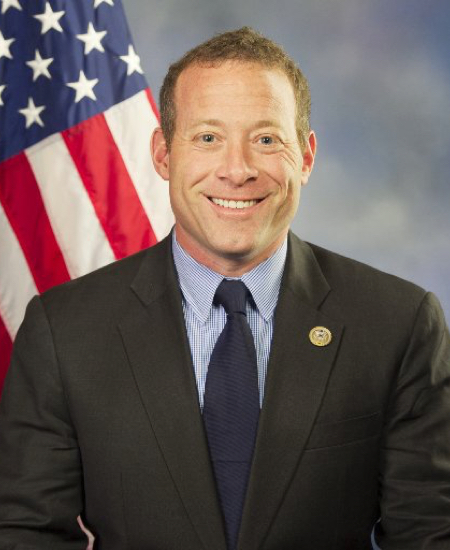
119th Congress Introduced by Josh Gottheimer and 1 co-sponsor

Creates a federal grant program to boost state regulators’ ability to identify, investigate, prosecute, and educate about senior financial fraud (ages 62+).

Introduced in House
0
WeVote Research Nonpartisan
Bill Summary · HR 10112

Overview

HR 10112, the Empowering States to Protect Seniors from Bad Actors Act, would amend the Investor Protection and Securities Reform Act of 2010 to create a federal-grant program aimed at strengthening state-level protection for senior investors and senior policyholders from financial fraud. The bill was introduced on August 17, 2026, by Rep. Gottheimer with Rep. Nunn as a co-sponsor and referred to the House Committee on Financial Services.

Main purpose and intent

  • To provide funding to state securities commissions and state insurance departments to bolster efforts against senior financial fraud.
  • To empower states to proactively identify, investigate, prosecute, and prevent fraud targeting seniors (defined as 62 years of age and older) and to educate seniors about fraud risks.
  • To enhance coordination between regulators and other state efforts in protecting seniors from financial exploitation.

Key provisions and changes

  • Amendments to: Section 989A of the Investor Protection and Securities Reform Act of 2010, renaming and restructuring the grants program.
  • Eligible entities for grants:
    • State securities commissions (or equivalent) and/or state insurance departments (or equivalent).
  • Definitions:
    • Senior: age 62 or older.
    • Senior financial fraud: a fraudulent act harming a senior, including misuse by a caregiver or fiduciary, deprivation of benefits/assets, or actions described in 18 U.S.C. § 1348 against a senior.
  • Grant program (Section 989A(a)(b)):
    • Eligible entities receive grants on a competitive basis to:
    • Hire staff to identify, investigate, and prosecute cases of senior financial fraud (civil, administrative, or criminal actions).
    • Fund technology, equipment, and training for regulators, prosecutors, and law enforcement.
    • Develop and provide educational materials and training to seniors.
    • Develop comprehensive plans to combat senior financial fraud.
    • Enhance state law protections against senior financial fraud.
    • Grants may not be used for indirect or general administrative costs not directly tied to the grant purpose.
    • The Commission can publicize actions and may delegate grant-related functions to staff with relevant state-regulator experience.
  • Applications:
    • Eligible entities must submit proposals detailing:
    • Scope of senior financial fraud in the state.
    • How proposed activities would protect, identify victims, assist investigations, and reduce fraud.
    • How activities would coordinate with other state efforts.
  • Performance, reporting, and audits:
    • The Commission may set performance objectives and reporting requirements.
    • Grantees must provide detailed accounting of grant use.
    • The Commission must publish a report at 2-year and 5-year intervals describing recipients, programs funded, and evaluations of effectiveness.
    • The Commission must annually audit the program to ensure funds are used for the intended purposes.
  • Grant amounts:
    • Individual grants may not exceed $500,000 per year.
    • If an entity serves as both a state securities regulator and a state insurance regulator, the cap is $1,000,000 per year.
  • Subgrants:
    • Eligible entities may subgrant to other entities as needed, but only for activities described in the grant’s purpose (not for the broader administrative costs).
  • Funding authorization:
    • Authorizes $10,000,000 for each fiscal year from 2025 through 2030 to carry out the section.
  • Conforming amendment:
    • Replaces the existing table of contents reference to Section 989A in the Dodd-Frank Act with the updated title: "Grants to eligible entities for enhanced protection of senior investors and senior policyholders."

Who would be affected

  • State-level regulators:
    • State securities commissions and state insurance departments (and their equivalents) in all states.
  • Senior investors and senior policyholders:
    • Beneficiaries of enhanced protections, education, and fraud-prevention measures.
  • Law enforcement, regulatory, and prosecutorial staff:
    • Employees involved in investigations, prosecutions, and enforcement actions related to senior financial fraud.
  • Taxpayers and federal budget:
    • Federal funding allocated through appropriations to support state programs.

Procedural and timeline aspects

  • Effective date alignment:
    • Authorization covers fiscal years 2025–2030; grants begin under the program once appropriated.
  • Reporting timeline:
    • First program performance and recipient report due within 2 years after enactment.
    • Second report due within 5 years after enactment.
  • Accountability:
    • Annual audits of the grant program to ensure proper use of funds.
    • Public disclosure of relevant Commission actions related to grant administration.
  • Administration:
    • Grants awarded on a competitive basis by the Commission (U.S. Securities and Exchange Commission).

Potential impact and considerations

  • Strengthened state capacity to combat senior financial fraud through targeted funding, training, and education.
  • Encourages joint action between securities and insurance regulators at the state level.
  • Establishes measurable reporting and accountability requirements to assess effectiveness.
  • Fiscal note considerations would include the $10 million annual appropriation and the administrative costs of managing the grant program relative to the total funding.

If you’d like, I can add a brief comparison with existing federal/state anti-fraud programs or outline potential evaluation metrics for a more actionable analysis.

Compiled from official sources — confirm details with the bill’s official record.

Sign in to ask a question.