

WeVote

Bill

Bill

HR 8979

Elementary and Secondary School Counseling Act

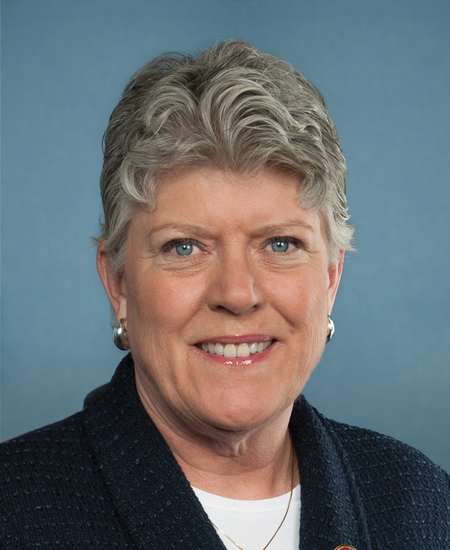
119th Congress Introduced by Angie Craig and 6 co-sponsors

The bill creates a federal grant program to significantly expand school-based mental health staffing in high-need schools, with targeted provider ratios and accountability.

Introduced in House
0
WeVote Research Nonpartisan
Bill Summary · HR 8979

Summary of HR 8979 ( Elementary and Secondary School Counseling Act )

This summary outlines the bill’s purpose, key provisions, who is affected, and notable timeline/procedural aspects.

Purpose and intent

  • The bill aims to effectively staff high-need public elementary and secondary schools in the United States with school-based mental health services providers.
  • It sets out to increase access to qualified school counselors, psychologists, social workers, and other licensed or certified mental health professionals within schools.

Key provisions and changes

  • Definitions and scope

    • Defines “high-need school,” and clarifies what qualifies as a “school-based mental health services provider.”
    • Establishes that providers include State-licensed/certified school counselors, psychologists, social workers, and eligible external providers (including community-based organizations) under state law.
  • Grants and subgrants to increase access (Section 4)

    • Secretary of Education would make grants and distribute subgrants to states, which then fund local educational agencies (LEAs) to increase staffing at high-need schools.
    • An initial reservation of funds is set aside for:
    • Bureau of Indian Education schools (1/2 of 1%)
    • Outlying areas (1/2 of 1%)
    • Administration/technical assistance (up to 2%)
    • State grants are allocated to fund subgrants to LEAs, with funding aligned to each State’s relative share of title I funding (based on the most recent data).
  • Grant duration and matching

    • Each state grant and corresponding LEA subgrants have a 5-year duration, with potential renewal based on progress toward goals.
    • States must provide a 20% match of the grant amount (cost-share) to receive funding.
  • Application requirements (State level)

    • States must submit an application detailing:
    • Assurance that funds will be used for the described activities.
    • How subgrants will be awarded to LEAs.
    • Plans to disseminate information about subgrants and the application process.
    • Current student-to-provider ratios (aggregated and disaggregated by counselor, psychologist, social worker, and other providers).
  • Subgrants to LEAs (Section 5)

    • Subgrants enable LEAs to recruit/retain school-based providers or contract with external mental health centers.
    • LEAs are to work toward meeting recommended maximum ratios:
    • 250 students per school counselor
    • 500 students per school psychologist
    • 250 students per school social worker
    • Priority given to LEAs serving many high-need schools.
    • LEA applications must describe how they will prioritize high-need schools and, if applicable, schools with high concentrations of low-income students.
  • Reporting and accountability

    • LEAs receiving subgrants must annually report:
    • Activities conducted with subgrant funds.
    • Number of providers employed or serving in high-need schools (by provider type and funded status).
    • Current student-to-provider ratios for each high-need school served.
    • States receiving grants must annually report to the Secretary on:
    • Progress toward desired ratios.
    • Aggregate and disaggregated provider ratios in assisted schools.
    • Any additional resources needed to meet the recommended ratios.
    • Public availability: Reports are sent to Congress and posted publicly (including on the Department’s website).
  • Administration and use of funds

    • Funds provided under this act must supplement, not supplant, existing school-based mental health funding.
    • States/LEAs may combine these federal funds with other state/local funds to implement the described activities.
  • Authorization of appropriations (Section 5)

    • Authorizes $5,000,000,000 for fiscal year 2027.
    • For subsequent years, authorizes such sums as necessary to continue activities.

Winners and affected groups

  • Who benefits

    • Students in high-need public elementary and secondary schools, particularly those with greater prevalence of mental health needs.
    • School-based mental health providers (counselors, psychologists, social workers, and other licensed professionals) who would be recruited/retained or contracted to work in high-need schools.
    • LEAs and States that receive subgrants to implement staffing improvements.
  • Who is affected

    • Local educational agencies (LEAs) serving high-need schools.
    • State educational agencies (SEAs) administering grants and distributing subgrants.
    • Students and families in high-need schools; schools’ daily operations to accommodate expanded mental health services.

Timeline and procedural notes

  • Implementation horizon
    • Initial authorization amounts set for FY 2027; ongoing funding contingent on appropriations and progress.
    • Subgrants issued for a 5-year period, with potential 5-year renewals based on demonstrated progress.
  • Reporting cadence
    • Annual reporting by LEAs to their SEA; annual reporting by SEAs to the Secretary; public release of these reports.
  • Strategic focus
    • Emphasis on achieving recommended staffing ratios and prioritizing high-need and low-income-serving schools.

Summary assessment

HR 8979 would create a federal framework to significantly expand school-based mental health staffing in high-need schools through a grant-and-subgrant program, with explicit targets for counselor, psychologist, and social worker ratios. It emphasizes leveraging both school staff and contracted community providers, includes strong reporting requirements for accountability, and dedicates substantial funding beginning in FY 2027 to support nationwide access to school-based mental health services.

Compiled from official sources — confirm details with the bill’s official record.

Sign in to ask a question.