

WeVote

Bill

Bill

HR 8096

Duplication Scoring Act of 2026

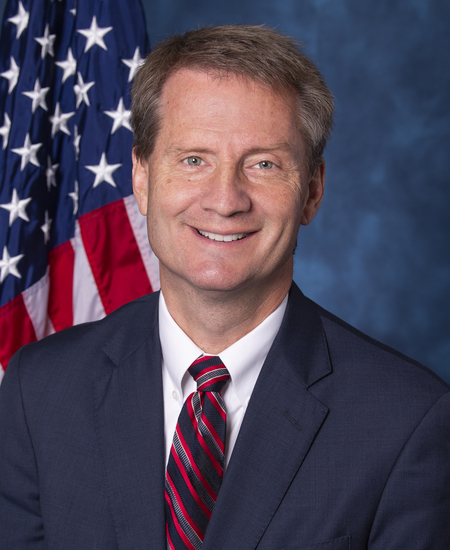
119th Congress Introduced by Tim Burchett and 4 co-sponsors

Requires GAO analysis to flag and publish potential duplicative or overlapping features in new bills, guiding committees and budget estimates.

Committee Consideration and Mark-up Session Held
0
WeVote Research Nonpartisan
Bill Summary · HR 8096

Summary of HR 8096 (Duplication Scoring Act of 2026)

Purpose and intent

  • Establishes a formal requirement for analyzing reported legislation to prevent duplication or overlap with existing federal programs, offices, and initiatives.
  • Tasked with examining new bills to identify potential duplicative features and to inform Congress and stakeholders about such overlaps.

Key provisions and changes

  • Amendment to GAO assessment process (District: 31 U.S.C. § 719, new subsection (i))
    • Introduces specific definitions critical to the duplication assessment:
    • “Covered bill or joint resolution” = any public-character bill or joint resolution reported by a congressional committee (including Appropriations and Budget Committees).
    • “Director” = Director of the Congressional Budget Office (CBO).
    • “Existing duplicative or overlapping feature” = an element previously identified as duplication/overlap/fragmentation in a GAO duplication and overlap report.
    • “GAO duplication and overlap report” = GAO’s annual report on duplication and overlap (based on 2010 Joint Resolution language updating the debt limit).
    • “New duplicative or overlapping feature” = a new federal program, office, or initiative created by a covered bill that would duplicate or overlap with an existing feature.
    • For each covered bill or joint resolution, GAO must:
    • (i) Assess the risk of creating a new duplicative or overlapping feature and, if warranted, identify:
      • (I) the name of the new federal program, office, or initiative.
      • (II) the section of the bill where the new feature is established.
      • (III) which GAO duplication and overlap report identifies the existing overlap.
    • (ii) Submit this information to the Director and the committee that reported the bill.
    • (iii) Publish the information on GAO’s website.
    • (ii)/(iii) May be incorporated by the Director as a supplement to the Congressional Budget Act of 1974 (CBO) estimate (section 402) as allowable, subject to timing.
    • If GAO information has not been submitted by the time the Director prepares the bill’s budget estimate, the Director may still provide the supplement once GAO information is submitted (with a parallel process for delivering to committees).

Effective date and implementation

  • The amendment takes effect on the earlier of:
    • 60 days after the Director of the OMB updates the information on GAO’s website per 31 U.S.C. § 1122(a); or
    • the date a new Congress begins after one year from the bill’s enactment.
  • This creates a staggered start tied to Executive Branch budget document updates and congressional term progress.

Procedural status and sponsors

  • Introduced in the 119th Congress, House of Representatives, March 26, 2026.
  • Reported with amendments on May 20, 2026 (yea/nay 39-1) and sent to the Senate for consideration.
  • Sponsors include Rep. Mark Burchett (primary) and several co-sponsors:
    • Nancy Mace
    • Tim Burchett
    • Melanie Stansbury
    • Paul Gosar
    • Jasmine Crockett

Potential impact

  • Aimed at increasing transparency around potential duplication in new legislation, potentially reducing redundancy in federal programs and funding.
  • Could influence how committees evaluate introduced legislation by providing a structured, GAO-led duplication risk assessment and ensuring findings are publicly accessible.
  • Creates a formal mechanism to flag duplicative features early, potentially affecting bill design, amendments, or offsets.
  • Debatable practical effects depend on how often GAO finds duplicative features and how the Director uses GAO-supplied information in budget estimates.

Compiled from official sources — confirm details with the bill’s official record.

Sign in to ask a question.