

WeVote

Bill

Bill

HB 5489

DOMESTIC VIOLENCE-JUVENILES

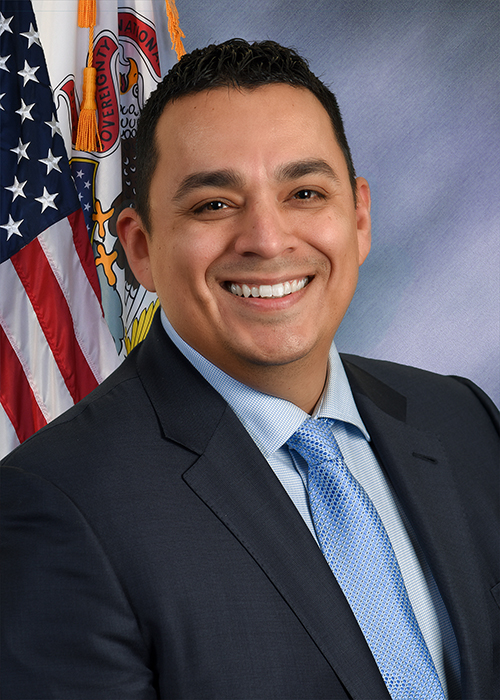
104th Regular Session Introduced by Li Arellano and 8 co-sponsors

Allows officers to divert or not arrest juvenile domestic violence offenders using a specific Adolescent Domestic Battery Typology Tool, with cases still reviewed by the State's At

Sent to the Governor
0
WeVote Research Nonpartisan
Bill Summary · HB 5489

Summary of HB5489 (104th General Assembly, Illinois)

Purpose and intent

HB5489 amends the Illinois Domestic Violence Act of 1986 to provide an alternative disposition for juvenile offenders in domestic violence cases. When a law enforcement officer believes a person has been abused by a family or household member, if the alleged offender is a juvenile, the officer may, based on totality of circumstances and using the Adolescent Domestic Battery Typology Tool (or its abbreviated version) developed by the Kane County State's Attorney's Office, choose not to arrest the juvenile. Instead, the officer may divert the juvenile or assist the juvenile and their family in finding alternative placement. The bill preserves other mandatory-law enforcement duties and reporting requirements consistent with the Act.

Key provisions and changes

  • Section amended: 750 ILCS 60/304 (Assistance by law enforcement officers).
  • New possible officer action for juveniles:
    • Officers may opt not to arrest a juvenile who is alleged to be an offender in a domestic violence incident, using the Adolescent Domestic Battery Typology Tool (full or abbreviated) to guide the decision.
    • Rationale: "Based on the totality of the circumstances" and the typology tool.
    • Alternative outcomes: diversion of the juvenile or assistance to the juvenile and family in finding alternative placement.
  • If no arrest is made under this Act:
    • The officer must forward the incident report to the State's Attorney's office for review.
  • Unchanged provisions retained by the Act:
    • Where there is probable cause that weapons were used, weapons may be seized and inventoried (subject to constitutional limits).
    • Officers may accompany victims to residences to remove belongings.
    • Officers must provide immediate information to victims (in appropriate language/format).
    • One referral to an accessible service agency for the victim.
    • Guidance on seeking medical attention and preserving evidence.
    • Transportation assistance for victims to medical facilities, shelters, or, after court hours, to the nearest judge to file for an emergency protection order.
    • If a victim leaves the scene, it is presumed in the best interests of any minors or dependents to remain with the victim or designated caregiver.
  • Reporting and follow-up:
    • If an arrest is not made, the officer must still document the investigation and disposition and inform the victim of criminal-proceeding options, including how to meet with the State's Attorney or other officials.

Who is affected

  • Primary: Juvenile alleged offenders accused of domestic violence within a family or household context.
  • Secondary: Domestic violence victims (and their families/dependents) who interact with law enforcement, the State's Attorney, and the court system.
  • Agencies: Law enforcement, State's Attorney, victim service providers, and those involved in juvenile diversion and placement alternatives.

Procedural and timeline aspects

  • Effective process begins when an officer has reason to believe a juvenile is the offender, triggering eligibility for diversion under the Adolescent Domestic Battery Typology Tool.
  • If diversion or no-arrest is chosen, the case is referred to the State's Attorney for review.
  • The bill outlines standard duties for officers in non-arrest scenarios, including reporting and informing victims and preserving evidence.
  • The bill has progressed through the Illinois House with amendments and rapid movement to third reading in April 2026, indicating expedited consideration within the Judiciary – Criminal Committee.

Additional notes

  • Co-sponsors: Rep. Patrick Sheehan, Rep. Matt Hanson, Rep. Angelica Guerrero-Cuellar.
  • The tool referenced is the Kane County State's Attorney's Office’s Adolescent Domestic Battery Typology Tool (and its abbreviated version).

Compiled from official sources — confirm details with the bill’s official record.

Sign in to ask a question.