

WeVote

Bill

Bill

S 4850

Diversity Jurisdiction Inflation Adjustment Act

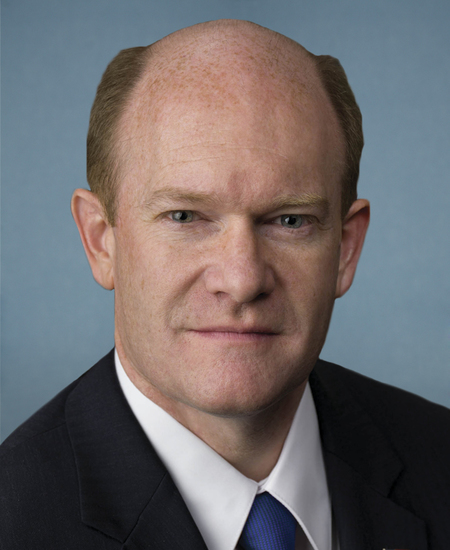
119th Congress Introduced by Chris Coons and 4 co-sponsors

In S.4850, the minimum amount in controversy for diversity jurisdiction is inflation-adjusted, starting at at least $150,000 and updated every 10 years by CPI-based rules.

Introduced in Senate
0
WeVote Research Nonpartisan
Bill Summary · S 4850

Overview

  • Bill: S.4850 (Diversity Jurisdiction Inflation Adjustment Act)
  • Session: 119th Congress (2nd Session)
  • Purpose: Amend 28 U.S.C. § 1332 to adjust the amount-in-controversy thresholds for diversity jurisdiction based on inflation, thereby updating the minimum dispute amount over time.
  • Status: Introduced and referred to the Senate Judiciary Committee (Action History shows 2026-06-22). Passed the Senate on August 7, 2026 (as indicated in the text).

What the bill seeks to change

  • The current diversity jurisdiction threshold in § 1332(a) is replaced. Instead of a fixed monetary amount (previously $75,000), the threshold is described in reference to changes under subsection (b) and is subject to periodic inflation-based adjustments.
  • The bill establishes an inflation-adjustment mechanism for the minimum amount in controversy (the monetary threshold for federal jurisdiction based on diversity of citizenship).

Key provisions

  • Section 1332(a): Replaces the fixed $75,000 minimum with a threshold described in subsection (b).
  • Section 1332(b) (new structure):
    • The minimum amount in controversy is set at not less than $150,000, exclusive of interest and costs, as adjusted under paragraph (2).
    • Inflation-adjustment methodology:
    • An “appropriate year” is the calendar year preceding the calendar year in which the adjustment takes effect.
    • The adjustment uses the Consumer Price Index (CPI) for All Urban Consumers (CPI-U), published by the Department of Labor.
    • Effective dates for adjustments: January 1, 2030, and January 1 of every tenth year thereafter.
    • Each adjustment rounds to the nearest $25,000 (or the next higher $25,000 multiple if the amount falls midway between multiples).
    • Calculation basis: change in CPI from September of the appropriate year:
      • For the initial adjustment: CPI for September 2025 (compared to September of 2025 for the baseline).
      • For subsequent adjustments: CPI for September of the year preceding the last adjustment.
    • Administration: The Director of the Administrative Office of the United States Courts must determine the new amount and publish in the Federal Register by November 15 of the appropriate year, with the new minimum taking effect January 1 of the following calendar year.
  • Section 1332(c) (cost allocation): The bill contains a provision regarding costs where a plaintiff is adjudged to recover less than the new minimum threshold, potentially denying costs to the plaintiff and allowing the defendant to recover costs, except where otherwise provided by statute.

Who/what is affected

  • Federal subject-matter jurisdiction based on diversity of citizenship:
    • Plaintiffs seeking to remove or establish federal jurisdiction based on diversity will be affected by the adjusted minimum amount in controversy.
  • Civil cases in which the amount in controversy is at or near the threshold:
    • Small-claims-style federal cases may be reclassified under state court jurisdiction if the threshold increases (or vice versa depending on the adjusted amount).
  • Federal courts and administrative offices:
    • Requires annual/periodic CPI-based adjustments and publication, affecting court budgeting and case assignment thresholds.

Procedural and timeline aspects

  • Inflation adjustments occur on a fixed schedule:
    • Initial adjustment effective January 1, 2030.
    • Subsequent adjustments every ten years on January 1.
  • Publication and notice:
    • The AOUSC Director must publish the amount and CPI-based change in the Federal Register by November 15 of the appropriate year.
  • Enactment path:
    • Introduced and referred to the Senate Judiciary Committee (June 22, 2026).
    • Reported or otherwise progressed (text indicates Senate passage on August 7, 2026).

Potential implications

  • The inflation-adjusted threshold could raise the bar for establishing federal diversity jurisdiction over time, potentially reducing the number of cases that qualify for federal court based on diversity.
  • The mechanism ensures reach to inflation and aligns with modern monetary values, reducing the need for frequent legislative updates.
  • The cost-shifting provision for certain judgments below the threshold could affect plaintiffs’ and defendants’ cost recovery in federal cases.

Compiled from official sources — confirm details with the bill’s official record.

Sign in to ask a question.