

WeVote

Bill

Bill

AB 2264

District agricultural associations: real property: affordable housing.

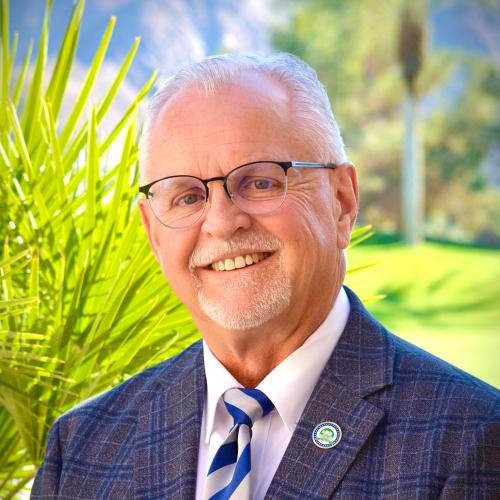
2025-2026 Regular Session Introduced by Tom Lackey

AB 2264 lets district agricultural associations use their land to build and lease affordable housing, with long-term 55-year covenants and up to 99-year leases.

Re-referred to Com. on APPR.
0
WeVote Research Nonpartisan
Bill Summary · AB 2264

Summary of AB 2264 (2025-2026) — California: District Agricultural Associations and Affordable Housing

Note: This summary reflects the bill as introduced and amended through the 2025-2026 session, focusing on substantive provisions, affected stakeholders, and timelines.

1) Purpose and Intent

  • AB 2264 aims to expand the authority of district agricultural associations (DAAs) to develop and maintain affordable housing on real property they own, acquire, hold, or lease.
  • The bill clarifies that DAAs may engage in constructing and maintaining affordable housing, including housing affordable to low- or moderate-income households.
  • It also tightens certain affordability requirements for housing projects on DAA property and extends lease durations to support longer-term housing developments.

2) Key Provisions and Changes

A. Real Property Authority and Housing

  • DAAs may purchase, acquire, hold, sell, exchange, convey, or lease real property with approval of the Department of General Services (DGS). AB 2264 explicitly includes authorization for:
    • Construction and maintenance of affordable housing on that property.
    • Construction and maintenance of housing affordable to persons and families of low or moderate income.

B. Leases and Term Length

  • Current law allows leases of real property by a DAA to last up to 55 years.
  • AB 2264 increases the maximum lease duration to up to 99 years.
  • Leases can be to any person or public body, and may be used to support affordable housing developments.

C. Affordability Covenants and Deed Restrictions

  • For affordable housing developed on DAA property (whether purchased, acquired, held, sold, exchanged, or leased), the bill requires a recorded deed restriction ensuring, for at least 55 years, that 100% of the units (excluding managers’ units) are dedicated to low- or moderate-income households at an affordable rent.
  • This creates a long-term affordability covenant to prevent future market-rate displacement.

D. Compliance with Other State Housing and Labor Standards

  • The bill aligns with existing Joe Serna, Jr. Farmworker Housing Grant Program restrictions:
    • Prohibits state grants/loans from funding predevelopment or operation of housing rented, sold, or subleased to entities employing H-2A workers until applicable affordability covenants and regulatory agreements expire.
    • Requires reimbursement to the state if funds are used contrary to these restrictions.
  • These restrictions and reimbursement requirements apply to DAA transactions and housing actions described in the bill.

E. Public Contracting and Oversight

  • The bill retains and reiterates contract-bid procedures for DAAs:
    • For construction exceeding $25,000, bids must be solicited in writing and awarded to the lowest responsible bidder, subject to Public Contract Code provisions.
    • DAAs may opt into the Uniform Public Construction Cost Accounting Act and Small Business Procurement/Contract Act, with related proportional exemptions.
  • Fiscal controls: DAAs must adopt fiscal review policies and may be audited (annual if budget > $5 million; otherwise annually examined and reviewed, and audited every three years). The 50th District Agricultural Association (if under a joint powers agreement) has a designated oversight structure.

F. Deeds, Property, and Pledges

  • DAAs may pledge revenues or other contract rights to secure obligations, with appropriate protections and disclosures.
  • Any bond or debt instruments under the act must include a disclaimer stating the State’s full faith and credit are not pledged to principal or interest.

3) Who Would Be Affected

  • District Agricultural Associations (DAAs) statewide:

    • Expanded authority to develop and maintain affordable housing on their property.
    • New long-term lease options (up to 99 years).
    • Required deed restrictions for long-term affordability (55-year minimum) on qualifying housing.
    • Additional governance, contracting, and auditing requirements.
  • Department of General Services (DGS) and Department of Housing and Community Development (HCD):

    • Oversight and approvals for property purchases, leases, and housing projects.
    • Implementation of affordability covenants and compliance with H-2A-related restrictions.
  • Prospective tenants and residents:

    • Access to affordable housing units on DAA properties when projects are developed under this authority.
    • Long-term affordability assurances for occupants.

4) Procedural Timelines and Status

  • Legislative History:

    • Introduced February 19, 2026.
    • Amended and read in subsequent sessions, with committee movements in spring 2026.
    • Re-referred to Appropriations (APPR) in April 2026; multiple round-trips through Agriculture (AGRI), Health, and Housing committees as part of hearings and amendments.
  • Effective/Implementation:

    • If enacted, the provisions would take effect upon the statute’s enactment date (as is typical for CA bills), with DAAs applying new authority and covenant requirements to relevant housing projects going forward.

5) Practical Implications

  • Expanded housing role for DAAs could increase the supply of affordable housing on fairgrounds and related properties, leveraging existing assets.
  • Longer lease terms (up to 99 years) may improve financing feasibility for large-scale housing projects.
  • The requirement of 55-year, 100% low/moderate-income deed restrictions strengthens long-term affordability but may limit equity extraction from some projects.
  • Increased compliance and auditing requirements may impose administrative costs on DAAs, balanced by potential access to state programs and subsidies.

This summary presents AB 2264 as a bill that broadens the housing-related use of DAA real property, pairs it with stringent affordability covenants, and adds governance and compliance requirements to support long-term, affordable housing development on DAA-owned or controlled land.

Compiled from official sources — confirm details with the bill’s official record.

Sign in to ask a question.