

WeVote

Bill

Bill

HR 7802

DISCLOSE Act of 2026

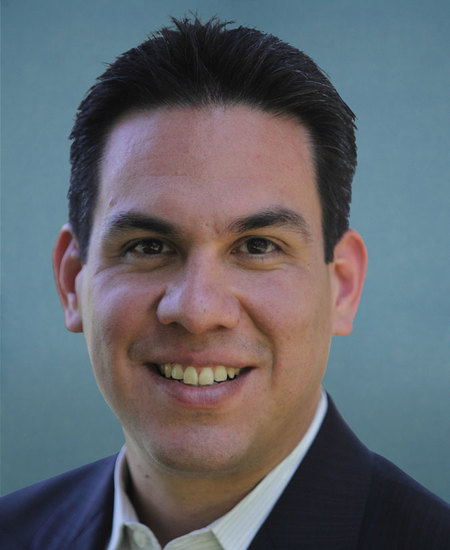
119th Congress Introduced by Pete Aguilar and 154 co-sponsors

The DISCLOSE Act expands/transparency by broadening foreign-money bans, tightening rapid disclosure of large campaign disbursements, and mandating clear online ad disclosures.

Introduced in House
1
WeVote Research Nonpartisan
Bill Summary · HR 7802

Summary of HR 7802 – DISCLOSE Act of 2026 (Session 119)

Purpose and intent

The DISCLOSE Act of 2026 aims to increase transparency in campaign finance by expanding disclosure requirements for corporations, labor organizations, Super PACs, and other entities involved in federal elections. The bill seeks to close foreign-money loopholes, enhance reporting of campaign-related spending (including online and judicial nomination activity), tighten restrictions on foreign influence, and strengthen enforcement through additional penalties and judicial-review provisions.

Key provisions and changes

Title I — Closing loopholes allowing foreign spending

  • Clarifies and expands the reach of the foreign-money ban (40 U.S.C. 319) to additional disbursements and activities.
  • Adds a new definition for “contribution or donation” to cover disbursements to political committees that bypass legal limits or reporting.
  • Establishes a new four-year study (with four-year election cycles) by the Comptroller General on illicit foreign money in federal elections, including targeting of specific groups.
  • Introduces a prohibition on foreign-national contributions/donations in connection with ballot initiatives and referenda, defining “covered foreign national” and clarifying applicability to federal, state, and local elections.
  • Extends the foreign-money ban to a broad set of disbursements, including independent expenditures, electioneering communications, and certain digital communications placed for a fee on online platforms.

Title II — Reporting of campaign-related disbursements

  • Reforms require “covered organizations” to disclose campaign-related disbursements exceeding $10,000 in an election cycle within 24 hours of each disclosure date.
  • Disclosures must include: organization details, principal place of business, beneficial owners, amounts and recipients, and certifications that disbursements were not coordinated with candidates or parties.
  • Establishes a framework for reporting connected transfers and payments (covered transfers) and requires rules to prevent coordination to evade disclosures.
  • Sets coordination with federal agencies (e.g., FinCEN) for enforcement and information sharing.
  • Applies similar reporting to Federal judicial nomination communications, highlighting concerns about dark money in judicial processes.
  • Amends definitions and filing requirements to align with the expanded scope; includes exemptions (e.g., ordinary business transactions) and conditions for donor restrictions.

Title III — Administrative reforms and judicial review

  • Expands avenues for petitioning for certiorari and codifies judicial-review procedures related to campaign-finance laws.
  • Provides for expedited jurisdiction and potential congressional intervention in certain cases challenging the act’s constitutionality.

Title IV — Stand by every ad

  • Expands disclaimer requirements for communications not authorized by candidates or committees, including online and digital formats.
  • Requires disclosures such as top-line funder lists (Top Five, Top Two) and tailored “disclosure statements” depending on whether a payer is an individual, corporation, or other entity.
  • Defines “online platform” and “third-party advertising vendor,” with thresholds (e.g., 50 million+ monthly US visitors) for applicability.
  • Establishes timing and placement rules for disclosures in text, audio, and video formats, including adapted disclaimers and landing pages when needed.

Title V — Standalone provisions and severability

  • Maintains the bill’s overall structure with severability provisions to allow parts of the act to remain in force if other parts are struck down.

Who would be affected

  • Corporations, labor organizations, political committees, Super PACs, and other “covered organizations” engaged in campaign-related disbursements.
  • Online platforms and third-party ad vendors that sell political advertising (with defined thresholds).
  • Recipients of campaign-related disbursements, especially where funds originate from covered transfers.
  • Entities involved in federal judicial nominations and related communications.
  • The FEC would administer and enforce the expanded disclosure regime, with FinCEN coordination.

Timelines and effective dates

  • Effective date for Title I–III provisions: disbursements made on or after January 1, 2027.
  • Provisions related to foreign-money bans and reporting apply prospectively from enactment, with ongoing studies and reports referenced in the act.
  • Regulations by the FEC required within six months of enactment to implement certain aspects of subsection 324.

Note

The bill is lengthy and technical, with numerous cross-references to the Federal Election Campaign Act and related statutes. The above captures the core aims, major new requirements, and potential implications for transparency and enforcement in federal campaign finance.

Compiled from official sources — confirm details with the bill’s official record.

Sign in to ask a question.