

WeVote

Bill

Bill

HB 712

Disability and Aging, Dept. Of - As enacted, directs the commissioner and the director of TennCare to develop guidelines for service providers for hiring qualified family members as a family caregiver; specifies that the department and the bureau of TennCare shall not prohibit qualified individuals from employment as a family caregiver at a service provider agency based on certain listed criteria. - Amends TCA Title 52 and Title 71.

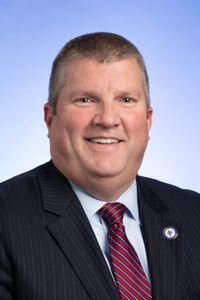
114th Regular Session (2025-2026) Introduced by Michael Hale

Creates the NC Universal Income Program to pay eligible job trainees/volunteers up to $3,000 a month for up to five years, funded by private sources and a 1% graduate tax surcharge.

Comp. became Pub. Ch. 182
0
WeVote Research Nonpartisan
Bill Summary · HB 712

HB 712 — Universal Income / Pay‑It‑Forward Fund (NC)

Status (per filing): Introduced November 12, 2024; Passed First Reading.
Subject areas: Commerce; Department of Commerce; Poverty; Public / Social Services.

Main purpose

Establishes a state‑administered "NC Universal Income Program" (NCUIP) and a dedicated Pay‑It‑Forward Fund to provide monthly income support to individuals who are receiving job training, performing volunteer work, or both, with the goal of incentivizing community volunteering and retraining for stable employment.

Key provisions

  • Establishment and administration
    • Creates the NCUIP and the Pay‑It‑Forward Fund within the North Carolina Department of Commerce.
    • The Department must adopt implementing rules and prioritize public‑private partnerships, tax incentives, and other funding strategies.
  • Benefit amount and duration
    • Authorizes monthly payments of up to $3,000 per eligible individual.
    • Payments may be provided for up to five years per participant (subject to program rules).
  • Eligibility and activities
    • Targeted to individuals who have difficulty finding good permanent employment and who are enrolled in job training, performing community volunteer work, or both (program rules to define details).
  • Funding and repayment
    • Department will seek funding from private sources and local, State, and federal governments.
    • Requires, in consultation with the Department of Revenue, a repayment mechanism whereby NCUIP graduates pay an additional 1 percentage point in State individual income tax; revenue from that surcharge is directed into the Pay‑It‑Forward Fund to support future participants.
  • Reporting and oversight
    • By January 1, 2026 the Department must establish and administer the NCUIP.
    • Secretary of Commerce must report to the General Assembly on implementation by April 1, 2026, and annually thereafter.

Who would be affected

  • Primary beneficiaries: unemployed, underemployed, or otherwise work‑disadvantaged individuals who participate in approved job training and/or volunteer programs.
  • State agencies: Department of Commerce (program design/administration), Department of Revenue (implements repayment collection).
  • Communities: will receive volunteer services and potentially expanded workforce participation/training resources.
  • State finances/taxpayers: costs depend on program uptake and funding mix; the 1% graduate surcharge would shift some costs to program graduates.

Implementation timeline and procedural notes

  • Effective date in the bill: July 1, 2025 (bill text specifies program establishment and reporting deadlines in 2026).
  • Department required to promulgate rules and set detailed eligibility, benefit disbursement, and administration procedures.
  • Fiscal impact: not specified in the bill text; actual budgetary effect will depend on enrollment, the portion of funding secured from private or federal sources, and revenue raised by the repayment surcharge.

Considerations and potential impacts

  • Positive aims: reduce poverty, support retraining, and increase civic volunteerism.
  • Fiscal and administrative challenges: sustaining payments at up to $3,000/month could require substantial funding; the 1% graduate tax surcharge may only partially replenish the Fund and raises equity and enforcement questions (who is required to pay and how).
  • Many operational details (eligibility criteria, interaction with other benefits, enforcement, and audit/oversight) are left to Department rulemaking.

Compiled from official sources — confirm details with the bill’s official record.

Sign in to ask a question.