

WeVote

Bill

Bill

HR 8693

Deter PRC Aggression Against Taiwan Act

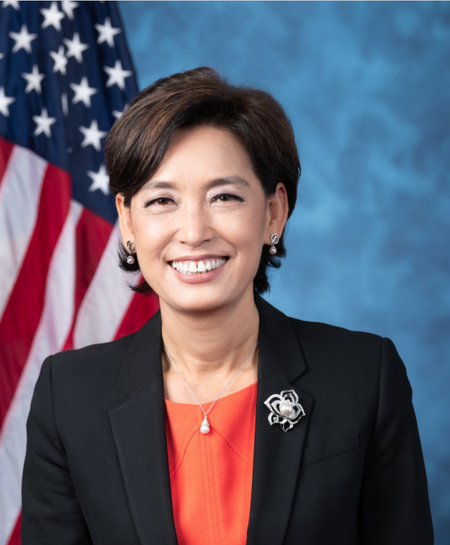
119th Congress Introduced by Young Kim and 1 co-sponsor

The bill would create a cross-agency Sanctions Task Force to identify entities tied to PRC aggression against Taiwan and propose targeted sanctions authorities and actions.

Introduced in House
0
WeVote Research Nonpartisan
Bill Summary · HR 8693

Overview

  • Bill: HR 8693, 119th Congress, 2nd Session
  • Title: Deter PRC Aggression Against Taiwan Act
  • Purpose: To develop and coordinate U.S. economic tools and sanctions to deter the People’s Republic of China (PRC) from using force or coercion against Taiwan, and to provide a framework for targeting entities that facilitate PRC aggression.

Main purpose and intent

  • Establish a structured approach for deterrence by using sanctions and other economic measures in response to PRC actions intended to exert control over Taiwan or to threaten Taiwan’s governing institutions, territory, or essential services.
  • Preserve and affirm the U.S. policy framework toward Taiwan, including the One China policy and long-standing commitments under the Taiwan Relations Act and related communiqués and assurances.

Key provisions and changes

  • Section 2: Sense of Congress

    • Preparedness to impose sanctions immediately on entities owned, controlled by, or acting at direction of the PRC Government or Chinese Communist Party that support:
    • Overthrow or dismantling of Taiwan’s governing institutions
    • Occupation of Taiwan-controlled territory
    • Violations of Taiwan’s territorial integrity
    • Significant actions against Taiwan (e.g., naval blockade, seizure of outlying islands, or significant physical/cyber attacks impairing Taiwan’s governance or essential services)
    • Policy stance that PRC sanctions recommendations complement, not contradict, U.S. policy on Taiwan; reaffirmation of One China policy and peaceful determination of Taiwan’s future.
  • Section 3: Definitions

    • Clarifies terms for purposes of the Act, including “PRC,” “PRC Sanctions Task Force,” and “appropriate congressional committees.”
  • Section 4: PRC Sanctions Task Force

    • Establishment of an interagency task force (within 180 days of enactment) led by the Coordinator for Sanctions (State) and the Director of OFAC (Treasury), with input from intelligence and other federal agencies.
    • Mission: identify entities (military and non-military) that could be sanctioned or otherwise economically targeted following PRC actions against Taiwan.
    • Section 4(b) requires a strategic briefing within 180 days outlining:
    • How existing sanctions could apply to identified entities
    • Potential new authorities needed to sanction such entities
    • Economic impact analysis on the U.S., allies, and partners
    • Mitigation measures (licenses, exemptions, carve-outs)
    • Coordination with allies/partners to leverage sanctions on PRC financial/industrial sectors and deter aggression
    • Identification of industries/sectors suitable for coordinated action
    • Assessment of resource needs across federal agencies to implement sanctions tools
    • Targeting criteria considering PRC policies, economic impact, and global financial stability
  • Section 5: Annual Report

    • Requires the Task Force to submit a classified annual report to congressional committees detailing:
    • Entities identified
    • New authorities needed
    • Economic impacts and mitigation options
    • Coordination status with allies/partners
    • Resource gaps and recommendations
    • Any additional resources needed
  • Section 6: Rules of Construction

    • (a) Reaffirms that nothing in the Act changes the U.S. One China policy.
    • (b) Specifies that sanctions authorities recommended by the Task Force are not self-executing; sanctions may only be imposed pursuant to existing federal law in effect before enactment or through new Acts of Congress.

Who/what would be affected

  • Targeted: PRC state actors, entities, and potentially industry sectors identified by the PRC Sanctions Task Force as supporting PRC aggression against Taiwan.
  • Indirectly affected: PRC government and state-owned enterprises, financial institutions tied to the PRC, and PRC companies; U.S. and allied businesses that could be impacted by sanctions and related economic measures.
  • U.S. government: establishment of a cross-agency Sanctions Task Force and expansion of interagency coordination and reporting requirements.

Procedural and timeline aspects

  • Establishment: PRC Sanctions Task Force to be formed within 180 days after enactment.
  • Initial briefing to Congress: within 180 days of establishment.
  • Annual reporting: initial report due within 180 days after the briefing, then annually thereafter.
  • Legal effect: Sanctions identified or recommended are not self-executing; must be authorized by existing law or subsequent Acts of Congress.

Notes for readers

  • The bill emphasizes coordinated, targeted economic tools rather than autonomous action; preserves U.S. Taiwan policy framework.
  • It creates a formal mechanism to anticipate and respond to potential PRC moves against Taiwan by identifying entities and proposing authorities, while highlighting mitigation and alliance coordination.
  • As introduced, it requires future legislative action to authorize specific sanctions.

Compiled from official sources — confirm details with the bill’s official record.

Sign in to ask a question.