

WeVote

Bill

Bill

HF 768

Department of Human Rights prohibited from maintaining a collection or database on incidents of protected speech.

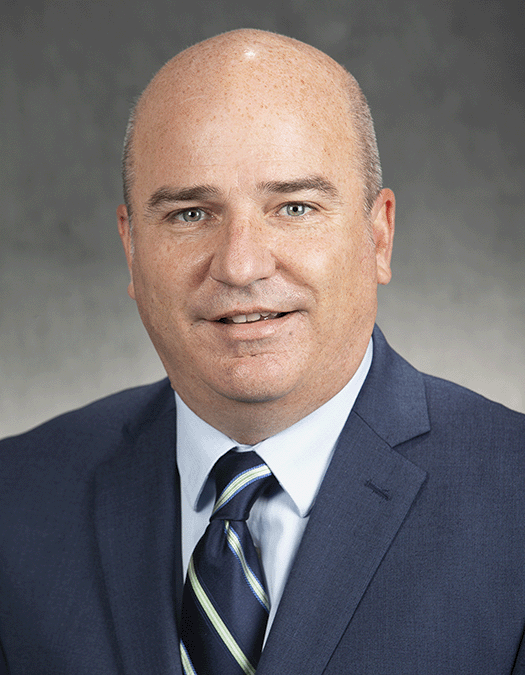
2025-2026 Regular Session Introduced by John Burkel and 7 co-sponsors

Minnesota bill prohibits Department of Human Rights from maintaining databases tracking incidents of protected speech, potentially limiting discrimination investigation documentation.

Authors added Knudsen and Burkel
0
WeVote Research Nonpartisan
Bill Summary · HF 768

Legislative bill overview

HF 768 prohibits the Minnesota Department of Human Rights from collecting, maintaining, or creating databases that track incidents involving protected speech. The bill creates restrictions on what data the department can retain regarding communications or expressions protected under state or federal law, potentially limiting the department's investigative capabilities in certain discrimination cases.

Why is this important

The Department of Human Rights investigates discrimination complaints, which sometimes involve speech as evidence of discriminatory intent or patterns. This bill would restrict what information the agency can document about speech-related incidents, raising questions about how discrimination investigations proceed when speech is central to proving bias. The practical impact depends on how "protected speech" is legally defined and whether exceptions exist for discrimination investigations.

Potential points of contention

  • Definition clarity: The bill doesn't specify what constitutes "protected speech" in this context—First Amendment speech, hate speech protections, or something broader—creating potential ambiguity in enforcement and litigation risk.
  • Investigation limitations: Civil rights advocates may argue this hampers the department's ability to document patterns of discrimination, while free speech advocates may contend the department previously overreached in monitoring lawful expression.
  • Scope questions: Unclear whether the restriction applies to all speech data or only databases specifically designed to track speech incidents, and whether exceptions exist for active investigations or court-ordered discovery.

Compiled from official sources — confirm details with the bill’s official record.

Sign in to ask a question.