

WeVote

Bill

Bill

HR 8080

Data to Save Moms Act

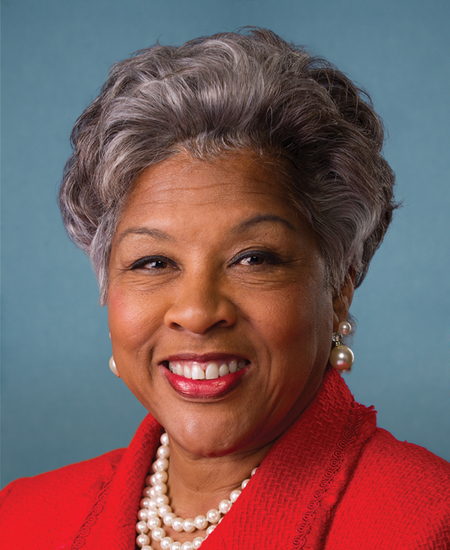
119th Congress Introduced by Joyce Beatty and 40 co-sponsors

Funds and standardizes improved maternal health data, diversifies review committees, and supports targeted AI/AN and minority-focused research to reduce disparities.

Introduced in House
0
WeVote Research Nonpartisan
Bill Summary · HR 8080

Summary: Data to Save Moms Act (H.R. 8080, 119th Congress)

Aims to improve maternal health outcomes by enhancing data collection, expanding maternal mortality review practices, and supporting minority communities through targeted funding and studies. The bill would amend the Public Health Service Act to strengthen data quality measures and promote community engagement in maternal health efforts.

1) Purpose and Intent

  • Improve the collection, quality, and use of maternal health data.
  • Expand and diversify maternal mortality review (MMR) committees and their processes.
  • Promote community engagement, with attention to racial and ethnic minority groups and American Indian/Alaska Native populations.
  • Support additional research into maternal health disparities and outcomes, including minority-serving institutions’ roles.
  • Develop and standardize quality measures for maternity care and improve coordination across DHHS agencies.

2) Key Provisions and Changes

A. Grants to Promote Community Engagement in MMR Committees (Sec. 2)

  • Adds a new funding pathway under 317K(d) to provide grants to state, tribal, or urban Indian maternal mortality review committees.
  • Grant purposes include:
    • Selecting community members to diversify committee membership (race/ethnicity, geography, experiences, non-clinical perspectives).
    • Addressing participation barriers (training, transportation, compensation, other supports).
    • Conducting outreach to gather input from communities, especially racial/ethnic minorities.
    • Releasing public reports on pregnancy-related and pregnancy-associated deaths, focusing on sensitivity to minority experiences and on diversity outcomes from fund use.
  • Technical assistance from HHS to grantees on best practices for increasing diversity and conducting community engagement.
  • Authorization of appropriations: $10 million per year for fiscal years 2027–2031.
  • Reservation of funds: At least $1.5 million annually for grants to Indian Tribes, Tribal organizations, or Urban Indian organizations.

B. Data Collection and Review Enhancements (Sec. 3)

  • Expands review topics for maternal health data, including:
    • Cases of severe maternal morbidity.
    • Deaths during pregnancy or up to 1 year after ending pregnancy due to suicide, overdose, or mental health/substance use conditions linked to pregnancy.
    • Consultation with community-based organizations representing pregnant/postpartum individuals from diverse groups to consider nonclinical factors.
  • Emphasizes practicability in reviewing, with attention to demographic diversity and nonclinical factors.

C. Review of Maternal Health Data Processes and Quality Measures (Sec. 4)

  • Secretary (through CMS and AHRQ) to consult stakeholders to assess and recommend improvements to data collection processes and quality measures.
  • Stakeholders to include: pregnant/postpartum individuals and families; community-based organizations; maternity care providers; perinatal health workers; organizations focused on maternal mental health and violence; higher education institutions (with emphasis on minority-serving institutions); hospitals, birth centers, midwifery practices; State/local agencies; and standard-setting bodies (e.g., National Quality Forum).
  • Topics to be assessed include:
    • Timeliness and accuracy of death certificate revisions when new information arises.
    • Electronic health record data fields (race, ethnicity, language, SES, geography, insurance, etc.).
    • Barriers to correlating maternal outcomes with demographic data.
    • Inclusion and training of diverse MMR committees; listening to stories from minority communities; consideration of social determinants; actionable recommendations and implementation; legal/administrative barriers to data collection; and funding adequacy.
    • Public reporting of stratified race/ethnicity data and alignment with quality measures.
  • Report due within 1 year of enactment; broad authorization for appropriations for this section (fiscal years 2027–2030).

D. Study on Maternal Health Among American Indian and Alaska Native Individuals (Sec. 5)

  • Requires a contract within 90 days of enactment with an independent research organization or Tribal Epidemiology Center to study maternal health outcomes in AI/AN populations.
  • Study scope (within 3 years of enactment):
    • Causes of maternal mortality and severe maternal morbidity unique to AI/AN individuals.
    • Listening to AI/AN individuals’ stories; settings of care (IHS facilities, tribal health programs, urban Indian programs, and non-IHS facilities).
    • Coordination of IHS with other DHHS programs; data collection practices; prevalence of mental health and substance use disorders.
    • Social determinants and historical trauma; funding and cultural appropriateness; misclassification reduction.
  • Report to Congress no later than 36 months after enactment.
  • Appropriations: up to $2 million annually (FY 2027–2029).

E. Grants to Minority-Serving Institutions (Sec. 6)

  • Establishes a program to fund research centers at minority-serving institutions to study maternal health disparities.
  • Eligible activities:
    • Storytelling/documentation processes with minority communities.
    • Investigations into potential undercounting of maternal mortality among Hispanic individuals and other subgroups.
    • Studies on disparities in access to prenatal care and lactation education to diversify the maternal health workforce.
  • Application requirements and technical assistance provisions.
  • Reporting and evaluation beginning one year after first grant.
  • Appropriations: $10 million per year (FY 2027–2031).

F. Definitions (Sec. 7)

  • Clarifies terms: maternity care provider, perinatal health worker, postpartum, pregnancy-associated death, pregnancy-related death, minority-serving institutions, and related demographic terms.
  • Distinguishes pregnancy-associated vs. pregnancy-related deaths and outlines the scope of data collection improvements.

3) Who Would be Affected

  • State, tribal, and urban Indian maternal mortality review committees (MMRCs) through new grant authority.
  • American Indian and Alaska Native communities via targeted AI/AN study and reserved tribal funding.
  • Minorities and underserved populations through enhanced data collection, reports, and community engagement.
  • Hospitals, birth centers, midwifery practices, health plans, and government agencies involved in maternal health data collection and reporting.
  • Minority-serving institutions and researchers conducting maternal health studies.
  • Maternal health stakeholders (providers, perinatal workers, community organizations, and patients) participating in consultations and reporting.

4) Procedural and Timeline Highlights

  • Short-term: Bills directs new funding authorities and study mandates starting FY 2027.
  • Reporting: A consolidated report on data collection and quality measures due within 1 year after enactment (Sec. 4(a)).
  • AI/AN study: Contract within 90 days; final Congress-report due within 3 years (Sec. 5).
  • Ongoing funding: Sec. 2 and Sec. 6 authorize multi-year appropriations (FY 2027–2031) for grants and research programs.
  • Definitions and cross-agency coordination: Emphasizes DHHS collaboration with CMS, AHRQ, and stakeholder groups for standardized quality measures and data practices.

Overall, the Data to Save Moms Act seeks to modernize maternal health data ecosystems, diversify and strengthen maternal mortality review processes, and fund targeted research to address racial and regional disparities in maternal health outcomes.

Compiled from official sources — confirm details with the bill’s official record.

Sign in to ask a question.