

WeVote

Bill

Bill

HR 9372

Data Infrastructure Energy Measurement and Standards Act

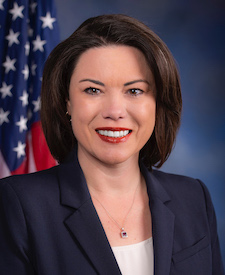
119th Congress Introduced by Valerie Foushee and 2 co-sponsors

Establishes NIST-led program to develop standardized metrics and best practices for measuring data center energy and water use, including AI workloads, to improve forecasting and d

Sponsor introductory remarks on measure. (CR H4134)
0
WeVote Research Nonpartisan
Bill Summary · HR 9372

Summary of HR 9372 (119th Congress) — Data Infrastructure Energy Measurement and Standards Act

Overall purpose

HR 9372 directs the Director of the National Institute of Standards and Technology (NIST), in collaboration with the Secretary of Energy and other stakeholders, to develop best practices for measuring energy and water use in data centers, assess data availability to improve energy demand forecasting, and promote standardized metrics and data-sharing to support forecasting and research. The act aims to enhance transparency and comparability of data center resource use and to improve national energy and water demand forecasting related to data infrastructure, including workloads from artificial intelligence and other compute-intensive processes.

Key provisions

  1. Best practices for measuring data center energy and water use (Section 2(a)-(b))

    • NIST, in consultation with the Secretary of Energy, must establish a measurement research program to inform best practices, definitions, methodologies, procedures, and technical standards for:
      • Measuring energy and water use by data centers and the workloads they run.
      • Including energy and water use from training and inference of artificial intelligence models and other compute-intensive tasks.
    • The program should address:
      • Types of workloads and aggregate energy/water use per data center, including AI workloads.
      • Temporal (time-varying) power consumption, considering behind-the-meter generation, front-of-meter generation, and energy generation not fed to the grid at the facility level.
      • IT systems, power chains, cooling configurations (servers, storage, network, power transformation, distribution, uninterruptible power supplies).
      • Temporal variations due to workloads, configurations, and location factors (climate, resources).
  2. Data needs for research and forecasting (Section 2(c))

    • Identify gaps in:
      • Data collection and data availability from public and non-public sources.
      • Researcher access to data.
    • Assess risks associated with these gaps and how they affect the reliability of energy and water demand forecasts from different stakeholder perspectives.
  3. Standardized metrics and data sharing (Section 2(d))

    • Support the development of standardized metrics and data-sharing mechanisms to improve energy and water demand forecasting capabilities.
  4. ** Coordination with the Secretary of Energy (Section 2(e))**

    • Ensure proper data management, stewardship, and archiving of applicable metrics and data per the best practices.
    • Promote open exchange of metrics and data at federal, state, academic, industry, and other relevant levels, as practicable and appropriate.
  5. ** International coordination (Section 2(f))**

    • Collaborate with international partners and standards organizations to maintain global data center energy measurement standards.
  6. ** Stakeholder engagement (Section 2(c))**

    • Engage with industry, academia, non-profit groups, standards organizations, civil society, and relevant federal entities to inform and shape the program.
  7. ** Briefings (Section 2(d))**

    • Require periodic briefings to Congress: within one year after enactment and again within two years, to relevant committees.
  8. ** Authorization of appropriations (Section 2(e))**

    • Authorizes $10 million annually for fiscal years 2027–2029 to carry out the section’s activities.
  9. ** Definitions (Section 2(f))**

    • Clarifies key terms:
      • Artificial Intelligence, Artificial Intelligence model
      • Behind-the-meter generation
      • Data center
      • Director (NIST)
      • Front-of-meter generation
      • Information system

Who would be affected

  • Data centers and their operators (as data collection and reporting standards are developed).
  • NIST as the lead agency implementing the measurement program.
  • Department of Energy and related federal, state, and industry stakeholders involved in data collection, analysis, and forecasting.
  • Researchers, academic institutions, standards bodies, and industry groups involved in data center energy/water measurement and forecasting.
  • International standards communities collaborating on global data center energy measurement standards.

Timelines and governance

  • Enactment and Authorization: The bill establishes a program and funding framework for FY 2027–FY 2029.
  • Briefings: Congress to be briefed within 1 year and again within 2 years after enactment.
  • Funding: Up to $10 million per year for 2027–2029 to support the program.
  • Coordination and engagement: Ongoing with federal, state, academia, industry, and international partners.

Practical implications

  • Increased standardization in how data centers measure energy and water use, including AI-related workloads.
  • Improved data availability and accessibility to support more accurate energy/water demand forecasting.
  • Potential for better policy and planning decisions based on standardized metrics and transparent data sharing.
  • Enhanced international alignment on measurement standards, aiding global benchmarking and collaboration.

Note for readers

This overview focuses on the bill’s stated aims and provisions regarding measurement standards, data needs, and forecasting support. It does not reflect potential amendments, committee reports, or eventual enactment changes.

Compiled from official sources — confirm details with the bill’s official record.

Sign in to ask a question.