

WeVote

Bill

Bill

S 4773

DASH Act

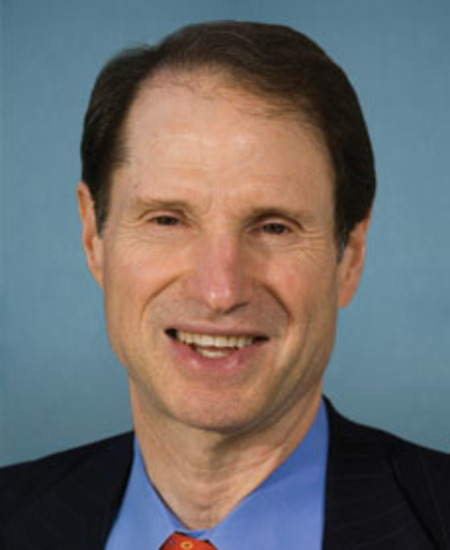
119th Congress Introduced by Ron Wyden

The DASH Act aims to expand rental vouchers and affordable housing supply, with a focus on homelessness, rural housing, and pro-housing zoning reforms.

Introduced in Senate
0
WeVote Research Nonpartisan
Bill Summary · S 4773

Overview

The DASH Act (S. 4773, 119th Congress) proposes a broad package of housing initiatives aimed at expanding rental assistance, accelerating affordable housing production, and stabilizing existing multifamily housing, with a particular emphasis on homelessness, rural housing, and pro-housing zoning reforms. The measure would create new voucher programs, bolster capacity for public housing agencies, promote modular construction, and strengthen preservation efforts for existing affordable housing.

Main Purpose and Intent

  • Provide rental vouchers for homeless and at-risk populations.
  • Expand and stabilize affordable housing supply, especially for very-low and extremely-low-income households.
  • Improve rural housing programs and preserve existing affordable multifamily housing.
  • Encourage innovative construction methods and zoning reforms to increase housing density and reduce barriers to development.
  • Strengthen program administration, data collection, and oversight.

Key Provisions and Changes

  • Title I, Section 111: Rental Vouchers for the Homeless

    • Establishes a new voucher program under the Housing Act of 1937 to assist eligible homeless or at-risk individuals/families with income under 50% of area median income.
    • Defines terms (eligible recipient, voucher recipient, service coordinator, HMIS, continuum of care, etc.).
    • Grants: initial 2026 allocation of 250,000 vouchers; 400,000 vouchers annually thereafter unless demand is lower.
    • Public housing agencies (PHAs) receive admin fees to cover upfront costs (security deposits, moving costs, etc.) up to 3 months’ rent.
    • Voucher payments capped at 125% of fair market rent; potential supplemental vouchers to cover high rents or approved formula waivers.
    • No mandatory participation in services; restrictions on eligibility for individuals with certain lifetime sex-offender registry statuses; requires data verification and HMIS use.
    • Priority for unaccompanied homeless youth and families with minors; data reporting to Congress; ongoing oversight and performance benchmarks.
    • Administrative funding ($15 million annual for HUD operations; $300 million cap for admin fees over several years).
  • Section 112: Land Acquisition and Construction

    • Expands definitions and targets for land acquisition and development of affordable housing for very-low and extremely-low-income households.
    • Sets priority on occupancy for homeless families/youth in early years.
  • Section 113: Modular Construction Pilot Program

    • Creates a pilot program to fund modular construction to build affordable housing.
    • Requires affordability guarantees for 20+ years; prioritizes larger projects, rapid construction (within 18 months), and partnerships with PHAs or local governments.
    • Federal share not to exceed 75% of project cost; appropriations of $2 million annually (2026–2031).
  • Section 114: Supporting Pro-Housing Development

    • Encourages zoning reform and planning innovations to increase multifamily and mixed-use housing.
    • Prohibits certain zoning practices (e.g., discouraging duplexes, restricting ADUs, parking minimums) and promotes waivers, expedited permitting, reduced fees, and higher floor-area ratios.
    • Establishes grant program with minimum awards by entity size; requires jurisdictions to report zoning information; grants emphasize multiple reform methods.
  • Section 115: Permanent Authorization for McKinney-Vento Grants

    • Keeps annual appropriations for McKinney-Vento grants at a level permitting ongoing homeless assistance.
  • Subtitle B (Rural Housing Assistance)

    • Sections 121–126: Rural reinvestment and preservation programs, including expanded rural housing loans/grants, rental assistance, and preservation tools for rural housing.
    • Emphasizes off-farm affordable housing for domestic farm laborers and low-income rural residents.
    • Sets priorities for energy efficiency and green building certifications; includes a Rural Housing Trust-like funding framework with substantial multi-year appropriation (several hundred million to billions across years).
  • Section 122: Housing Preservation and Revitalization Program

    • Establishes a program to preserve and revitalize multifamily properties financed under older rural programs, including loan restructuring, contract decoupling, and rental assistance renewal.
  • Sections 123–125: Rural Voucher Eligibility and Use of Assistance

    • Expands eligibility to households in Section 514/515/516-financed properties that prepaid, foreclosed, or matured after 2005.
    • Allows flexible use of rental assistance and tenant transfers upon mortgage maturation or retraction.
  • Section 126–127: Technical Improvements and Plan

    • Allocates funds for multifamily tech upgrades and requires a plan to preserve affordability and prevent displacement.

Who/What Is Affected

  • Homeless individuals and families (direct beneficiaries of new rental vouchers).
  • Public housing agencies (administrative responsibilities, service coordination, HMIS integration).
  • Continuums of care, public child welfare agencies, and service providers (service coordination and referrals).
  • Rural communities, including domestic farm laborers (rural housing loans, grants, and rental assistance).
  • Local jurisdictions implementing zoning reforms (grant eligibility and reporting requirements).
  • Owners of multifamily rental housing (preservation and revitalization programs, rent stabilization options).

Procedural and Timeline Aspects

  • Effective date: Introduces numerous programs upon enactment with a capacity-building period for voucher issuance and construction timelines.
  • Capacity-building period for vouchers: prioritizes early allocation to certain vulnerable groups, with gradual scaling to broader populations.
  • Modular construction pilot: grants announced and awarded within specified fiscal years (2026–2031).
  • Rural programs: multi-year appropriations (2026–2031/2036) with annual reporting and governance requirements.
  • Data and reporting: annual HUD-congress reports on voucher progress; requiring HMIS data collection and state-level benchmarks; potential penalty provisions tied to unmet performance standards.

Note: The bill emphasizes expanding homelessness interventions, increasing affordable housing supply, and incentivizing smart growth, with a strong focus on rural housing and housing preservation.

Compiled from official sources — confirm details with the bill’s official record.

Sign in to ask a question.