

WeVote

Bill

Bill

SB 902

Criminal procedure: probation; probation for certain criminal sexual conduct violations; prohibit. Amends sec. 1, ch. XI of 1927 PA 175 (MCL 771.1).

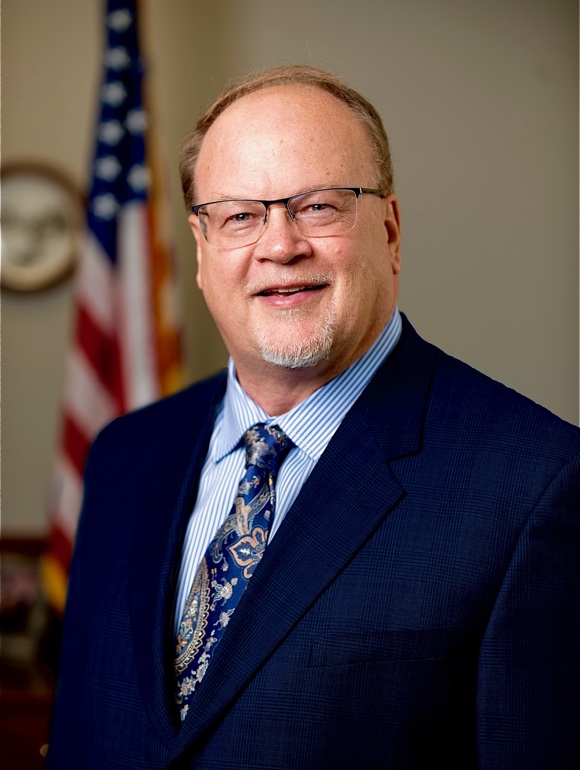
2025-2026 Regular Session Introduced by Jim Runestad

Allows probation instead of standard penalties for many offenses after guilty verdict, with up to 12 months' delayed sentencing and new supervision fees.

REFERRED TO COMMITTEE ON CIVIL RIGHTS, JUDICIARY, AND PUBLIC SAFETY
0
WeVote Research Nonpartisan
Bill Summary · SB 902

Summary of Senate Bill 902 (2025-2026) – Michigan

Purpose and intent

SB 902 proposes changes to Michigan’s probation framework in criminal procedure. The bill would allow a court to place certain defendants on probation in lieu of standard penalties, and it would modify sentencing delays and supervision fees associated with delayed sentencing. The aim appears to be expanding opportunities for probation and rehabilitation where the court determines the defendant is unlikely to engage in future offensive or criminal conduct and the public interest does not require harsher punishment.

Key provisions and changes

Probation eligibility for specific offenses

  • For prosecutions of felonies, misdemeanors, or ordinance violations (excluding murder, treason, and certain criminal sexual conduct offenses, including any degree of CSC involving sexual penetration and higher-tier offenses), a court may place the defendant on probation if:
    • The defendant has been found guilty (by verdict or plea), and
    • The court determines the defendant is not likely to engage in a future offensive or criminal course of conduct, and
    • The public good does not require the penalty otherwise prescribed by law.

Delayed sentencing option

  • In cases where the court may place a defendant on probation, the court may delay sentencing for up to 1 year to allow the defendant to demonstrate eligibility for probation or other leniency compatible with justice and rehabilitation (e.g., participation in a drug treatment court under the Revised Judicature Act).
  • If sentencing is delayed, the court must record the reason for the delay. Delaying sentencing does not deprive the court of jurisdiction to sentence at any point during the delay.

Court-ordered supervision fees tied to delay

  • When the circuit court delays sentencing (under subsection 2) and the defendant is placed on supervision, the court must order a supervision fee collected by the Department of Corrections:
    • If supervision is without electronic monitoring: $30 per month of the delay, up to 12 months.
    • If supervision includes an electronic monitoring device: $60 per month of supervision, up to 12 months.
  • Fees are due when the delayed sentence order is entered and may be paid in monthly installments if the court approves.
  • Fees are collected under Michigan Corrections Code provisions, and a person cannot be charged more than one supervision fee at the same time. If a second fee would overlap with an existing one, the court must waive the shorter remaining fee.
  • The court may waive the fee if the defendant is indigent.

Juvenile exception

  • The provisions do not apply to juveniles placed on probation and committed to an institution or agency under the Youth Rehabilitation Services Act.

Definitions

  • The term “electronic monitoring device” includes devices used to track location, enforce curfews, or detect alcohol presence.

Effective date

  • The act would take effect 90 days after enactment.

Who is affected

  • Defendants charged with felonies, misdemeanors, or ordinance violations (excluding certain serious CSC offenses listed) who are found guilty and may be eligible for probation under the bill’s criteria.
  • Courts (especially circuit courts) that would consider delayed sentencing and determine probation eligibility, and that would impose and collect the new supervision fees.
  • The Michigan Department of Corrections, which would collect the supervision fees.
  • Individuals who may be subject to electronic monitoring as part of probation.
  • Indigent defendants who may be eligible for fee waivers.

Procedural and timeline aspects

  • Process: Introduction and referral to the Civil Rights, Judiciary, and Public Safety Committee.
  • Jury verdicts or plea-based convictions would be eligible for probation under the new standard.
  • A potential 12-month window for delaying sentencing, with a record of the reason for delay.
  • Fees in connection with delayed sentencing would be due upon entry of the delayed-sentence order, with provisions for installment payments and waivers in indigent cases.
  • The bill lists specific exceptions (e.g., murder, treason, first- to fourth-degree CSC offenses, armed robbery, major drug offenses) where the probation option would not apply.

Summary assessment

SB 902 is a targeted reform to broaden probation opportunities and to incentivize rehabilitation through a structured delay in sentencing, paired with a new fee framework for supervision during delays. It emphasizes rehabilitation over punishment in select cases while preserving judicial discretion and safeguards (e.g., indigence waivers, juvenile exception, clear exclusions for serious offenses). The fiscal impact would largely involve the collection of supervision fees by the Department of Corrections and administrative costs for courts and corrections staff.

Compiled from official sources — confirm details with the bill’s official record.

Sign in to ask a question.