

WeVote

Bill

Bill

HB 5434

CRIMINAL JUSTICE TASK FORCE

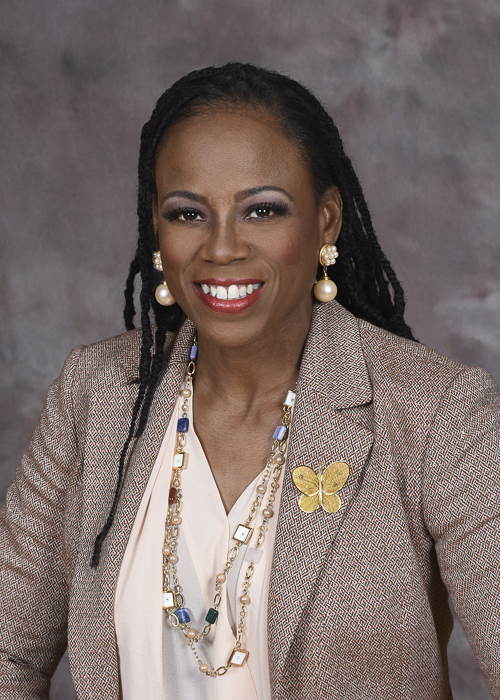
104th Regular Session Introduced by Carol Ammons and 15 co-sponsors

Creates a bipartisan task force to study and propose developmentally informed, cost-effective reforms for 18–25-year-olds in Illinois’ criminal justice system.

0
WeVote Research Nonpartisan
Bill Summary · HB 5434

Summary of HB 5434 (104th Illinois General Assembly) — Emerging Adult Criminal Justice Task Force Act

draft amendment replaces contents with new provisions focused on creating a dedicated task force to study emerging adults (ages 18-25) in the Illinois criminal justice system.

Note: This summary reflects the amendment text provided and outlines scope, provisions, timelines, and potential impacts.

1) Purpose and Intent

  • Create a bipartisan, bicameral Task Force on Emerging Adults in the Criminal Justice System (the “Task Force”).
  • Objective: Study and recommend developmentally appropriate, cost-effective, and equitable approaches to emerging adults within Illinois’ pretrial, sentencing, corrections, supervision, and reentry processes.
  • Rationale (as stated in findings): Emerging adults have higher involvement in crime and system contact, but ongoing neurodevelopment and environmental factors present opportunities for tailored interventions that may reduce harm and costs.
  • Anticipated benefit: Potential for lower incarceration and recidivism, improved education and employment outcomes, and better alignment of policy with the developmental needs of 18–25-year-olds.

2) Key Provisions and Changes

Establishment and Structure

  • Establishes the Task Force within the Illinois Department of Corrections (DOC) with staffing, research, and administrative support provided by the Department.
  • Task Force is explicitly bipartisan and bicameral, with broad stakeholder representation.

Membership

  • Composition includes:
    • Senate: 2 members appointed by the President (one designated co-chair), 2 by the Senate Minority Leader.
    • House: 2 members appointed by the Speaker (one designated co-chair), 2 by the House Minority Leader.
    • Governor-appointed members: key agency heads and practitioners, including:
    • Director of DOC (or designee)
    • Director of Juvenile Justice (or designee)
    • Director of the Administrative Office of the Illinois Courts (or designee)
    • 1 circuit court judge with problem-solving court experience
    • 3 State’s Attorneys from varying county sizes
    • 3 Public Defenders from varying county sizes
    • 1 representative from a victims’ rights org
    • 1 municipal police department representative
    • 1 sheriff’s office representative from a county jail
    • 1 community-based legal or holistic defense organization serving emerging adults
    • 1 organization offering reentry services for returning citizens (including emerging adults)
    • 1 organization serving education, workforce development, housing, or behavioral health services for emerging adults
    • 1 employer association/major employer representative who hires/ supervises ages 18–25
    • 1 administrator or faculty member from a community college or public university with expertise in student development or emerging adult behavior
    • 1 licensed mental health professional or developmental psychologist with expertise in late adolescence/emerging adulthood
    • 2 individuals with lived justice-involvement experience for offenses at ages 18–25 (including at least one formerly incarcerated in an adult facility)
    • The Director of the Sentencing Policy Advisory Committee
    • A representative of an attorneys’ statewide association
    • A representative of a philanthropic organization with expertise in funding services/policies for justice-involved emerging adults
  • Members serve without compensation but may be reimbursed for reasonable expenses, subject to appropriation.
  • Vacancies filled as original appointments; membership should reflect statewide demographic and geographic diversity.

Meetings and Public Input

  • First meeting to occur within 60 days after a majority of members are appointed.
  • Majority of members constitutes a quorum.
  • All meetings are subject to the Open Meetings Act.
  • At least 3 public hearings to be held in different regions of Illinois.

Duties and Activities

  • Tasks include:
    • Review Illinois laws and practices affecting emerging adults across pretrial, sentencing, corrections, supervision, and reentry.
    • Examine emerging adult models in other states and international standards (UN Standard Minimum Rules for Non-custodial Measures; UN Standard Minimum Rules for Juvenile Justice).
    • Synthesize current developmental research on emerging adults.
    • Analyze racial, ethnic, gender, and geographic disparities.
    • Conduct benefit-cost and fiscal analyses comparing current practices with developmentally tailored alternatives.
    • Engage a broad set of stakeholders (crime survivors, law enforcement, employers, higher education, community organizations, individuals with lived experience).
    • Develop recommendations for statutory, policy, and programmatic improvements.
    • Permit any member to submit written dissents or concerns; those must be included verbatim in interim and final reports.

Reporting Timeline

  • Interim Report: Due by January 31, 2027, to Governor and General Assembly, including preliminary findings, analyses, recommendations, and any dissents.
  • Final Report: Due by December 1, 2027, including all findings, recommendations, draft statutory language (where appropriate), estimated fiscal impacts and benefit-cost analyses, and dissents.
  • The Department must publish the final report on its website.
  • Dissents or statements of concern may be submitted up to 14 days after any recommendation adoption and will be published with majority recommendations.

Administrative and Data Access

  • Department of Corrections to provide staff, research, data analysis, and administrative assistance.
  • State and local agencies required to cooperate with data requests, within confidentiality laws.

Sunset and Effect

  • Repeal: The act automatically repeals on June 30, 2028 (one-year-plus implementation horizon).
  • Effective date: Takes effect upon becoming law.

3) Who Would Be Affected

  • Emerging adults aged 18–25 within Illinois’ criminal justice system (across pretrial to reentry).
  • State and local agencies in criminal justice, prosecution, defense, courts, corrections, and community services.
  • Stakeholders: police, sheriff’s offices, jails, prosecutors, public defenders, victims’ advocates, community organizations, higher education institutions, employers, mental health professionals, and individuals with lived experience in the system.
  • General public could experience policy changes through recommended reforms and potential statutory language.

4) Procedural and Timeline Aspects

  • The Task Force is established within DOC with mandated staffing and support.
  • Interim report due 1/31/2027; final report due 12/1/2027.
  • Public hearings required in at least three regions.
  • Dissent/concern statements allowed and publicly shared.
  • The act sunsets and reverts/dissolves on 6/30/2028 unless extended by further legislation.
  • Open Meetings Act applies to all Task Force proceedings.

5) Potential Impacts (High-Level)

  • Policy: Potential development of developmentally appropriate alternatives to incarceration for emerging adults.
  • Fiscal: Benefit-cost analyses could show savings from reduced incarceration and improved outcomes; final report to include estimated fiscal impacts.
  • Legal: Possible drafting of new statutory language to implement recommended practices.
  • Equity: Explicit emphasis on addressing disparities by race, ethnicity, gender, and geography.
  • Governance: Enhanced coordination among state agencies, courts, law enforcement, and community organizations focused on emerging adults.

This bill aims to place Illinois at the forefront of developmentally informed criminal justice policy for young adults, leveraging data, stakeholder input, and cross-jurisdictional models to inform potential reforms.

Compiled from official sources — confirm details with the bill’s official record.

Sign in to ask a question.