

WeVote

Bill

Bill

S 4441

CREATE AI Act

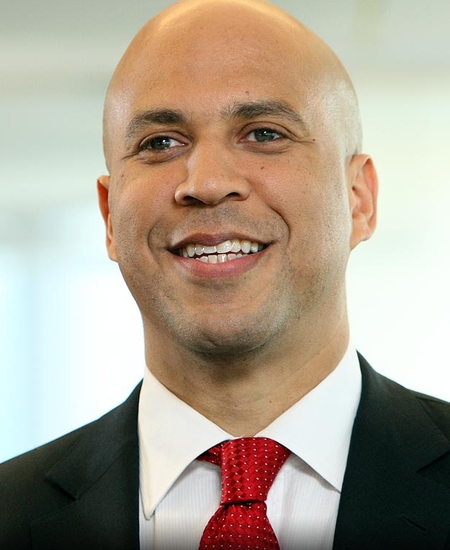
119th Congress Introduced by Cory Booker and 5 co-sponsors

Establish NAIRR to centralize and fund U.S. AI research resources (compute, data, software, models) and govern access for researchers, educators, and students.

Introduced in Senate
3
WeVote Research Nonpartisan
Bill Summary · S 4441

Summary of S.4441 (119th Congress) – CREATE AI Act

Purpose and goal

  • Establish the National Artificial Intelligence Research Resource (NAIRR) to accelerate AI research and the development of AI skills for the U.S. workforce.
  • Build a centralized resource network that connects U.S. researchers and educators to computational resources, data, software, models, testbeds, and educational materials.
  • Create an ongoing governance and funding structure to manage and expand access to AI research resources.

Key provisions and changes

  • New title added to existing law: Amends the National Artificial Intelligence Initiative Act of 2020 by adding Title LVI – National Artificial Intelligence Research Resource (NAIRR).

  • Sec. 5601 – Definitions

    • Defines NAIRR and related terms.
    • Clarifies roles such as Program Management Office (PMO) and executive agency status.
  • Sec. 5602 – Establishment; Governance

    • Establishment timeline: The NSF Director must establish the NAIRR within one year of enactment. Primary purposes:
    • Advance AI research and AI-enabled research.
    • Develop AI skills for the U.S. workforce. Governance structure:
    • A Program Management Office (PMO) within NSF’s Office of Advanced Cyberinfrastructure (or successor).
    • A PMO head (directory-level) to oversee NAIRR functions. PMO duties:
    • Develop the NAIRR budget.
    • Delegate operational tasks to one or more vetted nongovernmental organizations via competitive, transparent processes.
    • Coordinate resource contributions from federal, state, and non-governmental entities.
    • Establish policies and procedures to implement Sec. 5604 requirements. Reporting:
    • Annual public progress report on NAIRR.
  • Sec. 5603 – Resources of the NAIRR

    • PMO head to coordinate and provide NAIRR resources (computational resources, data, software, models, testbeds, educational resources).
    • Create processes for acquiring/integrating new resources and accepting in-kind contributions.
    • Publicly report a summary of available NAIRR resources.
  • Sec. 5604 – NAIRR Processes and Procedures

    • User eligibility:
    • Eligible users: U.S.-based researchers, educators, or students affiliated with eligible entities; or employees of eligible entities with a demonstrable mission-need.
    • Eligible entities include: U.S. higher education institutions, nonprofit institutions, executive/legislative/judicial branches, federally funded R&D centers, small businesses (with certain funding pathways), or a consortium of these.
    • Eligibility also includes a determination by NSF and the Office of Science and Technology Policy.
    • Strong enforcement to prevent eligibility eligibility by foreign nationals from listed adversarial countries.
    • Access process: A formal application process for eligible users to request NAIRR access. Research security:
    • Compliance with National Security Presidential Memorandum-33 (NSPM-33) and related guidance on research security and integrity.
    • Designation of a PMO “research security point of contact” to oversee NSPM-33 compliance; if tasks are delegated to another entity, that entity must designate a security lead as well. Open source policy:
    • Policy encouraging development of open-source software for administering the NAIRR and for resources created with NAIRR resources. Fee schedule (costs):
    • The PMO may establish a fee schedule for NAIRR access.
    • Fees may vary by user type and affiliated entity. Free tier must be available based on funds, anticipated costs, and demand. Possible cost-based charges for certain eligible users. Primary purpose must remain to support research. Fund handling:
    • Funds collected under the fee schedule may be retained and carried over (no annual re-appropriation requirement) and used for NAIRR purposes. Public availability of retained funds’ use and purposes.
  • Sec. on Advanced Cyberinfrastructure Advisory Committee

    • NSF Director must establish an advisory committee to assess NAIRR activities and management.
    • Membership and governance align with related provisions from the Research and Development, Innovation, and Competition Act (non-FACA) requirements for similar science advisory bodies.
    • This committee is not subject to the Federal Advisory Committee Act (FACA).
  • Conforming amendments and table insertion

    • Adds a new Title LIV (typo in text shows as LVI) section entries into the Thornberry NDAA 2021 table of contents to include Secs. 5601–5604.

Who would be affected

  • Researchers, educators, and students in the United States seeking access to AI resources, data, software, and compute through NAIRR.
  • U.S. research and educational institutions, including universities, nonprofits, federally funded research centers, and eligible small businesses.
  • Federal, state, and nongovernmental entities contributing resources or collaborating through the PMO.
  • Potentially foreign nationals and international collaborators would be screened to ensure alignment with national security requirements.
  • Open-source software developers and researchers encouraged to contribute code and tools to be used within NAIRR.

Procedural and timeline aspects

  • Enactment timeline: The NAIRR must be established within one year after enactment.
  • Annual reporting: Public progress reports by the NSF PMO on NAIRR activities.
  • Budget and operations: PMO to manage budget, resource intake, and coordination, with possible delegation to NGOs via competitive processes.

Potential impact and significance

  • Aims to democratize access to AI research resources, lowering barriers for U.S. researchers and educators to work with advanced AI tools, data, and models.
  • Seeks to accelerate AI innovation and upskill the U.S. workforce through centralized access and standardized resources.
  • Balances openness (open-source encouragement) with security and national policy requirements (NSPM-33 compliance, export/import controls on eligibility).
  • Introduces a funded, government-supported mechanism for resource aggregation and governance, with fee-based access possible but with a guaranteed free tier.

Compiled from official sources — confirm details with the bill’s official record.

Sign in to ask a question.