

WeVote

Bill

Bill

HR 8433

Countering Russia’s War on Faith Act

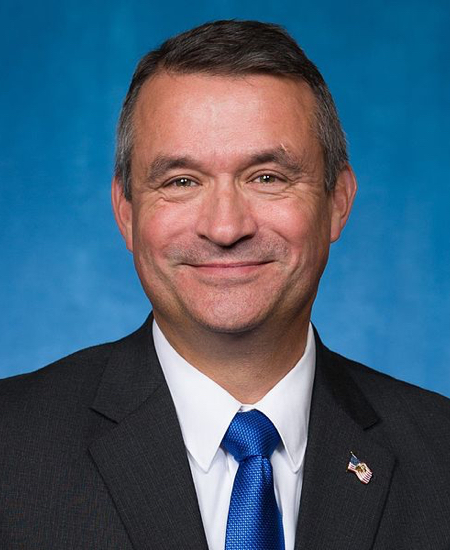
119th Congress Introduced by Don Bacon and 10 co-sponsors

The bill requires a joint report detailing Russia’s religious freedom abuses in occupied Ukraine and authorizes sanctions on individuals or entities responsible.

Introduced in House
0
WeVote Research Nonpartisan
Bill Summary · HR 8433

Summary: Countering Russia’s War on Faith Act (H.R. 8433, 118th Congress - 119th Session)

Note: Based on the text provided, this summary synthesizes the bill’s stated purpose, key provisions, potential impacts, and procedural elements.

Purpose and intent

  • The bill aims to document and counter Russia’s religious freedom violations in Ukraine, including in areas occupied or controlled by Russia.
  • It would require a joint report from the Secretary of State and the Secretary of Defense (with DNI involvement) detailing Russia’s persecution or suppression of religious groups in Ukraine and temporarily occupied territories.
  • It would establish a mechanism to sanction individuals and entities deemed responsible for such religious freedom abuses.

Key provisions and changes

Section 2 – Findings

  • Documents what the bill describes as Russian policies and actions in occupied Ukrainian territories that restrict, suppress, or eliminate freedom of religion and belief.
  • Cites reports of detention, torture, disappearances, and seizures of religious properties, as well as destruction of houses of worship.
  • Notes alleged Kremlin-driven framing of the invasion as a religious or theological matter and claims a broader pattern of religious persecution.

Section 3 – Report on Russia’s persecution of religious groups in occupied Ukraine

  • Requires, within 120 days of enactment and annually for 3 years, a joint report from:
    • Secretary of State
    • Secretary of Defense
    • Director of National Intelligence
    • To Congress, detailing:
    • Activities by the Russian government and state-affiliated or occupation-era authorities that persecute or discriminate against Christians, Jews, Muslims (including Crimean Tatars), and other non-Russian Orthodox groups, in occupied Ukrainian territories.
    • Affected religious facilities (churches, synagogues, mosques, etc.) damaged, destroyed, seized, or repurposed.
    • Quantitative assessments of persecution, imprisonment, displacement, and restrictions on worship and education for non-Russian Orthodox groups.
    • Efforts by Russian authorities or collaborators to compel affiliation with Moscow-based religious institutions or suppress non-aligned denominations.
    • Overall impact on religious freedom in occupied territories, including Crimea and Sevastopol.
    • A list of individuals and entities responsible for persecution or engaged in related conduct.

Certification and sanctions (new or ongoing authorities)

  • Subsection (b) requires the President, within 30 days after each report, to certify whether there are reasonable grounds to determine that listed individuals/entities engaged in the described conduct.
  • Subsection (c) authorizes sanctions against those positively certified, using existing authorities such as:
    • Global Magnitsky Act sanctions (31 CFR Part 583)
    • Ukraine/Russia-related sanctions (31 CFR Part 589)
    • Russian Harmful Foreign Activities sanctions (31 CFR Part 587)
    • Other applicable regulations (31 CFR Chapter V), including asset blocking.
  • Subsection (d) provides that sanctions can be waived or terminated if subsequent reporting shows the person no longer engages in the prohibited conduct.
  • Subsection (e) makes the report unclassified, though a classified annex may be included.

Who is affected

  • Foreign individuals and entities affiliated with or acting on behalf of the Government of the Russian Federation or de facto authorities in occupied Ukrainian territory.
  • The bill targets those responsible for religious persecution or suppression of Christian, Jewish, Muslim, Crimean Tatar, and other minority religious groups in Ukraine and occupied areas.

Procedural and timeline aspects

  • Introduction date: April 22, 2026.
  • Referral: Committee on Foreign Affairs, and in addition to the Committees on Financial Services and Ways and Means (for jurisdictional considerations).
  • Reporting timeline:
    • Initial report due: within 120 days after enactment.
    • Subsequent annual reports for 3 additional years.
  • Certification timeline: For each report, the President must certify within 30 days whether individuals/entities listed meet criteria for sanctions.
  • Form of report: Unclassified, with possible classified annex.

Potential impact and considerations

  • Establishes a formal mechanism to document religious freedom abuses and connect them to targeted sanctions.
  • Leverages existing sanction authorities to punish individuals/entities implicated in religious persecution.
  • Could influence Russia’s behavior by combining public reporting with consequences under Global Magnitsky and related regimes.
  • Risk consideration: The effectiveness of sanctions depends on enforcement, the designation process, and how measures interact with broader U.S.-Russia policy and allied actions.
  • The bill emphasizes religious freedom as a distinct, codified concern in the context of Russia’s actions in Ukraine.

Compiled from official sources — confirm details with the bill’s official record.

Sign in to ask a question.