

WeVote

Bill

Bill

SB 1306

Controlled substances: gamma-butyrolactone.

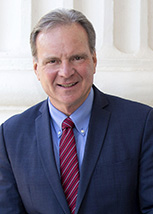
2025-2026 Regular Session Introduced by Dave Cortese

SB 1306 exempts GBL-containing mixtures at 70% or less from California precursor rules, aligning with federal exemptions and reducing burdens for industries like semiconductors.

From committee: Do pass and re-refer to Com. on APPR. (Ayes 9. Noes 0.) (June 9). Re-referred to Com. on APPR.
0
WeVote Research Nonpartisan
Bill Summary · SB 1306

Summary of SB 1306 (2025-2026) — California

Overview

  • Bill: SB 1306
  • Introduced by: Senator Cortese (co-sponsor: Dave Cortese)
  • Session: 2025–2026
  • Jurisdiction: California
  • Topic: Controlled substances, specifically gamma-butyrolactone (GBL)

SB 1306 adds a new Health and Safety Code provision (Section 11112) to adjust regulations governing chemical mixtures containing gamma-butyrolactone. The bill aims to align California treatment of GBL-containing mixtures with federal exemptions and practices in other states, reducing unnecessary compliance for semiconductor manufacturing and other industries that use GBL in legitimate processes.

1) Main purpose and intent

  • To exempt certain chemical mixtures containing gamma-butyrolactone from existing California regulatory requirements that apply to GBL as a controlled precursor.
  • To align California law with federal exemptions adopted by the U.S. Drug Enforcement Administration (DEA) for mixtures containing 70% or less GBL by weight/volume.
  • To reduce regulatory and enforcement burdens on semiconductor manufacturing and other industrial uses that rely on GBL, without compromising public safety.

2) Key provisions and changes

  • New provision added: Health and Safety Code Section 11112.
    • (a) Exemption from several existing sections (11100, 11100.1, 11103, 11106) for:
    • Chemical mixtures containing gamma-butyrolactone (GBL) that are obtained from any source (inside or outside California) and that are sold, transferred, exported, or furnished to any person or entity in California or elsewhere.
    • (b) Exemption from Section 11107 (which governs certain regulatory requirements) if the requirements would be imposed solely due to the presence of GBL in the mixtures.
    • (c) Definitions:
    • (1) “Chemical mixtures containing gamma-butyrolactone” means two or more chemicals including GBL (CAS 96-48-0) at 70% or less by weight/volume, with at least one additional substance that is not merely an inert carrier or impurity.
    • (2) “Inert carrier” means a chemical that does not interfere with the function of GBL in the mixture but is present to aid in delivery for use in a chemical process.
  • Scope:
    • The exemptions apply regardless of whether the source is within or outside California, and regardless of whether the mixtures are sold to entities in California or another state.
  • Related findings:
    • The bill emphasizes misalignment between California law and federal exemptions (70% threshold) and argues that current California requirements impose unnecessary burdens on semiconductor manufacturers and other industries using GBL.

3) Who or what would be affected

  • Affected entities:
    • Manufacturers, wholesalers, retailers, and other persons handling chemical mixtures that contain GBL at 70% or less, when those mixtures are part of a broader chemical formulation.
    • Semiconductor fabrication facilities and other industrial processes relying on GBL as a solvent or reagent.
  • Affected activities:
    • Regulation, permitting, reporting, and compliance actions currently triggered by GBL presence in mixtures under sections 11100, 11100.1, 11103, 11106, and 11107.
  • Practically, the bill would reduce or eliminate certain regulatory requirements for compliant GBL-containing mixtures, provided the GBL concentration meets the 70% or less criterion and the mixtures include at least one additional non-inert substance.

4) Procedural and timeline aspects

  • Status history:
    • Introduced: February 20, 2026
    • Referred to Public Safety (PUB. S.) Committee; later moved to Assembly Appropriations (APPR) and then to second reading.
    • Committee actions show progression: Do pass and re-refer (April 14, 2026); ordered to second reading (April 27, 2026).
  • Fiscal impact:
    • The bill does not authorize an appropriation (as indicated by “Appropriation: NO” in the digest).
    • Fiscal Committee indicated; specific fiscal effects are not detailed in the provided text.
  • Effective date:
    • Not stated in the excerpt; typically, California bills specify an operative date if enacted, otherwise it may take effect on January 1 of the following year or upon signing, depending on the bill’s final language.

Notes for readers

  • The bill targets regulatory alignment rather than creating new safety protections. It relies on the federal DEA 70% exemption standard to distinguish mixtures that should be exempt from state precursor controls.
  • If enacted, California would treat many industrial GBL-containing mixtures more like federal practice, potentially reducing compliance costs for manufacturers while preserving safety for mixtures that exceed the 70% GBL threshold or lack an appropriate non-inert co-substance.

For further detail, consult the full text of Section 11112 once enacted and the bill’s fiscal and policy analyses.

Compiled from official sources — confirm details with the bill’s official record.

Sign in to ask a question.