

WeVote

Bill

Bill

HB 4796

CONT SUB-RESCHEDULING SCH I

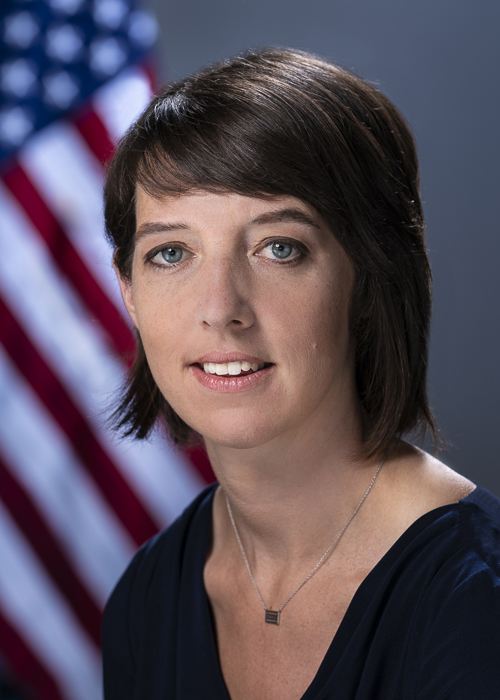
104th Regular Session Introduced by Lindsey LaPointe

Illinois DHS must reschedule a federally rescheduled Schedule I substance for mental health treatment within 30 days of the federal final order.

0
WeVote Research Nonpartisan
Bill Summary · HB 4796

Summary of HB4796 (104th General Assembly, Illinois)

Purpose and intent

  • HB4796 amends the Illinois Controlled Substances Act to provide a specific requirement related to substances that are scheduled as Schedule I by the United States Drug Enforcement Administration (DEA) and later rescheduled for treating mental health disorders (e.g., anxiety, depression, PTSD).
  • The bill requires the Illinois Department of Human Services (DHS) to reschedule such a substance within 30 days of the Federal Register publication of the final federal order that reschedules the substance for medical/mental health treatment purposes.

Key provisions and changes

  • Trigger for rapid state action (new subsection 0-1 or 0-1.5 style provision): If a federally Schedule I substance is rescheduled to be used for treating mental health disorders, DHS must reschedule the substance in Illinois within 30 days after the federal final order is published.

  • Existing framework for scheduling decisions (Section 201):

    • The Illinois Department may add, delete, or reschedule controlled substances in the specified schedules (204, 206, 208, 210, 212) through administrative rule.
    • When evaluating a substance for scheduling changes, the Department must consider:
    • Potential for misuse
    • Pharmacological effect (scientific evidence)
    • State of scientific knowledge
    • History and current patterns of misuse
    • Scope, duration, and significance of misuse
    • Public health risks
    • Potential to cause psychological or physiological dependence or a substance use disorder
    • Whether the substance is an immediate precursor to a controlled substance
    • Immediate harmful effects (potentially fatal dosage)
    • Long-range health effects
    • If a federal scheduling action occurs and notice is given to the Department, Illinois will automatically seek to apply similar control after 30 days unless the Department objects or a party files substantial written objections.
    • If objections are filed, the Department must publish reasons and hold a hearing. A final Department ruling becomes binding unless altered by statute.
    • An issued objection can stay similar state control until the Department publishes its ruling.
  • Procedural safeguards (objections and hearings): The bill preserves existing mechanisms for objections, hearings, and published rulings if the Department objects to federal scheduling actions.

  • Exclusions preserved:

    • The act does not extend control to distilled spirits, wine, malt beverages, or tobacco as defined under other Illinois statutes.
    • DEA-registered manufacturers/distributors must maintain security and controls to prevent theft/diversion, but not to the extent of requiring the physical security measures specified for certain other substances (e.g., Schedule V with pseudoephedrine or Schedule II with dextromethorphan).

Who or what would be affected

  • State agencies: Illinois Department of Human Services (DHS) would have the statutory duty to reschedule substances within 30 days of a federal rescheduling for medical/mental health use.
  • Controlled substances and law/regulation: Substances that are federally rescheduled for mental health treatment would be subject to Illinois’ scheduling actions in a timely manner, aligning state law with federal action.
  • Regulated entities: Entities registered with the DEA to manufacture or distribute controlled substances would continue to be subject to federal and state security requirements, with existing exceptions for certain security measures.

Timeline and procedural aspects

  • When a federal final order reschedules a substance for mental health treatment, Illinois DHS must reschedule within 30 days of publication in the Federal Register.
  • If the Department objects within the 30-day window, the standard procedural process for objections, hearings, and final rulings applies, including publication of objections and opportunities to be heard. A final Department ruling would be issued as a rule and would be binding unless changed by statute.

Overall assessment

  • The bill is designed to synchronize Illinois’ controlled-substances scheduling with federal actions in the specific context of rescheduling Schedule I substances for the treatment of mental health disorders.
  • It creates a mandatory 30-day window for state action, subject to the existing objection/hearing framework if objections are raised.
  • It preserves important regulatory safeguards and clarifies that the rapid rescheduling requirement does not override alcohol or tobacco regulatory contexts.

Compiled from official sources — confirm details with the bill’s official record.

Sign in to ask a question.