

WeVote

Bill

Bill

HR 10184

Consumer Financial Protection Accountability and Reform Act of 2026

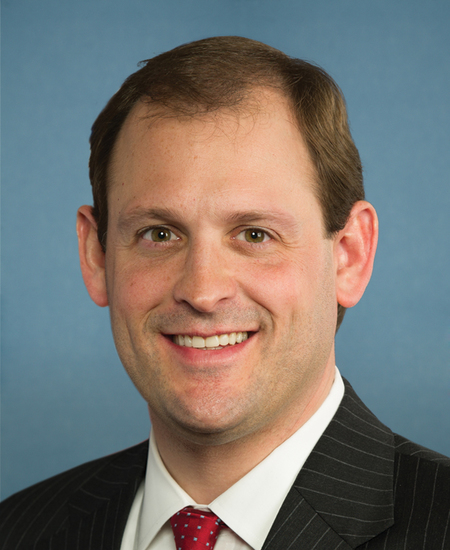
119th Congress Introduced by Andy Barr and 27 co-sponsors

HR 10184 restructures CFPB for greater transparency and accountability, limits enforcement by rulemaking, and creates a safer, clearer path for small-dollar loans.

Introduced in House
0
WeVote Research Nonpartisan
Bill Summary · HR 10184

Overview

  • Bill: HR 10184 | 119th Congress
  • Title: Consumer Financial Protection Accountability and Reform Act of 2026
  • Purpose: Reforms the Bureau of Consumer Financial Protection (CFPB) including governance, legal standards, supervision, and enforcement, and adds several programmatic studies and rules to improve transparency, accountability, and coordination with state regulators.

Main purpose and intent

  • Reorganize CFPB governance and oversight.
  • restore certain legal standards and procedural fairness in CFPB actions.
  • foster innovation while ensuring predictable supervision.
  • curb regulation-by-enforcement and improve interagency coordination.
  • introduce specific protections for small entities (small businesses) and consumers, with added transparency for rulemaking and data.

Key provisions and changes

Title I – Reforming Bureau Governance

  • Bring CFPB into the regular appropriations process (budget, financial management, and audits) and restructure CFPB’s internal budgeting requirements.
  • Create a Consumer Financial Civil Penalty Fund and modify excess penalty distribution: direct victims receive payments; any remaining funds from the Civil Penalty Fund for that penalty go to the Treasury general fund.
  • Increase transparency in cost-benefit analyses for proposed CFPB rules, including:
    • full Federal Register publication of notices with objective, measurable performance indicators.
    • explicit statutory authority identification and consideration of duplicative or conflicting regulations.
    • quantitative and qualitative costs/benefits, alternatives, distributional effects, and uncertainty analyses.
    • public data disclosure of data and assumptions used.
  • Improve accountability to small businesses via enhanced small-entity considerations in rulemakings and versions of regulatory flexibility analyses.
  • Modernize regulatory reviews through a new Section 1022A:
    • OMB conducts a formal review of major rules within 8 years of compliance date; includes interagency consultations and public input.
    • If net benefits are not demonstrated, CFPB must propose amendments/repeals or seek an extension.
    • Separate review framework for non-major rules (within 10 years) and guidance on severability and calendars.
  • Inspector General reform:
    • Establish an independent CFPB Inspector General (IG) with transition provisions and public reporting requirements.
    • Transfer certain ongoing matters and ensure continuity of investigations/audits during transition.

Title II – Restoring Legal Clarity and Procedural Fairness

  • Define and clarify abusive acts and practices:
    • Require formal rulemaking to define “abusive” and impose a cost-benefit analysis.
    • Introduce a public comment period on any confusion about abusive/UD practices, and prohibit enforcement actions before final rulemaking on abusive acts.
    • Prohibit discriminatory interpretations of abusive authority.
  • Tighten the abusive standard:
    • Establish detailed criteria for what constitutes abusive conduct, including substantial injury tests and a presumption framework around disclosures.
    • Clarify that mere technical violations without concrete harm may not meet the standard.
  • Notice and opportunity to cure:
    • CFPB must issue a cure notice within 90 days of self-identification of potential unfair, deceptive, or abusive practices, granting 180 days to cure before enforcement actions.
  • Enforcement actions:
    • Enforcement actions under the new section must be filed in specific federal districts (HQ location or DC).
    • Prohibits overlapping or alternative claims (unfair/deceptive vs abusive) in the same action.
  • Examination period limitations:
    • Introduces an examination window (look-back) for penalties tied to the most recent interagency consumer compliance rating, with clawback protections.

Title III – Promoting Innovation in Consumer Financial Markets

  • Safe harbor for small-dollar credit products under Truth in Lending Act:
    • Establish a safe harbor for compliant small-dollar loans/lines of credit, shielding from civil penalties or private rights of action if requirements are met.
    • Product structure requirements:
    • Installment loans: >45-day term, amortized payments, no rollovers unless initiated by consumer, no overlapping small-dollar product if one exists.
    • Line of credit: Draws >45 days unless single payment; allow up to 3,500 (or adjusted) or 20% of monthly deposits, etc., with full amortization.
    • Underwriting requirements, disclosures, penalties prohibitions (no prepayment penalties), and prompt disbursement rules.
    • Inflation adjustments to eligible dollar amounts starting 2028 and each year thereafter.
    • Definitions of “covered entity,” “small-dollar product,” and related financial institutions.
  • Guidance clarity for agencies: each financial agency must display a guidance clarity statement on guidance documents, clarifying non-binding nature and lack of rights/obligations.
  • GAO study on Buy Now Pay Later (BNPL) services:
    • Requires a comprehensive study on BNPL players, disclosures, benefits/risks, data practices, partnerships, fraud, and comparisons with traditional credit.
    • A report due within one year after enactment.

Title IV – Promoting Effective, Predictable Supervision

  • Asset-based supervisory thresholds and updated supervisory framework for CFPB and other banking-supervisory entities.
  • Supervisory elections and enhanced coordination with other regulatory bodies.
  • Enhanced nonbank supervision reforms.

Title V – Preventing Regulation by Enforcement

  • Civil monetary penalties and enforcement limitations to emphasize rulemaking and formal processes.
  • Limitations on market monitoring functions and strengthening state enforcement cooperation.
  • Indexing of asset-based thresholds for regulations.
  • Complaint collection enhancements.
  • Privacy protections improvements for small business loan data.

Who and what would be affected

  • The CFPB itself (governance, funding, inspection, and processes).
  • Regulated entities including banks, savings associations, credit unions, and third-party service providers (especially those offering small-dollar credit products and earned wage access services).
  • State insurance regulators (narrow construction on CFPB authority with respect to regulated entities).
  • Small businesses and consumers (through enhanced cost-benefit analyses, flexible considerations for small entities, and small-dollar loan safe harbor).
  • Earned wage access providers and BNPL providers (subject to new disclosures, protections, and potential oversight or study).
  • Inspector General offices transitioning to a CFPB IG, with possible alignment to Fed Reserve IG processes during transition.

Procedural and timeline aspects

  • Implementing date: Provisions become effective upon enactment; first Inspector General appointment due within 60 days after enactment.
  • Major rule reviews: 8-year post-compliance review trigger for major rules; public input and interagency consultations required; potential amendments or repeals if net benefits fail.
  • Cost-benefit and transparency changes: New requirements apply to notices of proposed rulemaking; data sharing and public availability of data and assumptions are to be prioritized.
  • Budgetary reform: CFPB moves to regular appropriations process; modifications to the Civil Penalty Fund and related transfers.
  • Inflation adjustments: Safe harbor dollar amounts for small-dollar products adjusted annually from 2028 onward.
  • Guidance clarity: Each financial agency must publish a guidance clarity statement on guidance documents issued after enactment.

Note: This summary captures the bill’s substantive provisions and intended effects as described in the text. It does not reflect legislative negotiations, amendments, or final congressional action.

Compiled from official sources — confirm details with the bill’s official record.

Sign in to ask a question.