

WeVote

Bill

Bill

HRES 1400

Condemning the People's Republic of China's Law on the Promotion of Ethnic Unity and Progress and the Chinese Communist Party's campaign of forced assimilation against ethnic and religious minorities.

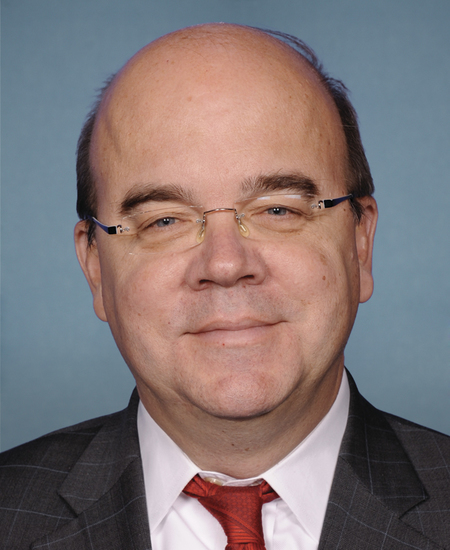
119th Congress Introduced by Jim McGovern and 1 co-sponsor

Condemn the PRC-CCP Ethnic Unity Law and forced assimilation, and outline U.S. policy actions including sanctions, diplomacy, and support for minority cultures and diaspora communi

Submitted in House
0
WeVote Research Nonpartisan
Bill Summary · HRES 1400

Overview

  • Bill: H.Res. 1400
  • Session: 119th Congress
  • Date Introduced: June 30, 2026
  • Primary sponsors: Mr. Smith (NJ) and Mr. McGovern
  • Purpose: Condemn the PRC’s Ethnic Unity Law and the Chinese Communist Party’s broader campaign of forced assimilation against ethnic and religious minorities, and outline U.S. policy responses and reporting requirements.

Main purpose and intent

  • The resolution formally condemns the People’s Republic of China (PRC) and the Chinese Communist Party (CCP) for:
    • Enacting the Law on the Promotion of Ethnic Unity and Progress (Ethnic Unity Law), effective July 1, 2026.
    • Undertaking a broader campaign of forced assimilation targeting ethnic and religious minority groups (e.g., Tibetans, Uyghurs, Mongolians, Hui Muslims, Manchus, and others).
  • It asserts that cultural erasure, coercive assimilation, and human rights abuses are incompatible with unity or legitimate governance.
  • It emphasizes support for minority and diaspora communities and urges actions to counter perceived coercion and repression.

Key provisions and changes urged

The resolution lays out 12 concrete actions and positions:

  1. Condemnation of the Ethnic Unity Law and CCP’s forced-assimilation campaign.
  2. Condemnation of policies that separate children from families and communities (e.g., boarding schools, residential schools, orphanages) and other forced-assimilation mechanisms.
  3. Recognition that the recognition/succession of Tibetan Buddhist leaders (e.g., the Dalai Lama) is a religious matter decided by Tibetan Buddhists, not the PRC/CCP.
  4. Call for substantive, unconditioned dialogue between the PRC and Tibetan representatives to address grievances.
  5. Support for the release of political prisoners detained for peaceful advocacy, religious practice, scholarship, or cultural preservation (listing specific individuals as examples).
  6. Authority for sanctions and visa restrictions on officials and entities responsible for the Ethnic Unity Law and related policies, under tools such as the Global Magnitsky Act, E.O. 13818, and related statutes.
  7. Coordination with democratic allies (EU, Canada, Japan, Australia, UK) to monitor and respond to the law’s implementation and transnational repression.
  8. Expanded programs to support endangered languages and cultural traditions, diaspora-led education, documentation of repression, and local-language broadcasting and public diplomacy.
  9. Strengthened protection for U.S.-based diaspora communities against harassment, surveillance, and coercion of relatives abroad.
  10. Use of U.S. influence at the United Nations to highlight violations (genocide in Xinjiang, human rights abuses) and secure international accountability.
  11. Assessment by the Secretary of State of whether PRC/Tibet policies constitute atrocity crimes warranting public determination.
  12. Reporting requirements to include detailed analyses of the Ethnic Unity Law and related policies in the State Department’s annual human rights, religious freedom, and trafficking reports.

Who would be affected

  • Ethnic and religious minority groups in China (e.g., Tibetans, Uyghurs, Mongolians, Hui Muslims, Manchus, and others) by virtue of the policy focus and potential U.S. actions.
  • Members of Chinese diaspora communities, including those in the United States, who may face harassment or surveillance linked to the Ethnic Unity Law.
  • PRC/CCP officials and entities associated with implementing or enforcing the Ethnic Unity Law and related assimilation policies (potentially targeted by sanctions and visa restrictions).
  • U.S. and international partners (through coordinated monitoring and diplomacy).

Procedural and timeline aspects

  • Legislative path: A concurrent resolution in the House, referred to the Committee on Foreign Affairs and the Judiciary for consideration of provisions within their jurisdiction.
  • No specific amendments or dates beyond urging actions; the resolution does not itself impose new law but signals policy preferences and requests for sanctions, diplomacy, and reporting.
  • If enacted, implementation would involve: sanctions designations, diplomacy, funding for language/cultural programs, diaspora protection measures, and inclusion of related reporting in State Department outputs.

Summary of potential impact

  • Diplomatic: Elevates U.S. stance against the Ethnic Unity Law and CCP assimilation policies; enables coordinated actions with allies.
  • Sanctions and visa policy: Opens potential targeted sanctions and travel-bans on implicated PRC/CCP officials and entities.
  • Human rights and advocacy: Increases U.S. emphasis on monitoring, documentation, and public reporting of abuses; supports advocacy for political prisoners and cultural preservation.
  • Diaspora security: Strengthens protections for U.S.-based Chinese diaspora communities against coercion and harassment.
  • Cultural preservation: Allocates support for endangered languages, religious practices, and documentary efforts among affected communities.

Note: As a resolution, this bill expresses Congress’s position and guidance to executive branch actions; it does not itself create new mandatory legal obligations unless implemented through subsequent legislation or executive actions.

Compiled from official sources — confirm details with the bill’s official record.

Sign in to ask a question.