

WeVote

Bill

Bill

HR 6623

Community Development Block Grant Equity Act of 2025

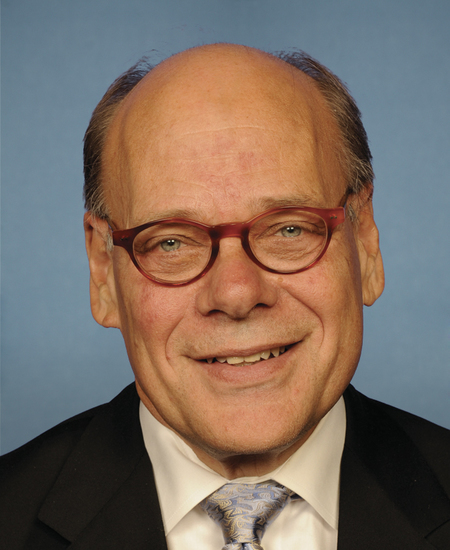
119th Congress Introduced by Steve Cohen

Equity-based CDBG: poverty, female-headed households, old housing, and overcrowding guide allocations to high-need metros, urban counties, and nonentitlement areas; CPI-U updates.

Introduced in House
0
WeVote Research Nonpartisan
Bill Summary · HR 6623

Summary of HR 6623 — Community Development Block Grant Equity Act of 2025

Purpose and intent

HR 6623, introduced in the House on December 11, 2025 by Representative Steve Cohen, seeks to revise how Community Development Block Grant (CDBG) funds are allocated under the Housing and Community Development Act of 1974. The bill aims to create a new equity-focused funding formula that prioritizes communities with higher poverty and housing-need indicators, with explicit adjustments to include metropolitan cities, urban counties, and nonentitlement (statewide) areas.

Key provisions and changes

1) Revision of the CDBG allocation formula (Section 106)

  • The bill replaces the existing allocation framework with a formula-based approach that ties funding to metropolitan and urban-area characteristics.
  • For metropolitan cities, the Secretary would determine the allocation amount based on the average of ratios across four indicators:
    • A. Poverty rate per person in families and elderly households
    • B. Share of female-headed households with children under 18
    • C. Extent of housing built before 1950 occupied by a household in poverty
    • D. Extent of housing overcrowding
  • For urban counties, the same four indicators are used, applied to the county level.
  • The calculation uses weighted averaging to reflect relative need, with explicit counts applied to each ratio when averaging:
    • Poverty rate ratio counted five times
    • Housing built before 1950 ratio counted three times
    • Other indicators counted once each
  • A parallel structure applies to nonentitlement (state) areas, with allocations to states determined by the average of the same four indicators across nonentitlement areas, again with specified weighting:
    • Poverty rate ratio counted five times
    • Housing built before 1950 ratio counted three times
    • Other indicators counted once each

2) Redefinition of key terms (Section 102)

  • The bill revises definitions related to poverty and reorganizes/streamlines certain terms.
  • It defines poverty as having an income that does not exceed the official poverty level.
  • It eliminates several existing definitions, consolidating terminology within the act (renumbering/parsing adjustments).

3) Authorization of appropriations (Section 103)

  • For CDBG purposes under Section 106, the act authorizes an initial appropriation of $3,425,000,000 for fiscal year 2026.
  • The funding amount would be adjusted annually for fiscal years 2026–2029 by CPI-U, reflecting changes in the Consumer Price Index.
  • For each subsequent fiscal year (2027–2029), the authorized amount equals the prior year’s authorization plus the CPI-U percentage increase, as applicable to that year.

Who would be affected

  • Metropolitan cities and urban counties would receive CDBG allocations based on the new need-focused formula.
  • Nonentitlement (state) areas would see allocations recalculated using the nonentitlement provision of the new formula.
  • States and local governments that administer CDBG funds would implement the revised allocation methodology and adjust planning accordingly.

Procedural and timeline notes

  • Status: Introduced in the House and referred to the Committee on Financial Services (as of December 11, 2025).
  • The act sets the short title: “Community Development Block Grant Equity Act of 2025.”
  • The budgeting provision creates an explicit CPI-based adjustment schedule for 2026–2029.

Potential impact (high-level)

  • The bill emphasizes equity by prioritizing areas with higher poverty, higher concentration of female-headed households, older pre-1950 housing in poverty, and housing overcrowding.
  • It would alter the distribution of CDBG dollars across metropolitan areas, urban counties, and nonentitlement areas, potentially shifting funding toward places with greater demonstrated housing- and poverty-related need.
  • The CPI-based annual adjustments aim to preserve purchasing power over time.

Compiled from official sources — confirm details with the bill’s official record.

Sign in to ask a question.