

WeVote

Bill

Bill

SB 1367

CMS-BUILDING MAINTENANCE

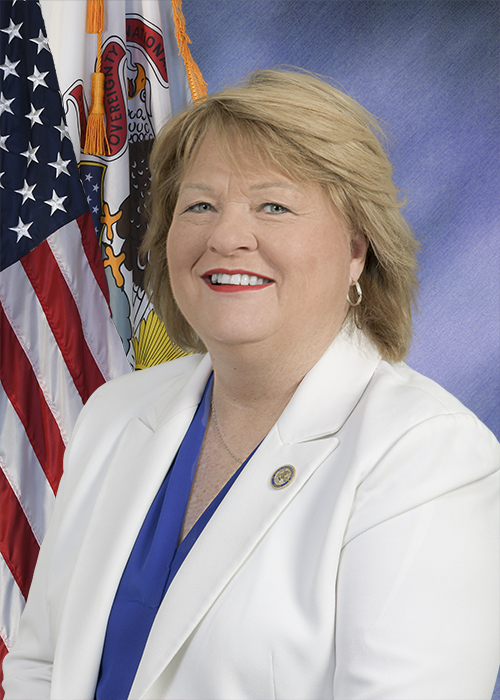
104th Regular Session Introduced by Terri Bryant and 2 co-sponsors

CMS must annually inspect all state-owned buildings, report condition and itemized repair costs to the General Assembly, and establish a maintenance schedule for vacant buildings.

Added as Co-Sponsor Sen. Terri Bryant
0
WeVote Research Nonpartisan
Bill Summary · SB 1367

Summary — SB 1367 (CMS — Building Maintenance)

Status: Enacted (Act 116, May 29, 2025)
Citation added: 20 ILCS 405/405-316 (new)
Introduced: Jan 28, 2025 (Sen. Sally J. Turner)

Main purpose

SB 1367 directs the Illinois Department of Central Management Services (CMS) to establish a recurring program of inspection, reporting, budgeting, and rulemaking focused on the condition and upkeep of State‑owned buildings — with special direction to create and oversee a repair and maintenance schedule for vacant State buildings. The goal is to prevent deterioration and provide the General Assembly with regular, itemized information to inform budgeting and asset management decisions.

Key provisions

  • Adds a new statutory section (405‑316) to the CMS law requiring CMS to:

    1. Review the condition of all State‑owned buildings annually.
    2. Report annually to the General Assembly on the condition of each State‑owned building.
    3. Identify and report the necessary costs to repair and maintain each State‑owned building (i.e., itemized repair/maintenance cost estimates) annually.
    4. Adopt rules that create and oversee a repair and maintenance schedule specifically for all State‑owned vacant buildings.
  • Requires CMS to undertake both assessment (inspection and condition reporting) and planning (cost identification and scheduling) functions on an annual basis.

Who is affected

  • Primary: Department of Central Management Services — new statutory duties, including inspections, reporting, cost estimation, and rulemaking.
  • Secondary: All State agencies that own or occupy State‑owned buildings (since CMS actions and schedules will affect asset allocation, maintenance timing, and potentially occupancy decisions).
  • Tertiary: General Assembly and state budget officials — will receive annual condition and cost reports to better inform capital and operating budget decisions.
  • Fiscal impact: Could require CMS to dedicate staff, contract resources, or data systems to execute annual inspections, costing, and rule development; may reveal maintenance backlogs that influence future appropriations.

Procedural / timeline notes

  • The bill was introduced in the 104th General Assembly and enacted as Act 116 (Gov. Msg. No. 1216) on May 29, 2025.
  • The statutory obligations are framed as recurring (annual reviews and reports); CMS must also promulgate rules to implement the repair/maintenance schedule for vacant buildings — timing for rulemaking will follow applicable administrative procedure requirements.

Potential effects and considerations

  • Increased transparency and better information for legislative budgeting decisions on capital and maintenance needs.
  • Early identification of deferred maintenance costs and risks of building deterioration, especially for vacant properties.
  • Short‑term administrative costs for CMS to perform inspections, develop cost estimates, and complete rulemaking; longer‑term savings possible if timely maintenance prevents major rehabilitation or demolition costs.
  • The rulemaking requirement gives CMS flexibility to define schedules and procedures but also requires compliance with administrative rules processes.

Compiled from official sources — confirm details with the bill’s official record.

Sign in to ask a question.