

WeVote

Bill

Bill

S 5351

Clean Elections Act

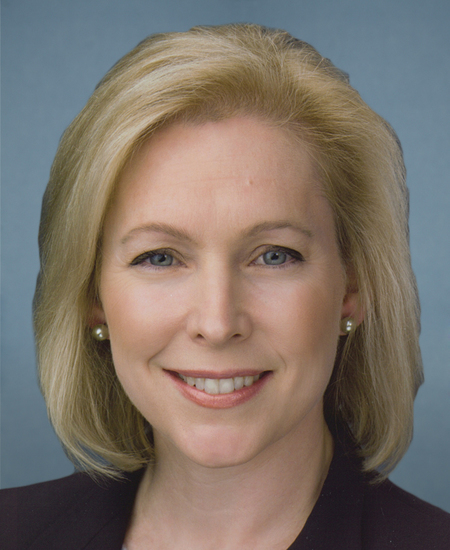
119th Congress Introduced by Kirsten Gillibrand

The bill creates a democracy dollars public financing program allowing eligible voters to fund participating federal campaigns with up to $100 per category, replacing presidential

Introduced in Senate
0
WeVote Research Nonpartisan
Bill Summary · S 5351

Bill Summary: Clean Elections Act (S. 5351, 119th Congress)

Purpose and Intent

  • Aim: Amend the Federal Election Campaign Act of 1971 to create a public financing system for federal elections funded through voter-directed vouchers called “democracy dollars.”
  • Core idea: empower individual voters to supporters of their choice by giving them democracy dollars that can be transferred to qualifying candidates, reducing reliance on private contributions.

Key Provisions

  • Establishment of Democracy Dollars Program (Title V)

    • Creates a new Title V within the Federal Election Campaign Act, outlining definitions, distribution, use, administration, and funding.
  • Definitions (Sec. 501)

    • Defines applicable election series (primary, convention/caucus, general/special/runoff, including presidential nominating processes).
    • Defines democracy dollars (Congressional, Senate, and Presidential democracy dollars).
    • Establishes democracy dollar accounts for participating candidates.
    • Introduces terms: eligible individual, participating candidate, qualified resident, election cycle (2-year cycles starting Jan 1 of odd-numbered years).
  • Distribution of Democracy Dollars (Sec. 502)

    • Eligible individuals (aged 18+, U.S. citizen/national, with residency) can request democracy dollars to use in the current federal election.
    • Distribution window: requests allowed from the first day of the election cycle up to 10 days before the election.
    • Limits: an eligible individual can generally receive democracy dollars for at most one primary and one general election per federal office (Congress, Senate, President/Vice President) per cycle.
    • Pilot for mail-based distribution; potential expansion if cost-effective.
  • Amounts (Sec. 502(b))

    • Base amounts: $100 per Congressional/Senate/Presidential dollar category.
    • Inflation adjustments: starting after 2030, amounts increase based on specified formulas tied to prior election-cycle contributions and an inflation index (with a cap ensuring no increase above 200% of prior levels over time).
    • Congressional amount starts at $100; Senate and Presidential amounts likewise start at $100.
    • For 2030s cycles and beyond, increases hinge on relative fundraising dynamics and an inflation formula.
  • Eligibility of Individuals (Sec. 503)

    • Qualifying candidates must meet criteria to be labeled “participating,” including collecting qualified contributions and democracy dollars, establishing a democracy dollar account, and enforcing contribution and personal-funds rules.
  • Requirements for Participating Candidates (Sec. 503)

    • Threshold contributions: candidates must meet a minimum aggregate value of qualified contributions and democracy dollar transfers.
    • Personal funds limit: candidates cannot spend more than $2,500 of personal funds per election in the applicable series.
    • Certification: candidates must certify compliance with contribution and personal-fund rules.
  • Use of Democracy Dollars (Sec. 504)

    • Eligible individuals may transfer democracy dollars to participating candidates in increments of $10 (rounding down to the nearest $10 if necessary).
    • Transfers are treated as actual contributions to the candidate’s campaign committee, subject to reporting and contribution limits.
    • Democracy dollar accounts must reflect transfers within 5 business days, with possible minimum transfer thresholds.
    • Funds in democracy dollar accounts may be used for campaign expenditures or returned under specified rules.
    • Prohibitions include personal use, reimbursing donors, or using funds to compensate family members.
  • Administration (Sec. 505)

    • The Federal Election Commission (FEC) would regulate administration, audit participating candidates, and periodically review and adjust dollar amounts after general elections.
    • Audits: random audits with defined sampling rules.
    • Public outreach: targeted information campaigns to inform eligible individuals and encourage voter registration.
  • Funding (Sec. 506)

    • Congress would authorize appropriations as needed to fund the democracy dollars program, with money remaining available until expended.
    • If democracy dollar transfers exceed appropriations, the Commission would pay out based on the order in which transfers were received.
  • Reporting and Privacy (Amendments to FECA)

    • Updates to reporting requirements to include democracy dollar contributions, with privacy protections (restricting public access to donor identity beyond ZIP, city, and occupation on public lists).
  • Repeal of Presidential Financing System (Sec. 506, subparts)

    • Repeals the presidential public financing system, along with related provisions in the Internal Revenue Code (subtitle H and related parts), effectively ending the Presidential Election Campaign Fund and related tax designations.
    • Remaining balances would be transferred to the general treasury.
  • Effective Date (Sec. 506(d))

    • The amendments apply to federal elections occurring after December 31, 2028.

Who Would Be Affected

  • Eligible individuals: U.S. citizens/nationals aged 18+ who reside in a state with federal elections.
  • Participating candidates: those who meet the threshold requirements and comply with contribution and personal-funds rules to receive democracy dollars.
  • Federal election campaigns: campaigns for House, Senate, and the Presidency/Vice Presidency, which would participate in the democracy dollars program.
  • Federal agencies and state/local governments: for data, residency verification, voter registration, and administration of the program (with privacy protections).

Procedural and Timeline Aspects

  • Introduced in the Senate on August 6, 2026, by Senator Kirsten Gillibrand (co-sponsor noted).
  • Requires committee action (Rules and Administration) and potential floor consideration.
  • Effective date for changes: elections after December 31, 2028.
  • Ongoing administrative framework: annual/periodic reviews of dollar amounts, audits, and public information efforts.

Potential Impacts and Considerations

  • Expands public financing of federal elections through voter-directed vouchers, aiming to broaden participation and reduce dependence on large private contributions.
  • Introduces new dynamics for campaign finance: candidate funding via democracy dollars and donor behavior through the transfer mechanism.
  • Substantial changes to presidential financing, with repeal of the current presidential public financing system.
  • Administrative and fiscal implications: requires robust IT, privacy protections, and ongoing funding appropriations; potential challenges include ensuring equitable distribution and preventing manipulation.

Note: This summary focuses on the substantive provisions and their likely implications based on the bill text as introduced.

Compiled from official sources — confirm details with the bill’s official record.

Sign in to ask a question.