

WeVote

Bill

Bill

HR 8070

Child Suicide Prevention Act

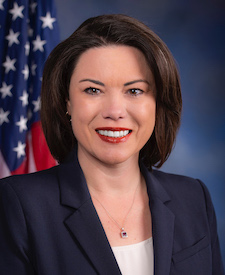
119th Congress Introduced by Angie Craig and 2 co-sponsors

Authorizes grants to fund youth suicide prevention in health care and education, includes lethal means safety, gun storage support, and a public information website.

Introduced in House
0
WeVote Research Nonpartisan
Bill Summary · HR 8070

Summary of HR 8070 — Child Suicide Prevention Act

Jurisdiction: United States Congress | Session: 119th Congress | Introduced: March 25, 2026

Purpose and Intent

  • To authorize the Secretary of Health and Human Services (HHS) to award grants aimed at reducing suicide rates among youth (referred to as “covered individuals” under 26 years of age) by promoting evidence-aligned practices in health care settings.
  • To support educational programs in health care and in higher education that integrate suicide prevention and lethal means safety (particularly firearm safety), with a focus on at-risk youth.
  • To create a centralized information resource (a government website) and require annual reporting to monitor implementation and assess effectiveness.

Key Provisions and Changes

Section 2: Grant Program to Address Youth Suicide and Lethal Means

  • Authorized Grants: The Secretary must award grants within one year of enactment to eligible entities to establish or expand programs in health care settings to reduce suicide risk among covered individuals.
  • Eligible Entities: States, state/local health departments, professional membership organizations in health care, hospitals serving covered individuals, nonprofit organizations, and institutions of higher education.
  • Use of Funds: Grants must fund education and training for health care providers on:
    • Identification of high-risk youth using validated, age-appropriate screening and risk assessment.
    • Communication with youth and families about lethal means safety and firearm storage.
    • Understanding risk factors and their relation to suicide/self-harm.
    • Suicide prevention/intervention and post-attempt support.
    • Addressing racial and ethnic disparities in youth suicide attempts.
    • Methods/means used in attempts and best practices for safety planning.
    • Knowledge of State and Federal firearm laws and how to discuss them with youth and families.
    • Referral procedures to other health care providers, social services, or crisis resources.
  • Secure Gun Storage or Safety Devices: Eligible entities may allocate up to 15% of grant funds to provide secure gun storage or safety devices at reduced or no cost to residences with at least one covered youth, including:
    • A plan to make devices available and the types of devices based on community needs.
    • Counseling on the use of devices for households receiving them.
  • Technical Assistance: HHS will provide technical assistance to grant recipients and health care providers on best practices.
  • Reporting: Grantees must submit annual activity reports through FY 2029; the Secretary will publish these reports publicly and, by FY 2029, deliver a congressionally requested summary with recommendations on implementing evidence-aligned practices.

  • Funding: Authorization of appropriations of $20 million for FY 2027–2030.

Section 3: Grant Program to Develop and Integrate Suicide Prevention and Lethal Means Safety Curricula

  • Authorized Grants: The Secretary must award grants within one year to eligible schools to develop and integrate curricula on the described topics.
  • Eligible Schools: Accredited medical schools, accredited nursing schools, programs in physician assistants or mental/behavioral health, residency/fellowship programs in health care, and other accredited health education institutions (including continuing education programs).
  • Partnerships: Schools may partner with local health departments, professional associations, nonprofit organizations, and institutions of higher education.
  • Curriculum Content (Duties):
    • Lethal means safety and firearm storage; knowledge of relevant laws.
    • Evidence-aligned, culturally appropriate communication about lethal means safety.
    • Suicide prevention/intervention strategies for youth and high-risk individuals.
    • Validated screening and risk assessment techniques for suicide and firearm use.
    • Identification of risk factors and safety-planning methods addressing means used in attempts.
  • Technical Assistance: Provided to eligible schools for grant applications and program implementation.
  • Reporting: Annual reports through FY 2029, publicly available; a congressionally submitted end-of-period report with curricula recommendations on suicide prevention.
  • Eligible Schools Defined: Medical schools, nursing schools, PA programs, mental/behavioral health programs, health care residency/fellowship programs, and other accredited health education institutions.
  • Funding: Authorization of appropriations of $10 million for FY 2027–2030.

Section 4: Informational Website

  • Development and Maintenance: HHS must create a website within 1 year to inform covered youth, families, health care educators/providers about best practices in suicide prevention and use of firearms in suicide attempts.
  • Updates: Website content updated based on grant reports and curricula reports.
  • Consultation: Development and updates must involve a broad set of stakeholders, including VA, Federal firearms licensees and instructors, local health departments, hospitals, and other organizations.

Section 5: Definitions

  • Covered Individual: Youth under 26 years old.
  • Covered Risk Factors: Factors increasing suicide risk, such as:
    • Substance use, abuse or trauma (sexual/physical), psychiatric diagnoses linked to risk,
    • LGBTQ+ status,
    • Certain racial/ethnic group risk profiles,
    • Prior suicide/self-harm attempts,
    • Other evidence-supported factors (including family factors and bullying).
  • Secure Gun Storage or Safety Device: Defined per 18 U.S.C. 921(a)(34).
  • Other Definitions: Details for institutions of higher education, the Secretary, and the State.

Affected Parties

  • Youth and families of youth (the primary population targeted).
  • Health care providers and health systems that serve youth.
  • Hospitals, clinics, and other facilities that treat or interact with youth at risk of suicide.
  • Educational institutions (medical, nursing, PA, behavioral health, residency programs, and other health education programs).
  • State and local health departments.
  • Families and guardians of affected youth.

Procedural and Timeline Aspects

  • Effective: Grants to be awarded beginning no later than one year after enactment.
  • Grant Periods: Funding authorized for FY 2027–2030 for both grant programs.
  • Reporting: Annual grant reports through FY 2029; a final Congress-bound report by end of FY 2029 with broader recommendations.
  • Website: Information portal to be up within one year, with ongoing updates.
  • Jurisdictional Interaction: Bills assigns roles to HHS (grant administration, curricula development, website) and mentions coordination with Education and Workforce committees.

Potential Impact

  • Increased deployment of evidence-aligned practices in health care settings to identify and support at-risk youth.
  • Expanded training for health care and education professionals on lethal means safety and firearm-related risk reduction.
  • Greater access to secure gun storage options for families with at-risk youth, including accompanying counseling.
  • Improved data collection and transparency through annual reporting and a centralized information website.
  • Development of standardized curricula across medical, nursing, and health education programs to sustain suicide prevention efforts.

Note: This summary reflects the bill text as filed and does not account for amendments or final legislative action.

Compiled from official sources — confirm details with the bill’s official record.

Sign in to ask a question.