

WeVote

Bill

Bill

HR 6695

Charlie Kirk Act

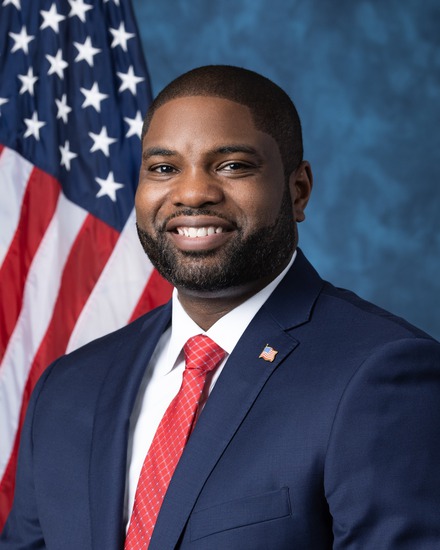
119th Congress Introduced by Byron Donalds and 1 co-sponsor

H.R.6695 bans USAGM domestic distribution, imposes a 12-year hold before domestic access via the Archivist, and charges fees to requesters.

Introduced in House
0
WeVote Research Nonpartisan
Bill Summary · HR 6695

Summary of H.R. 6695 – The Charlie Kirk Act

Purpose and intent

  • Introduces the “Charlie Kirk Act,” a bill aimed at clarifying and tightening the United States policy on how program material produced or disseminated by the United States Agency for Global Media (USAGM) can be distributed domestically.
  • Focuses on limiting domestic dissemination of materials prepared for abroad audiences, while specifying processes for making certain materials available domestically through the Archivist of the United States.

Key provisions

Section 2: Dissemination abroad of information about the United States

  • Amends Section 501 of the United States Information and Educational Exchange Act of 1948.
  • General authorization for USAGM Chief Executive Officer (CEO) to prepare and disseminate information about the United States abroad via multiple media (press, publications, radio, TV, internet, centers abroad, instructors abroad, etc.).
  • Domestic distribution is restricted: with limited exceptions, information disseminated abroad may not be disseminated within the United States, its territories, or possessions.
  • Some materials (e.g., Problems of Communism and the English Teaching Forum) may be sold by the Government Publishing Office.
  • Allows such information to be made available in English at the Department of State for examination by US press associations, newspapers, magazines, radio systems, researchers, scholars, and Members of Congress, at reasonable times after release abroad.

Section 2(b): Domestic distribution through the Archivist

  • Creates a mechanism for domestically distributing USAGM materials beginning 12 years after the material’s initial abroad dissemination, or after the material was prepared if never disseminated abroad.
  • Requires reimbursement of USAGM expenses for this domestic distribution, credited to USAGM appropriations.
  • The Archivist of the United States would:
    • Be the official custodian of such materials.
    • Promulgate regulations to ensure proper rights/licensing and required fees are paid (fees to cover the cost of providing material to requesters, per 44 U.S.C. 2116(c)).
    • Deposit collected fees into the National Archives Trust Fund.

Section 2(c): Rule of construction

  • Clarifies that the USAGM CEO is not required to make abroad-disseminated material available in any format other than the format in which it was disseminated abroad.

Section 208 (Foreign Relations Authorization Act, FY 1986/1987)

  • Adds a new section: Ban on domestic activities of USAGM.
  • General prohibition: funds appropriated to USAGM may not be used to influence public opinion in the United States, and no USAGM program material may be distributed domestically (with an exemption for programs under the Mutual Educational and Cultural Exchange Act of 1961).
  • Savings provision permitting employees to respond to inquiries about USAGM operations, policies, or programs.
  • Minor clerical amendment to update the table of contents.

Who would be affected

  • United States Agency for Global Media (USAGM) and its component networks (e.g., Voice of America, Radio Free Europe/Radio Liberty, etc.).
  • Archivist of the United States, and the National Archives Trust Fund (for handling and charging fees for domestic access to material).
  • U.S. policymakers, researchers, journalists, and the public seeking access to USAGM materials domestically after the specified holding period.
  • Potential impact on transparency and access to government-produced information that was originally produced for foreign audiences.

Timeline and procedure

  • Introduced: December 12, 2025.
  • Status: Referred to the House Committee on Foreign Affairs.
  • No further actions detailed in the text provided; committee consideration would be the next step.

Overall impact

The bill would significantly constrain domestic distribution of USAGM-produced content, create a formal process for long-delayed domestic access via the Archivist, and establish explicit prohibitions on using USAGM funds to influence domestic public opinion, with specific exemptions and a defined holding period before domestic release.

Compiled from official sources — confirm details with the bill’s official record.

Sign in to ask a question.