

WeVote

Bill

Bill

HF 1580

Changes to born alive infant provisions made.

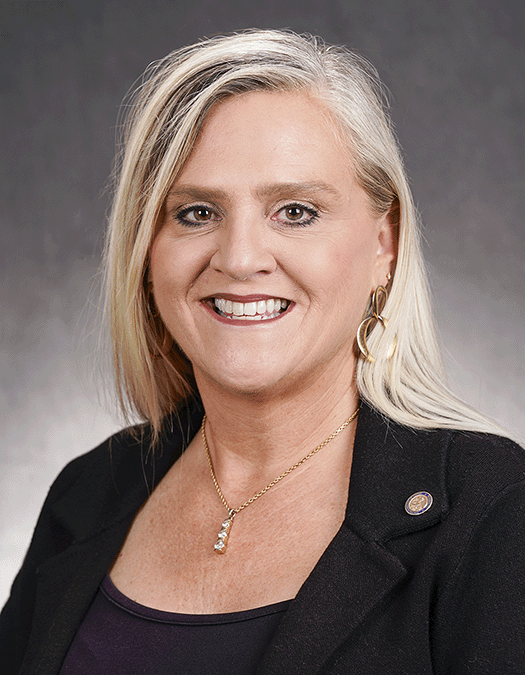
2025-2026 Regular Session Introduced by Pam Altendorf and 12 co-sponsors

HF 1580 aims to change Minnesota’s born-alive infant provisions, potentially altering care standards, reporting, and legal obligations for healthcare providers and facilities.

Author added Sexton
0
WeVote Research Nonpartisan
Bill Summary · HF 1580

Summary of HF 1580 (2025-2026) — Changes to Born Alive Infant Provisions

Purpose and Intent

HF 1580 proposes changes to Minnesota’s statutes governing born-alive infant provisions. While the bill’s full text is not provided here, the title indicates a focus on altering the legal framework around infants who are born alive, potentially affecting definitions, reporting requirements, medical standards, or consequences related to care and neglect in such cases. The bill’s introduction and initial referrals suggest it is an health policy measure aimed at refining or tightening rules surrounding born-alive infants.

Key Provisions (as suggested by the bill’s title)

Note: Specific statutory language is not included in the provided material, so the following reflects typical areas addressed in born-alive infant provisions and what HF 1580 would likely modify. The exact sections may differ in the final text.

  • Definitions: Possible revision of what constitutes “born alive” or related terms to reduce ambiguity in enforcement and reporting.
  • Medical Standards and Care: Potential requirements for medical professionals and facilities regarding the care of infants born alive, including standards of resuscitation or stabilization.
  • Reporting and Documentation: Possible changes to mandatory reporting obligations for healthcare providers, facilities, or authorities when a baby is born alive, including timing and documentation.
  • Legal Obligations and Protections: Possible adjustments to legal duties of physicians, nurses, or other personnel, and any related penalties or safe-harbor provisions for compliance or disputes.
  • Relationship to Abortion/Perinatal Care: The bill may address how born-alive provisions interact with abortion laws or perinatal care policies, though this depends on the exact language.

Who Would Be Affected

  • Healthcare providers: Hospitals, clinics, obstetric and neonatal teams, and other clinicians involved in labor, delivery, and immediate postnatal care.
  • Medical facilities: Hospitals and birthing centers responsible for implementing care standards and reporting requirements.
  • State and local health departments: Agencies responsible for enforcement, monitoring compliance, and handling reports.
  • Families and infants: Newborns born alive and their families, through requirements for care and potential documentation or notification processes.

Procedural and Timeline Aspects

  • Introduction: HF 1580 was introduced and assigned to the Health Finance and Policy committee for consideration.
  • Action History:
    • 2025-02-26: Introduction and first reading; referred to Health Finance and Policy.
    • 2025-03-03 and 2025-03-20: Additional authors/sponsors added (Perryman, Sexton, and others), indicating support and potential amendments during committee review.
  • Next steps (typical for such bills): Committee hearings, potential amendments, floor debate in the House, and eventual passage or defeat. If advanced, the bill would proceed to the Senate (or modified version) for consideration, with potential conference committees if there are differences between chambers.

Potential Impacts and Considerations

  • Patient care: Changes could clarify or alter obligations regarding resuscitation, stabilization, and after-birth care of infants born alive.
  • Compliance burden: Hospitals and providers may need to update protocols, training, and reporting systems.
  • Legal implications: Adjustments could affect liability, investigation processes, and enforcement mechanisms related to born-alive scenarios.
  • Public health policy: The bill could influence statewide perinatal care standards and align with broader legislative trends on newborn protections.

Sponsor and Support

  • Primary and co-sponsors listed include Tim O'Driscoll, Tom Dippel, Pam Altendorf, Tom Sexton, Bernie Perryman, Paul Torkelson, Patti Anderson, Peggy Scott, Bryan Lawrence, Kristin Robbins, Krista Knudsen, Erica Schwartz, and Roger Skraba.
  • The authorship span across multiple members, indicating bipartisan interest in the issue.

If you have access to the bill’s full text, I can provide a more precise, section-by-section breakdown of the actual provisions, definitions, exceptions, and any fiscal estimates or effective dates.

Compiled from official sources — confirm details with the bill’s official record.

Sign in to ask a question.