

WeVote

Bill

Bill

AB 1311

California Rangeland, Grazing Land, and Grassland Protection Program.

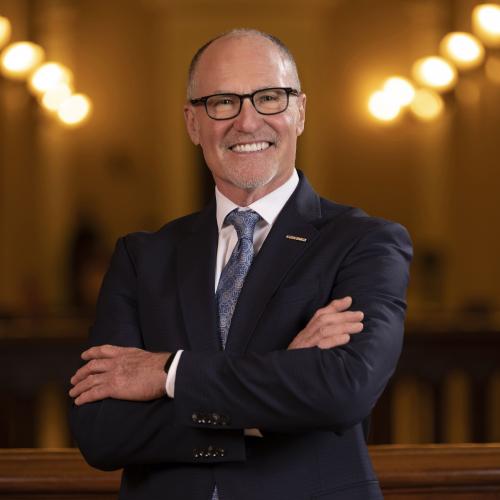
2025-2026 Regular Session Introduced by Gregg Hart

The bill would allocate $400 million from Prop 4 to fund grants for acquiring conservation easements on privately owned rangelands and grasslands to protect working lands and their

From committee: Filed with the Chief Clerk pursuant to Joint Rule 56.
0
WeVote Research Nonpartisan
Bill Summary · AB 1311

AB 1311 — California Rangeland, Grazing Land, and Grassland Protection Program

Status: In committee — Held under submission (last action: 2025-05-23)
Introduced: February 21, 2025 (Author: Hart)
Classification: Bill; appropriation

Main purpose

AB 1311 would appropriate $400 million from the voter-approved Safe Drinking Water, Wildfire Prevention, Drought Preparedness, and Clean Air Bond Act of 2024 (Proposition 4) to the Wildlife Conservation Board (WCB) to fund grants for the acquisition of perpetual conservation easements on privately owned rangelands, grazing lands, and grasslands. The program is intended to protect working lands that produce food and fiber and provide ecosystem services such as wildfire fuel reduction, groundwater recharge, wildlife habitat, and open vistas.

Key provisions

  • Appropriates $400,000,000 (from Proposition 4 funds made available to WCB) to the California Rangeland, Grazing Land, and Grassland Protection Program.
  • Directs WCB to award the funds as grants to eligible entities to acquire conservation easements on qualified privately owned property that supports production and ecosystem services.
  • Requires WCB to disburse grant funds to grantees via grant agreements on or before June 30, 2028.
  • Requires grantees, on or before June 30, 2029, to expend grant funds to acquire and record the conservation easement.
  • Allows WCB to partner with, and receive funds from, land trusts certified by the USDA Natural Resources Conservation Service (NRCS), as provided.
  • Amends Public Resources Code Section 10332 (definitions) — includes eligibility criteria requiring accreditation and stewardship capacity (text truncated in source).

Eligibility and requirements

  • Eligible entities must meet specified accreditation and capacity criteria (e.g., accreditation from the Land Trust Accreditation Commission at application time, capacity to complete acquisition within specified timeframes, and demonstrated financial capacity for perpetual stewardship).
  • Grants target privately owned rangelands and working lands that provide ecosystem services and support production of food and fiber.

Who is affected / potential impacts

  • Private landowners and ranchers who may enter into conservation easements.
  • Land trusts and nonprofit conservation organizations (accredited entities).
  • Wildlife Conservation Board (as administrator of grants).
  • State bond-funded program allocations (redirects $400M of Proposition 4 funds to this program).
  • Environmental, wildfire mitigation, agricultural, and outdoor recreation interests via protected habitat, fuel reduction buffers, groundwater benefits, and maintained working landscapes.

Legislative timeline / procedural notes

  • Introduced 02/21/2025; read first time 02/24/2025; amended and referred through Natural Resources Committee.
  • Passed Assembly Natural Resources (do pass, re-referred to Appropriations; placed on Appropriations suspense file 05/07/2025).
  • Held under submission in Assembly Appropriations as of 05/23/2025.

Context and findings cited

The bill’s findings reference the state’s 30x30 conservation goal, the 2022 Pathways to 30x30 report, the 2024 Proposition 4 bond (total authorization $10 billion; $870 million made available to WCB upon appropriation), the scale of California rangelands (~32 million acres statewide; ~17 million privately owned), and economic/ecosystem values of working rangelands (e.g., cattle industry revenue cited: $4.76 billion in 2023).

Note: Some statutory language and allocation details are truncated in available documents.

Compiled from official sources — confirm details with the bill’s official record.

Sign in to ask a question.