

WeVote

Bill

Bill

S 5198

Build to Scale Reauthorization Act of 2026

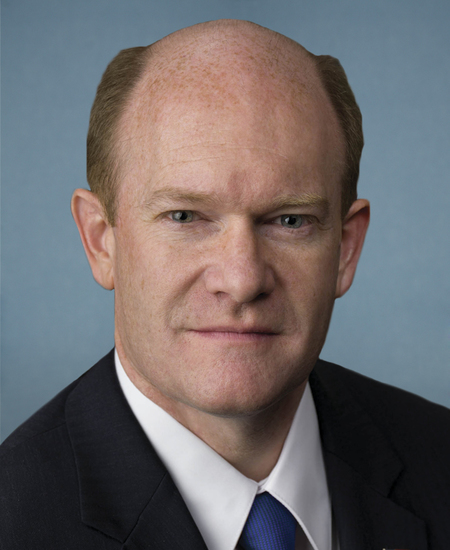
119th Congress Introduced by Chris Coons and 1 co-sponsor

Reauthorizes and expands funding and rules for the Regional Innovation Program to boost regional venture funding, support, and data-driven collaboration across agencies.

Introduced in Senate
0
WeVote Research Nonpartisan
Bill Summary · S 5198

Overview

  • Bill: S. 5198 (Build to Scale Reauthorization Act of 2026)
  • Session: 119th Congress, 2nd Session
  • Purpose: Reauthorize and modify the Regional Innovation Program under the Stevenson-Wydler Technology Innovation Act of 1980. The bill aims to bolster regional innovation ecosystems by expanding capital access, defining and supporting venture development organizations, and enhancing outreach and data provisions. It also establishes funding authority and timetables for program implementation.

Main purpose and intent

  • Reauthorize the Regional Innovation Program (RIP) and update its framework to promote regional economic development through innovation.
  • Expand the federal role in financing and supporting regional, innovation-centered ventures.
  • Improve coordination among federal agencies, regional entities, and workforce initiatives to accelerate commercialization and scale of innovative businesses.

Key provisions and changes

  1. Definitions and program structure

    • Recasts the program’s criteria for “Venture Development Organization” (VDO) as a State or nonprofit entity with a defined geographic focus and a mission to promote regional or sector-based economic prosperity.
    • VDOs must provide:
      • Direct financing to private innovation-focused businesses.
      • Services to accelerate commercialization of research.
      • Entrepreneurial support for founders, startups, and businesses within their service areas.
  2. Changes to program operations

    • Renames and expands the RIP initiatives to emphasize broader participation and outcomes.
    • Adds a requirement that activities funded under RIP be pursued with a cost-sharing framework (see Budget/Cost Share).
  3. Cost sharing (cost share) requirements

    • Federal share of RIP-funded activities shall not exceed 50%.
    • An additional amount of up to 40% (in certain cases) may be provided by non-federal sources, with distribution based on regional needs as determined by the Secretary of Commerce.
    • The exact allocation must be based on relative needs of the area as determined by regulations.
  4. Outreach and inclusion

    • The Secretary must conduct outreach to engage entities in:
      • Rural communities.
      • Areas economically displaced by trade.
      • Regions experiencing persistent economic distress.
    • Outreach should target entities willing to collaborate with local workforce investment boards on workforce or training activities.
  5. Data and coordination

    • Data sources section updated to include the Regional Technology and Innovation Hub Program (Sec. 28) alongside other data sources.
    • Reflects increased emphasis on data-driven evaluation and inter-agency coordination.
  6. Cross-agency collaboration and funding

    • Enhances alignment with other federal initiatives (e.g., Department of Energy, National Science Foundation) for initiatives and activities under subsection (d).
    • Strengthens the integration of RIP with broader innovation and workforce programs.
  7. Funding authorization and availability

    • Establishes an authorization of up to $50,000,000 per fiscal year from 2026 through 2030 to carry out the reauthorized RIP.
    • Allows the Secretary to use unobligated funds from prior years to carry out RIP activities.
  8. Notice of funding opportunity

    • Requires the Secretary of Commerce to issue a notice of funding opportunity within 90 days after enactment, informing potential applicants about RIP opportunities and requirements.

Who would be affected

  • Regional Innovation Programs and existing venture development organizations (or new entities meeting the VDO criteria) operating in defined geographic regions.
  • Private innovation-centered businesses seeking funding, services, and acceleration support.
  • Local and regional workforce investment boards and partner entities collaborating on workforce and training activities.
  • Rural and economically distressed communities targeted for outreach and program participation.
  • Federal agencies involved in technology, innovation, and economic development (coordination and data reporting).

Procedural and timeline aspects

  • Introduction and referral:
    • Introduced in Senate on July 30, 2026, by Senators Todd Young and Coons (co-sponsors).
    • Referred to the Senate Committee on Commerce, Science, and Transportation.
  • Funding and implementation timeline:
    • Congressional authorization established for FY2026–FY2030 at up to $50 million per year.
    • 90 days after enactment: Secretary of Commerce must issue a notice of funding opportunity for RIP.
  • Implementation details:
    • Revisions to statutory text require amendments to the Stevenson-Wydler Act (as amended by this bill) to implement new definitions, cost-share rules, outreach duties, and data provisions.
    • Future appropriations subject to annual appropriations and regulatory guidance.

Potential impact (high-level)

  • Expanded access to capital and support services for regional innovation ecosystems, potentially accelerating the growth of commercialization and scale-up of research-derived ventures.
  • Greater emphasis on equity and inclusion through targeted outreach to distressed or underserved regions.
  • Increased federal-share constraints with a defined cost-sharing framework may incentivize local or private co-investment.
  • Improved data integration and interagency coordination with parallel technology and regional innovation programs.

Compiled from official sources — confirm details with the bill’s official record.

Sign in to ask a question.