

WeVote

Bill

Bill

SB 4170

BEHAVIOR ANALYST LICENSING

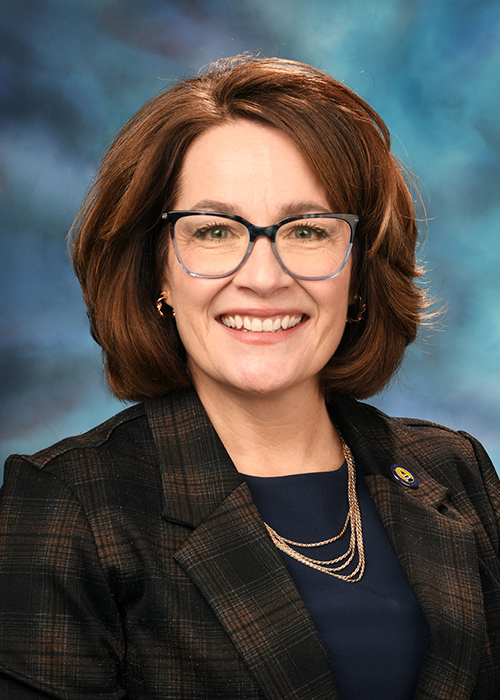
104th Regular Session Introduced by Meg Loughran Cappel

Expands who can provide or advertise ABA services and lets certain schools and nonprofits employ licensed analysts without owners being licensed, with strong enforcements for unlic

Referred to Assignments
0
WeVote Research Nonpartisan
Bill Summary · SB 4170

Overview

SB4170, introduced in the 104th Illinois General Assembly by Sen. Meg Loughran Cappel, amends the Behavior Analyst Licensing Act and related statutes. The bill expands permissive exemptions and ownership/organizational considerations for behavior analysis services, clarifies unlicensed practice implications, and integrates applied behavior analysis into related professional service and professional LLC frameworks. It becomes effective immediately upon enactment.

Purpose and intent

  • Clarify who may provide or advertise behavior analysis services without violating the Behavior Analyst Licensing Act.
  • Permit certain organizations (public schools, districts, charter schools, and 501(c)(3) nonprofits) to employ or contract licensed behavior analysts even if owners/operators are not licensed.
  • Expand the scope of related professional services and professional LLC/PC frameworks to include the practice of applied behavior analysis (ABA) by licensed individuals.
  • Strengthen enforcement against unlicensed practice, including entities that make clinical decisions without a license.

Key provisions and changes

  • Additions to exemptions under the Behavior Analyst Licensing Act:

    • Occupations allowed to perform or advertise ABA activities without violating the Act include clinical psychologists, social workers, psychiatrists, speech-language pathologists, audiologists, professional counselors, occupational therapists, and others, provided activities align with state laws, ethical codes, and do not use licensed titles.
    • Nonhuman applications (e.g., applied animal behaviorists and trainers) are exempt from licensure restrictions, though individuals may still use the title “behavior analyst” if not implying licensure.
    • General organizational services to organizations (not individuals) may use the title “behavior analyst” without licensure, as long as services are for the organization’s benefit and no licensure claim is made.
    • Matriculated students, postdoctoral fellows, and supervised field experiences may engage in ABA activities under supervision without current licensure.
    • A school-based employee with an applicable State Board of Education endorsement (learning behavior specialist or school support personnel) can deliver ABA services in a school setting if within the defined scope and not presented as licensed analysts.
    • Qualified intellectual disabilities professionals and certain Department of Human Services service providers may deliver ABA services within regulated programs, without presenting as licensed analysts.
    • Medical assistance program participants transitioning to licensure education/training are exempt from licensure restrictions at the effective date.
  • Unlicensed practice penalties and governance:

    • Any person or a business entity’s owner, partner, director, or officer who makes clinical decisions regarding patient care without licensure is deemed in violation of unlicensed practice, violation, and civil penalty provisions.
  • Ownership exemptions for certain schools and nonprofits (Section 150.1):

    • Public schools, districts, charter schools, and 501(c)(3) nonprofits may employ or contract with licensed behavior analysts even if owners/managers are not licensed.
    • Organizations may engage licensed behavior analysts to perform services within their scope of practice.
  • Professional Service Corporation Act (Section 3.6) and Professional Limited Liability Company Act (Section 13) amendments:

    • ABA, when licensed under the Behavior Analyst Licensing Act, is added to the list of personal/professional services that may be combined within related professional service corporations or professional LLCs, alongside other professions (medical, psychological, engineering, etc.).
  • Effective date:

    • Effective upon becoming law.

Affected parties

  • Licensed and prospective licensed behavior analysts (adds clarifications and potential exemptions).
  • Public schools, school districts, charter schools, and 501(c)(3) nonprofit organizations that provide ABA services (permitted to employ/contract with licensed analysts regardless of ownership/licensure status).
  • Other licensed professionals (clinical psychologists, social workers, OT, speech-language pathologists, etc.) who may lawfully perform or advertise ABA activities under exemptions.
  • Health, education, and human-services agencies and service providers regulated under related acts.
  • Entities operating as Professional Service Corporations or Professional Limited Liability Companies that provide ABA services.

Procedural and timeline aspects

  • The Act’s general licensing requirements begin 10 months after the rules required under Section 80 (regarding rulemaking) are adopted; thereafter, practice and title usage are restricted to licensed individuals, subject to exemptions outlined in the bill.
  • The Section 70 provisions impose civil penalties up to $10,000 per offense for unlicensed practice, with enforcement and hearing processes specified.
  • The bill includes a new Section 150.1 creating ownership exemptions for certain schools/nonprofits, effective immediately upon enactment.
  • Several existing sections (20 and 70) of the Behavior Analyst Licensing Act, along with related statutes (Professional Service Corporation Act and Professional Limited Liability Company Act), are amended to reflect ABA’s inclusion within related professional services and organizational structures.

Practical impact and considerations

  • Increased flexibility for schools and nonprofit organizations to hire licensed ABA professionals without requiring all owners to be licensed.
  • Potential increased access to ABA services in educational and nonprofit settings, with safeguards to prevent misrepresentation of licensure.
  • Clear boundaries for exemptions emphasize supervision, scope of practice, and adherence to professional ethics and state laws.
  • Enforcement remains in the Department with civil penalties for unlicensed practice, reinforcing the need for compliance.

If you’d like, I can provide a side-by-side comparison of current law vs. SB4170 language, or a brief Q&A highlighting common scenarios (e.g., school settings, nonprofit employment, private practice).

Compiled from official sources — confirm details with the bill’s official record.

Sign in to ask a question.