

WeVote

Bill

Bill

HB 1764

Appropriation; Supreme Court, Court of Appeals and trial judges services.

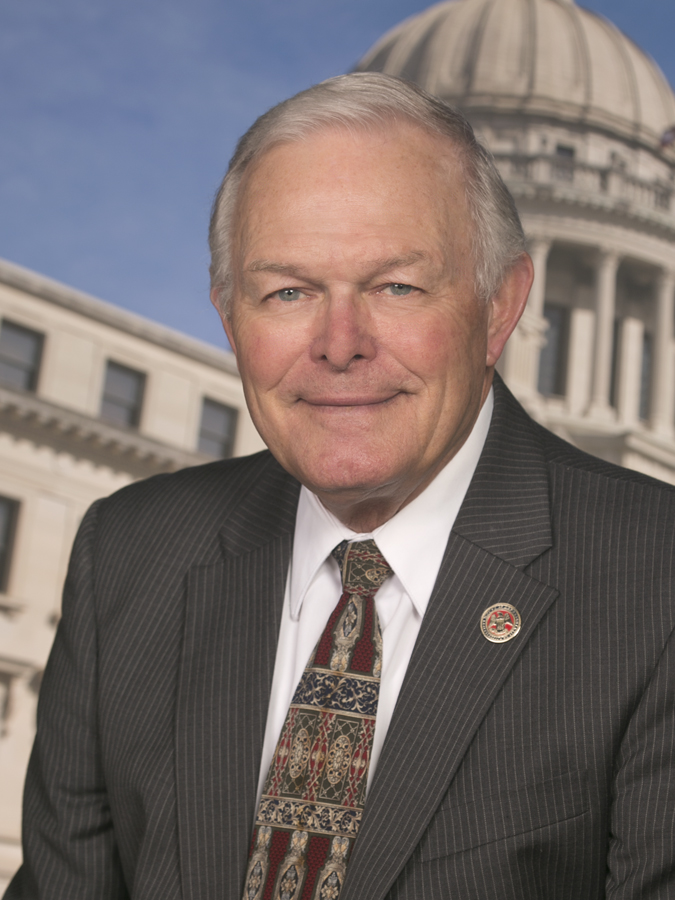
2025 Regular Session Introduced by Manly Barton and 8 co-sponsors

Mississippi would fund FY2026 judicial operations (courts, AOC, CLE, staff) while Arkansas would treat certain protection-order violations as Class D felonies.

Died In Conference
0
WeVote Research Nonpartisan
Bill Summary · HB 1764

Bill Summary — HB 1764

Status: Died In Conference (3/29/2025)
Introduced: January 7, 2025
Subject classification: Appropriations (A, D)
Primary sponsors: Rep. Underwood; Sen. J. Bryant. Co‑sponsors listed across versions include Michael J. Coffey, Jr., Tom Weber, Mims, Faulkner, Hood, Read, McKnight, Watson, Cockerham, Rushing, Barton. Companion: SB 522.

Note: The legislative file contains materials from multiple jurisdictions and amendment tracks. The primary enacted text under consideration is an appropriations bill for judicial operations (Mississippi), and the bill packet also includes an Arkansas substantive amendment concerning violations of protection orders. This summary separates those components.

Purpose and intent

  • Main (appropriations) purpose: Provide fiscal year 2026 appropriations (July 1, 2025 – June 30, 2026) to fund the State Supreme Court, Court of Appeals, trial judges, Administrative Office of Courts, Board of Bar Admissions, continuing legal education, and related judicial operations.
  • Secondary (Arkansas amendment): Amend Arkansas law (A.C.A. § 5-53-134) to expand the circumstances under which a violation of an order of protection is charged as a Class D felony.

Key provisions — Appropriations (Mississippi text)

  • Appropriates multiple sums (selected line items shown in enrolled/amendment language):
    • Mississippi State Supreme Court (special funds): $7,651,428
    • Authorized positions funded: $1,004,093 (listed as a sum tied to authorized headcount)
    • Trial judges (special judges, chancellors, circuit judges) (special funds): $36,921,111
    • Associated authorized positions: $4,286,025
    • Support staff funding: $14,170,000 total, capped at up to $130,000 per judge per fiscal year
    • Administrative Office of Courts (special funds): $17,343,629
    • Administrative Office of Courts funding listed: $28,159,106
    • Continuing Legal Education Fund: $172,366; interest credited to the fund
    • Court of Appeals (special funds): $5,503,789; associated positions funding $1,684,865
    • Board of Bar Admissions funding: $371,804
  • Authorizations: Multiple “authorized headcount” lines appear; many specific permanent/time‑limited slots are blank in the excerpt.
  • Standard legislative constraints included (transfer/escalation rules, prohibitions on replacing federal funds, nepotism language).

Key provisions — Arkansas substantive amendment (Underwood)

  • Amends A.C.A. § 5-53-134(b)(2)(A): A violation of an order of protection becomes a Class D felony if:
    • The offense occurs within five years of a prior conviction for violating an order of protection under this section or a violation of an equivalent domestic abuse order of protection of another state or foreign jurisdiction; and
    • The original order of protection was issued after a hearing at which the defendant had actual notice and the opportunity to participate.
  • Impact assessment (Arkansas Sentencing Commission, 4/1/2025): fiscal/penal impact cannot be determined; historical data show 77 felony convictions (1/1/2022–12/31/2024) and 4 offenders currently serving sentences where violation of protection order was the most serious offense.

Who is affected

  • Mississippi appropriations: state Supreme Court, Court of Appeals, trial judges, Administrative Office of Courts, Board of Bar Admissions, attorneys (continuing education), judicial support staff, and taxpayers funding appropriations.
  • Arkansas amendment: defendants charged with violating orders of protection, prosecutors, courts, and correctional system resources (potentially more felony prosecutions where prior out‑of‑state convictions qualify).

Procedural history & timeline (selected)

  • Multiple committee actions, amendments, and readings across chambers (see ledger). Key milestones: committee substitute considered and reported favorably (April 2025); bill advanced through calendars and reads; amendment(s) adopted; enrolled and transmitted in some records. Final recorded status in provided ledger: Died In Conference (3/29/2025). (Records include some conflicting entries indicating passage/enrollment in some lines; the controlling status provided is Died In Conference.)

Fiscal/operational impact

  • Appropriations specify dollar amounts for FY2026 as listed above.
  • Arkansas sentencing impact: commission reports insufficient data to quantify additional correctional needs; potential to increase Class D felony filings where out‑of‑state prior convictions are recognized, but magnitude unknown.

Notes

  • The bill packet contains materials that appear to merge texts from different states (Mississippi appropriations, Arkansas criminal amendment, and an Illinois senior property tax bill excerpt). This summary focuses on the appropriations/Arkansas elements present in the file. For enactment status or precise appropriation execution, consult official state legislative journals and enrolled acts for the relevant state.

Compiled from official sources — confirm details with the bill’s official record.

Sign in to ask a question.