

WeVote

Bill

Bill

S 5183

Anti-Corruption Bureau Creation Act

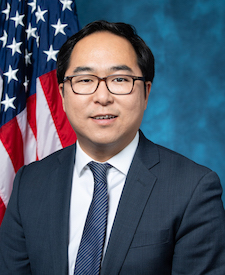
119th Congress Introduced by Andy Kim and 3 co-sponsors

Establishes an independent Anti-Corruption Bureau with broad federal enforcement powers and a private right of action to unwind corruption by top officials and connected actors.

Introduced in Senate
0
WeVote Research Nonpartisan
Bill Summary · S 5183

Overview

S.5183, the Anti-Corruption Bureau Creation Act, would establish an independent Anti-Corruption Bureau (ACB) within the executive branch and authorize a private right of action to unwind corruption. The bill blends traditional independent watchdog features with new private enforcement tools, aimed at preventing, detecting, and remedying corruption, conflicts of interest, and abuses of power.

Main Purpose and Intent

  • Restore and strengthen federal anti-corruption enforcement across government, ethics, campaign finance, and civil service laws.
  • Create a robust, independent investigative and enforcement body that cannot be easily politicized or weakened by any single administration.
  • Allow private plaintiffs (including states acting as parens patriae) to pursue civil actions to recover funds resulting from corruption and to deter future misconduct.

Key Provisions and Changes

  • Title II: Establishment and Governance

    • Establishes the Anti-Corruption Bureau as an independent establishment in the executive branch.
    • Commission of 7 members appointed by the President with Senate advice and consent; includes rules on political balance, independence, qualifications, and prohibition on outside employment.
    • Creation of a Blue Ribbon Advisory Panel (11 members) to identify and propose Bureau nominees, with public reporting of recommendations.
    • Chair and Vice Chair roles, with specified powers (budgeting, staff, subpoenas, oaths, etc.) to ensure independent operations.
    • Temporary judges may appoint temporary Bureau members to fill vacancies when needed.
  • Title III: Powers and Duties

    • Broad enforcement jurisdiction over:
    • Campaign finance, ethics in government, conflicts of interest, financial disclosures, whistleblower protections.
    • Federal Election Campaign Act, Internal Revenue Code chapters, and related ethics laws.
    • Exclusive civil enforcement authority for the covered laws.
    • Authority to initiate, defend, or appeal civil actions; issue advisory opinions; and develop regulations.
    • Annual reporting to the President and Congress detailing activities and recommendations.
  • Title I: Private Right of Action to Unwind Corruption

    • Creates a private civil remedy against “covered persons” (broadly defined to include the President, VP, high-level officials, their spouses/adult children, certain officials, major contractors, and others connected to power) for “covered violations.”
    • Violations involve using office for personal enrichment in excess of $50,000, with penalties including:
    • Civil penalties (minimum $50,000 per violation), disgorgement, and treble damages (three times government damages).
    • Private actions can be brought in federal court in the name of the United States Government; provisions for seal, intervention rights, and equitable relief (constructive trusts, rescission of contracts, etc.).
    • Statute of limitations: generally 10 years from the violation date, with broader retroactive applicability for older conduct.
    • Private action provisions include potential attorney’s fees for prevailing plaintiffs and mechanisms to avoid frivolous claims.
  • Title IV–V: Administrative and Procedural Details

    • Defines terms (Bureau, Chair, Fund, Panel, etc.).
    • Sets removal procedures and congressional notification for Bureau members.
    • Outlines annual reporting timelines, rules for meetings, ethics education, and conflicts-of-interest management.
    • Prohibits executive branch interference with Bureau actions and imposes penalties for improper political influence.
    • Expands ethics offices within the federal framework to align with the Bureau’s oversight functions.

Who Would Be Affected

  • Federal officials covered under the definitions (President, Vice President, senior appointees, contractors, and other designated positions) could be subject to civil enforcement and private action.
  • Private parties, including states acting as parens patriae, could bring lawsuits and receive a share of recovered proceeds.
  • The Bureau would gain investigative, regulatory, and enforcement authority across major integrity-related domains.

Procedural and Timeline Aspects

  • Initial Bureau appointments: within 180 days of enactment; staggered terms for initial members.
  • Blue Ribbon Panel convening timelines specified, with public disclosure of recommendations.
  • Regulations: Bureau must issue rules governing ex parte communications within 180 days.
  • Annual reporting deadline: by June 1 each year.
  • Privacy and court procedures align with standard federal civil litigation, with specific safety and dismissal provisions for private actions.

Overall, the bill seeks to institutionalize a strong, independent anti-corruption framework with both aggressive federal enforcement and a novel private-right mechanism to unwind corrupt gains.

Compiled from official sources — confirm details with the bill’s official record.

Sign in to ask a question.