

WeVote

Bill

Bill

H 190

An Act relative to fines for violations of cannabis advertising regulations

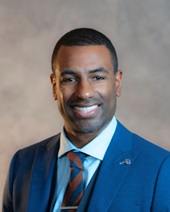
194th Legislature (2025-2026) Introduced by Marcus Vaughn

HB 190 requires covered facilities to designate exclusive female or male multi-occupancy restrooms, changing rooms, and sleeping quarters, with private suits for violations.

Accompanied H154
0
WeVote Research Nonpartisan
Bill Summary · H 190

Summary of Idaho House Bill H 190 — Protecting the Privacy of Women

Overview

House Bill 190 adds a new Chapter 98 to Title 67 of Idaho Code to establish safety and privacy protections for women in certain facilities. The bill applies to “covered entities” and creates a framework of designations, accommodations, and private remedies to prevent cross-sex use of multi-occupancy restrooms, changing rooms, and sleeping quarters. It also declares an emergency and sets an effective date of July 1, 2025.

  • Status: Introduced Feb 10, 2025; Reported Printed and Referred to Judiciary, Rules & Administration (JRA)
  • Fiscal note: No anticipated state or local revenue or expenditure impact
  • Primary aim: Preserve privacy and safety in female-designated spaces in facilities that have traditionally safeguarded such privacy

Key Definitions (Chapter 98)

  • Covered entity: A correctional facility, domestic violence shelter, juvenile correctional center, or state educational institution
  • Restroom, changing room, sleeping quarters: Multi-occupancy spaces subject to privacy protections
  • Female / Male: As defined in Idaho Code
  • Multi-occupancy: Spaces used by multiple persons simultaneously
  • State educational institution: Includes the University of Idaho, Lewis-Clark State College, Idaho State University, Boise State University, the Idaho School for the Deaf and Blind, and public community colleges

Safety and Privacy Requirements (67-9802)

1) Covered entities must designate multi-occupancy restrooms, changing rooms, and sleeping quarters for exclusive use by either females or males.
2) Such spaces designated for a sex must be used only by members of that sex.
3) Covered entities must take reasonable steps to provide privacy from members of the opposite sex.
4) Exceptions permit entry by the opposite sex in specific circumstances, including:
- Custodial services or maintenance
- Rendering medical or law enforcement assistance
- Emergencies or natural disasters, or to prevent serious safety/order threats
- If only one facility reasonably available; temporarily designated facilities
- Coaching or athletic training during events
- When assisting a person in need (family member or guardian, or designated helper not necessarily of the designated sex)
5) Provisions allow accommodations:
- Entities may establish single-occupancy facilities or redesignate spaces
- Policies may be adopted to accommodate individuals protected by the ADA, young children needing assistance, or elderly persons needing aid
6) State educational institutions must provide reasonable accommodations to students or employees unwilling or unable to use facilities designated for their sex; accommodations must be requested in writing and must not provide access to opposite-sex facilities where such access is possible or present

Remedies (67-9803)

  • Private right of action: Individuals may pursue declaratory and injunctive relief if a covered entity allows opposite-sex use of a space or fails to prohibit it
  • Sleep quarters: Affected individuals may sue if required to share sleeping quarters with someone of the opposite sex
  • Time limits: Civil actions must be filed within 2 years of the violation
  • Attorneys’ fees: Prevailing plaintiffs may recover reasonable attorney’s fees and costs

Procedural/Timeline Details

  • Emergency clause and effective date: Provisions are declared to be in effect on July 1, 2025
  • Severability: If any provision is held invalid, the remainder remains in effect

Potential Impacts

  • Affects how restrooms, changing rooms, and sleeping quarters are designated and used in correctional facilities, domestic violence shelters, juvenile facilities, and state-funded educational institutions
  • Creates a private enforcement mechanism via injunctive relief and attorney’s fees
  • Requires educational institutions to implement accommodations upon written request
  • Could lead to facility design changes (single-occupancy spaces or redesigned multi-occupancy spaces) and policy updates
  • Aligns with efforts to preserve single-sex spaces in settings where privacy and safety are a concern

If you’d like, I can provide a concise one-page briefing or a side-by-side comparison with existing Idaho privacy policies.

Compiled from official sources — confirm details with the bill’s official record.

Sign in to ask a question.