

WeVote

Bill

Bill

SB 3039

AN ACT RELATING TO WATERS AND NAVIGATION -- COASTAL RESOURCES MANAGEMENT COUNCIL

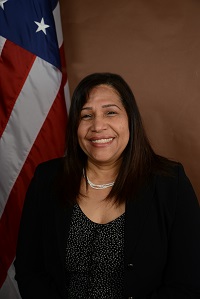
2026 Regular Session Introduced by Ana Quezada

CRMC becomes the lead agency for tidal-dredging policy and public-trust management of submerged lands, while allowing property owners to take limited protective actions without pri

04/28/2026 Committee recommended measure be held for further study
0
WeVote Research Nonpartisan
Bill Summary · SB 3039

Summary of SB 3039 (Rhode Island, 2026)

Purpose and Intent

SB 3039, introduced by Senator Ana B. Quezada, aims to update Rhode Island’s coastal resources framework by reinforcing the Coastal Resources Management Council’s (CRMC) role in dredging policy, public trust management of submerged lands, and protections for coastal resources. The bill also adds a new provision allowing property owners to undertake certain protective actions against coastal hazards without prior CRMC approval. Overall, the bill seeks to codify maintenance dredging as a state policy, clarify public trust duties, and empower owners to respond to coastal hazards in limited circumstances.

Key Provisions and Changes

1) Legislative Findings and Policy Framework (46-23-1)

  • Reaffirms the state’s rights and duties to conserve and manage coastal resources, with a priority on preservation and restoration of ecological systems.
  • Emphasizes comprehensive, long-range planning and management of coastal resources to balance public and economic interests.
  • Affirms that coastal resources are critical to public health, safety, recreation, industry, and overall welfare.

2) Maintenance Dredging Policy and CRMC Authority (sections 46-23-1, 46-23-11)

  • Recognizes the need for a general maintenance dredging policy and program for ports, channels, harbors, marinas, and related facilities.
  • Cites historical declines in channel depths and associated navigational and economic consequences.
  • Designates the CRMC as the lead state agency for dredging in tidal waters, with the following duties:
    • Coordinate state interests regarding dredging.
    • Develop and adopt a state dredging policy integrating those interests.
    • Negotiate and enter into agreements with the federal government and other entities.
    • Serve as the primary point of contact for dredging project applications in tidal waters.
    • Develop and maintain a comprehensive plan for dredge material management.
    • Coordinate with DEM, DOT, State Health, and Economic Development Corporation.

3) Public Trust and Submerged Lands (46-23-1, new subsections)

  • Reaffirms the submerged lands public trust and Rhode Island’s responsibility to protect public interests (fishery, navigation, etc.).
  • Establishes that leases or licenses for large-scale fills (25 acres or more) require direct legislative approval; CRMC will review requests for smaller projects and make recommendations to the General Assembly.
  • Grants CRMC authority to create a system for leasing submerged and filled lands and licenses, ensuring consistency with the public trust.
  • Imposes a maximum annual fee of $80,000 for each transatlantic cable landfall in Rhode Island, with fees deposited into the Bays, Rivers and Watersheds Fund (46-31-12.1) for fund purposes.
  • Clarifies that other regulatory processes (e.g., aquaculture leasing under Title 20 Chapter 10 and water quality certification under Title 46 Chapter 12) remain intact and unaffected by this subsection.
  • Provides definitions:
    • Filled land: tidal lands rendered no longer subject to tidal action.
    • Tidal lands: lands below mean high water.
    • Mean high water: standard tidal datum as defined by USCOE and NOAA.

4) Protective Actions by Property Owners (new § 46-23-31)

  • Allows a property owner within the CRMC’s jurisdiction to undertake measures reasonably necessary to protect against coastal hazards to:
    • Human life or public safety
    • Existing structures or infrastructure
    • Essential land uses (economic, recreational, historic, or public benefit value)
  • Actions may be taken without prior CRMC approval if reasonably related to protecting the identified interests.
  • Prohibits actions from constituting new development unrelated to the protected interests.

5) Effective Date

  • The act takes effect upon passage (immediate upon enactment).

Who Is Affected

  • Property owners within Rhode Island coastal jurisdictions (CRMC jurisdiction) gain a limited, no-approval pathway to address coastal hazards.
  • CRMC becomes the lead agency for dredging policy in tidal waters and oversees dredge material management.
  • The state gains stronger oversight of submerged and filled land leases, licenses, and the public trust implications for large-scale fills.
  • Public funds (Bays, Rivers and Watersheds Fund) receive dedicated fees from transatlantic cable landfalls.
  • Other state agencies (DEM, DOT, State Health, and Economic Development Corporation) will coordinate with CRMC on dredging-related activities.

Procedural and Timeline Aspects

  • The bill was introduced March 5, 2026, and located in Senate Judiciary.
  • As of the latest action, the Committee recommended the measure be held for further study (April 28, 2026).
  • The act would take effect upon passage, with ongoing implementation to develop dredging policies and land-leasing systems.

Notes for Readers

  • The 25-acre threshold for mandatory General Assembly approval is a notable control point for large-scale land fills; smaller projects remain reviewable by CRMC with recommendations to the legislature.
  • The new protective actions provision balances property owner flexibility with the CRMC’s regulatory framework, by enabling rapid responses to hazards while limiting changes to existing structures and essential uses.

Compiled from official sources — confirm details with the bill’s official record.

Sign in to ask a question.