

WeVote

Bill

Bill

H 296

An act relating to Vermont’s adoption of the Dietician Licensure Compact

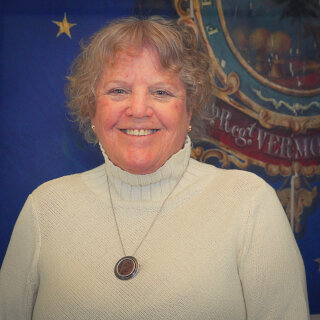
2025-2026 Regular Session Introduced by Sarita Austin and 12 co-sponsors

Vermont would join the Dietician Licensure Compact to allow licensed dietitians to practice across member states with a portable compact privilege while preserving Vermont’s licens

Read first time and referred to the Committee on Health Care
0
WeVote Research Nonpartisan
Bill Summary · H 296

Bill summary: H.296 (2025-2026) – Vermont adoption of the Dietician Licensure Compact

Purpose and intent

  • This bill proposes that Vermont adopt and join the Dietician Licensure Compact. The goal is to facilitate interstate practice of dietetics while preserving state licensing authority to protect public health and safety.
  • It aims to create a portable, or “compact,” privilege that allows licensed dietitians to practice in other member states without obtaining a full, separate license in each state, subject to rules and protections.

Key provisions and changes

  • Creation of a new subchapter (Dietician Licensure Compact) within Vermont’s licensing framework.

    • Establishes the Vermont-adopted Dietician Licensure Compact and aligns its text with the model language used by other participating states.
  • Compact purpose and objectives (§ 3391a).

    • Improves public access to dietetics services.
    • Enables interstate practice by dietitians who meet uniform requirements.
    • Eliminates need for multiple state licenses (via compact privilege).
    • Reduces administrative burden; enhances public health protections; promotes cooperation among states; supports relocation of military members and spouses.
    • Facilitates data-sharing of licensure, investigative, and disciplinary information.
    • Ensures accountability of dietitians by governing their practice in the state where care is provided.
  • Definitions (§ 3391b).

    • Sets terms for license, licensee, home state, compact privilege, data system, adverse actions, equal to a license in remote states, and other terms critical to operation (e.g., “ACEND,” “CDR,” “compact privilege,” “home state,” “remote state,” etc.).
  • State participation and requirements (§ 3391c).

    • States must license and regulate dietetics, have complaint investigations, and participate in the Compact Commission’s data system.
    • States must implement criminal history checks (including FBI fingerprint checks) and share adverse-action information according to compact rules.
    • States may charge fees for granting a compact privilege; home-state licensure requirements remain primary.
  • Compact privilege mechanics (§ 3391d).

    • To obtain a compact privilege, a licensee must:
    • Either hold current registration as a registered dietitian or meet standardized education, supervised practice (minimum 1,000 hours), and examination requirements.
    • Hold an unencumbered home-state license.
    • Register intent to seek a compact privilege in a remote state, pay applicable fees, meet jurisprudence requirements, and report adverse actions.
    • Compact privileges are valid for the home-state license term and require renewal aligned with home-state licensure.
    • Practitioners must follow the remote state’s laws but are not required to meet additional continuing education in the remote state beyond home-state requirements.
  • Home-state changes and active military provisions (§§ 3391e, 3391f).

    • One home state at a time for compact privileges.
    • Processes for changing home states when moving between member states; conversion of former home-state license to compact privilege; handling of fees and verifications; active-duty military members and spouses can designate a home state.
  • Adverse actions and enforcement (§§ 3391g, 3391k).

    • Remote states can take adverse actions against a licensee’s compact privilege; home state retains authority over its license.
    • Data system records are shared among member states; actions are reported promptly.
  • Dietitian Licensure Compact Commission (DLCC) (§§ 3391h–3391l).

    • Establishes a joint Commission with member-state representation, rules, bylaws, financing, annual reporting, and governance structures (Executive Committee, meetings, transparency, and public access).
    • Provides for dispute resolution, enforcement mechanisms, immunity, and data-sharing protocols.
    • Rules have force of law in member states but must align with each state’s licensure laws.
  • Effective date (Sec. 2).

    • The act takes effect on July 1, 2025.

Who would be affected

  • Licensed dietitians in Vermont seeking to practice in other member states (via compact privilege).
  • Vermont licensing authorities and the Office of Professional Regulation (administration, data management, and enforcement).
  • Other Vermont health- and safety-regulating bodies through cross-state credential sharing and joint investigations.
  • Individuals seeking dietetics services may benefit from expanded interstate access to qualified providers.

Procedural and timeline notes

  • Effective date set for July 1, 2025, pending enactment.
  • The Compact Commission would establish data systems, rules, and processes, including criminal history checks and annual financial reviews.
  • States join by enacting similar statutes; the compact becomes effective once seven states enact the model statute.
  • Vermont would participate as a charter member state if it enacts the bill.

Compiled from official sources — confirm details with the bill’s official record.

Sign in to ask a question.