

WeVote

Bill

Bill

HB 5369

AN ACT RELATING TO TAXATION -- PROPERTY SUBJECT TO TAXATION

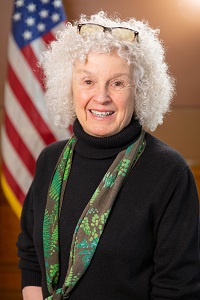
2025 Regular Session Introduced by Edith Ajello and 7 co-sponsors

Automatically grants CSHCS medical eligibility to children reported under Michigan's lead program, speeding access to care and triggering Early On referrals.

06/20/2025 Effective without Governor's signature
0
WeVote Research Nonpartisan
Bill Summary · HB 5369

Summary — HB 5369 (Public Health Code — Children with lead exposure / CSHCS)

Bill number: HB 5369 (substitute H‑2)
Statutes amended: 1978 PA 368, sections 5823 & 5825 (MCL 333.5823 & 333.5825); interacts with sec. 5474 (lead poisoning prevention program)
Introduced: Nov 14, 2023 (Rep. Karen Whitsett) | House action: passed House Dec 10, 2024 (56–52), substitute H‑2 adopted. Current referral: Committee on Government Operations (also referred to Licensing & Administrative Procedures). Enactment is conditional on companion legislation (House Bill 5368).

Main purpose

To streamline automatic medical eligibility for Michigan’s Children’s Special Health Care Services (CSHCS) program for children reported to the state under the lead poisoning prevention program, and to strengthen lead‑reporting, referral, and annual reporting requirements in the lead program.

Key provisions

  • Automatic medical eligibility for CSHCS:

    • If an application for CSHCS identifies a child who has been reported to the Department under section 5474 (lead poisoning prevention program), that child is considered medically eligible for CSHCS and the department shall not perform a separate medical investigation.
    • Following medical eligibility determination, the department will perform a financial assessment for cost‑sharing and may arrange transportation and provider transfers as appropriate.
  • Lead poisoning program reporting and referrals (substitute H‑2 content):

    • Requires reporting of all blood lead tests conducted in the state to the department (by rule).
    • When the department receives notice of an elevated blood lead level, it must contact the child’s physician and/or the local public health department.
    • Local health departments or physicians notified of a child under age 3 with an elevated blood lead level must refer that child to the Early On early intervention program (Department of Lifelong Education, Advancement, and Potential).
    • Annual reporting: by July 1 each year the department must report to the Legislature the count of children under 6 screened and confirmed with elevated blood lead levels (and compare trends); the department must also prepare an annual expenditures report for the lead program by July 1.
  • Non‑discrimination and administrative provisions:

    • Department shall not discriminate in referrals against qualified health professionals.
    • The enacted sections include an enacting clause: the act does not take effect unless HB 5368 (related lead law changes) is also enacted.

Who is affected

  • Children reported through Michigan’s lead poisoning prevention program—particularly young children with elevated blood lead levels—who would gain immediate medical eligibility for CSHCS services.
  • Families of affected children (faster access to services and potential referral to Early On).
  • Department of Health and Human Services (administrative responsibilities for reporting, referrals, financial assessments, transportation/transfer facilitation).
  • Local health departments and physicians (required referral role for children under age 3).
  • CSHCS service providers (potential caseload increase).

Procedural / timeline notes

  • House passage: Dec 10, 2024 (substitute H‑2 adopted). The bill contains an enactment condition tied to HB 5368; it must be enacted alongside other specified bills before taking effect.
  • Referred to additional committees (Government Operations; Licensing & Administrative Procedures) per legislative actions through April 2025.

Potential impacts

  • Operational: likely increases in CSHCS enrollments and related administrative workload (financial assessments, transportation authorizations).
  • Public health: faster linkage to specialized services and early intervention for lead‑exposed children, which could improve health and developmental outcomes.
  • Fiscal: potential additional program costs (state and local) tied to increased service utilization and enhanced reporting/administration; specific fiscal effects would depend on implementation and companion bill changes.

Compiled from official sources — confirm details with the bill’s official record.

Sign in to ask a question.