

WeVote

Bill

Bill

HB 6009

AN ACT RELATING TO TAXATION -- PERSONAL INCOME TAX

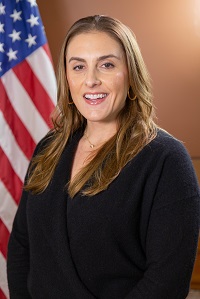
2025 Regular Session Introduced by Jackie Baginski and 8 co-sponsors

Requires expert witnesses in domestic-violence assault prosecutions to show demonstrated expertise and experience with DV victims, narrowing admitted expert testimony.

05/06/2025 Committee recommended measure be held for further study
0
WeVote Research Nonpartisan
Bill Summary · HB 6009

Summary — HB 6009 (Civil procedure: evidence; guidelines for expert testimony in certain cases)

Status: Introduced (electronically reproduced 09/26/2024); introduced in House 01/22/2025. Did not advance out of subcommittee (see Procedural History).

Sponsor(s): Reps. Young, Rogers, Price, Hope, Breen, Brabec, Miller, Edwards, McKinney, Neeley, MacDonell, Byrnes, B. Carter, O’Neal, Aiyash.

Subject: Evidence rules in prosecutions for certain assault/domestic‑violence offenses.

Purpose / Intent

The bill proposes to amend multiple sections of the Michigan Penal Code (1931 PA 328; MCL 750.81 et seq.) to impose a qualification requirement for expert witnesses who offer testimony in prosecutions for assault or assault and battery involving domestic‑relation victims. The stated intent is to limit admissible expert testimony to witnesses who have demonstrated expertise and experience working with victims of domestic violence.

Key provisions and changes

  • Amends sections of the Penal Code, including MCL 750.81 and other specified sections (750.81a, 750.136b, 750.520b, 750.520c, 750.520d, 750.520e, 750.520g).
  • Adds explicit evidentiary rule in MCL 750.81 (new subsection 8 in the bill text):
    • “In a prosecution for assaulting or assaulting and battering an individual described under subsection (2), expert testimony is not admissible unless the proposed expert witness possesses demonstrated expertise and experience in working with victims of domestic violence.”
  • The bill text (as reproduced) also retains/reflects provisions on enhanced fines for assaults on health professionals/medical volunteers and posting requirements at health facilities; the primary novel change in the provided excerpts is the limitation on expert testimony in domestic‑relation assault prosecutions.

Who would be affected

  • Criminal defendants and prosecutors in prosecutions for assault/assault and battery involving spouses, dating partners, household members, or pregnant victims (subsection (2) categories).
  • Expert witnesses (e.g., psychologists, clinicians, social‑science experts) — they would need to demonstrate specific expertise and experience with domestic‑violence victims to be admitted.
  • Victims and courts — admissible evidence in these prosecutions could change, potentially limiting some kinds of expert explanations (e.g., behavioral responses to abuse) unless the proffered expert meets the bill’s qualifications.

Procedural history (selected)

  • 09/26/2024: Bill electronically reproduced and introduced in House; read first time; referred to Judiciary.
  • 01/22/2025: Reintroduced/Filed; referred to joint committee on Government Administration and Elections.
  • Feb–Mar 2025: Referred to Commerce, Intergovernmental Affairs, and Industries & Professional Activities subcommittees.
  • 05/03/2025: Indefinitely postponed and withdrawn from consideration (listed).
  • 06/16/2025: Died in Industries & Professional Activities Subcommittee (listed).
  • No effective date specified in the provided materials.

Notes / Potential implications

  • The bill narrows admissibility of expert testimony in defined domestic‑relation assault prosecutions, placing a heightened qualification burden on experts. That could reduce certain expert evidence (e.g., testimony interpreting victim behavior) unless experts can demonstrate relevant domestic‑violence experience.
  • The change affects evidentiary practice and may influence trial strategies, witness selection, and pretrial qualification hearings; it could also raise litigation over what constitutes “demonstrated expertise and experience.”

Compiled from official sources — confirm details with the bill’s official record.

Sign in to ask a question.