

WeVote

Bill

Bill

SB 2829

AN ACT RELATING TO STATE AFFAIRS AND GOVERNMENT -- DEPARTMENT OF CHILDREN, YOUTH AND FAMILIES

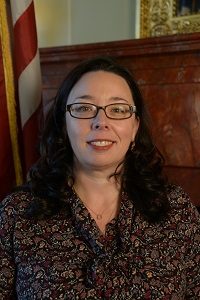
2026 Regular Session Introduced by Melissa Murray

The bill expands Rhode Island Works childcare to more families (up to 261% FPL, plus transitional up to 300%), adds protective-services eligibility, and caps liquid assets at 1,000

06/11/2026 Senate passed Sub A
0
WeVote Research Nonpartisan
Bill Summary · SB 2829

Summary of SB 2829 ( Rhode Island, 2026 Session )

Purpose

This act concerns the Rhode Island Works Program and the provision of childcare assistance. Its overall intent is to expand and clarify eligibility for child care subsidies, define a new protective-services eligibility category, and extend/adjust certain funding provisions related to childcare for specific groups (including public higher education enrollment and childcare workers). The act takes effect upon passage.

Key Provisions and Changes

1) Expanded and Clarified Childcare Eligibility (40-5.2-20)

  • The Department of Human Services (DHS) must provide appropriate child care to:
    • Any participant eligible for cash assistance who needs child care to meet work requirements.
    • Low-income working families with incomes at or below 261% of the federal poverty level (FPL) if they require child care to work.
    • Families below 261% FPL if they need child care to participate in short-term work-related activities (training, apprenticeships, internships, on-the-job training, etc.) sponsored by the Governor’s Workforce Board or state agencies within a coordinated program system.
  • Specific historical/procedural provisions retained:
    • For certain periods (2021–2022; 2022–2024; 2025), the act references prior authorizations for child care assistance tied to higher education enrollment and lower income thresholds, with capped or phased eligibility. The bill reiterates or codifies these timelines and conditions for past pilot-like provisions, aligning them with current law as of the effective date.
  • Protective-services category added (see below) remains eligible for child care.

2) Protective Services Category

  • The department must provide childcare assistance to families who meet the “protective services category,” defined as foster or kinship children served through the Department of Children, Youth and Families (DCYF).

3) Liquid Resources Cap and Resource Rules

  • No family/assistance unit shall be eligible for childcare if its combined liquid resources exceed $1,000,000 (consistent with the federal/state plan cap).
  • Liquid resources include cash and readily convertible financial instruments (e.g., cash, savings accounts, stocks, bonds, mutual funds). Excludes educational savings accounts, retirement accounts, or jointly held accounts with another adult (not including a spouse).
  • DHS is authorized to promulgate rules to determine ownership and source of funds in joint accounts.

4) Paternity and Support Requirements

  • As a condition of eligibility, a parent/ccaretaker must consent to and cooperate with the department in establishing paternity and in establishing/enforcing child support and medical support orders, unless good cause is shown.

5) Definition of “Appropriate Child Care”

  • Child care includes infant, toddler, preschool, nursery, and school-age care from providers authorized by the state agency.

6) Income-Related Assistance and Sliding-Fee Scale

  • For families with:
    • Less than 100% FPL: free child care.
    • 100%–200% FPL: sliding-scale fees up to 7% of income.
    • 200%–261% FPL: continues to qualify for child care under the same 7% cap (as they move toward 261% threshold for ongoing eligibility).
  • For families whose child care eligibility ends at 261% FPL, they may remain eligible up to 300% FPL if they continue paying a sliding fee up to 7% of income.
  • The department determines the type of care by considering costs, suitability for the child, and parent preference.

7) Income Definition for Eligibility

  • For cash-assistance households (per § 40-5.2-11): income includes gross earned and unearned income, with specified exclusions.
  • For other families: gross earned and unearned income per departmental regulations.

8) Forecasting and Active-Duty Provisions

  • Caseload estimating conference will forecast child care expenditures per § 35-17-1.
  • For reserve component members called to active duty, the department shall freeze family composition and income at the point just before departure, continuing until discharge.

9) Child Care Support for Educators/Staf (Temporary Funding Provision)

  • From Aug 1, 2023, through Jul 31, 2028, DHS shall fund child care for eligible childcare educators and staff who work at least 20 hours/week in licensed child care centers or family child care homes.
  • Eligibility: family incomes up to 300% of the FPL; no copayments.
  • Participants may choose their child care setting; DHS must promulgate regulations and collect data to report demand annually to the Governor and General Assembly by November 1.

Affected Parties

  • Families receiving or eligible for child care subsidies through Rhode Island Works.
  • Working families earning up to 261% FPL (and certain transitional ranges up to 300% FPL under specified conditions).
  • Families in protective services (foster/kinship) served by DCYF.
  • Parents/legal guardians required to cooperate with paternity and child support processes.
  • Childcare providers and facilities, due to eligibility rules and funding mechanisms.
  • Public higher education enrollees previously covered by niche provisions (historical references retained in the act).
  • Public school-age and early childhood programs, via collaboration with DHS and workforce programs.
  • DHS staff administering the Rhode Island Works Program.

Timeline and Effective Date

  • Effective upon passage (immediate implementation if enacted and signed).
  • Ongoing provisions reference specific periods (e.g., 2021–2022, 2022–2024, 2025) for historical eligibility rules and funding, integrated into current statutory text.

Observations

  • The bill broadens eligibility by adding a protective-services category and clarifies income-based thresholds with a sliding-scale approach.
  • It maintains a strict cap on liquid assets to preserve program fiscal integrity.
  • It includes a dedicated provision to support childcare for educators and staff in licensed facilities, with a data-driven reporting requirement.
  • Overall, the act emphasizes work support through childcare access, with a focus on low- and moderate-income families and those involved with protective services.

Compiled from official sources — confirm details with the bill’s official record.

Sign in to ask a question.