

WeVote

Bill

Bill

HB 5019

AN ACT RELATING TO HEALTH AND SAFETY -- CONSUMER PFAS BAN ACT OF 2024

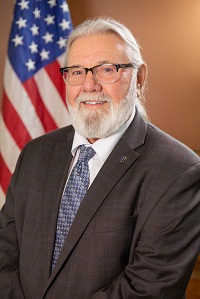
2025 Regular Session Introduced by David Bennett and 9 co-sponsors

The bill requires certain supervised juveniles convicted of sex- or prostitution-related offenses to provide DNA samples (and secretor status) before placement or discharge.

06/10/2025 Signed by Governor
0
WeVote Research Nonpartisan
Bill Summary · HB 5019

Summary — HB 5019 (House Bill No. 5019)

Short title / subject: Amendments to the Juvenile Facilities Act (1988 PA 73) — modifies section 5a (MCL 803.225a) to expand DNA sampling and related procedures for certain juveniles; tie bar with HB 5016.

Purpose / intent

The bill requires juveniles under department or county juvenile agency supervision who have been found responsible for or convicted of certain sex- and prostitution-related offenses to provide DNA samples (and secretor status) before community placement or discharge from wardship. It updates offense references (including replacing some references to “prostitution” with “commercial sexual activity”) and sets procedures, disclosure limits, and a fee assessment to help cover DNA profiling costs.

Key provisions

  • Amends section 5a of the Juvenile Facilities Act (MCL 803.225a).
  • Triggers for required DNA sampling: juveniles under departmental or county juvenile agency supervision who have been found responsible for or convicted of listed offenses, including (but not limited to) violations of:
    • MCL 750.83, 750.91, 750.316, 750.317, 750.321;
    • Criminal sexual conduct and related provisions (MCL 750.349, 750.520b–520g);
    • MCL 750.167(1)(c) or (f) and 750.335a (indecent exposure), and local ordinances substantially corresponding to those provisions;
    • Certain misdemeanors including MCL 750.145a (enticing a child), MCL 750.167 variants (window peeping/indecent conduct/loitering in places where commercial sexual activity is practiced), MCL 750.451, 750.454, and 750.462 (prostitution/commercial sexual activity related provisions).
  • Required samples: blood, saliva, or tissue for DNA identification profiling and determination of secretor status.
  • Collection and transmission:
    • Samples collected by the department or county juvenile agency and transmitted to the Michigan State Police per the DNA Identification Profiling System Act (1990 PA 250, MCL 28.171–28.176).
    • Agencies may collect samples without juvenile consent and without a prior hearing or court order.
  • Limited disclosure of DNA profiles to:
    • Criminal justice agencies for identification/law enforcement;
    • Courts as authorized in judicial proceedings;
    • Defendants in criminal cases when profiles are used against them;
    • De-identified academic or research uses.
  • Fee/assessment: juvenile found responsible or convicted pays a $60 assessment to defray DNA profiling and retention costs; juvenile agency forwards proceeds to the Department of Treasury for the MSP Forensic Science Division.
  • Exceptions: if an investigating law enforcement agency or MSP already holds a qualifying sample, no new sample or fee is required.
  • Definitions: clarifies “felony” and “sample.”
  • Effective date: the act takes effect 90 days after enactment; however, it does not take effect unless HB 5016 of the same legislature is enacted (tie bar).

Who is affected

  • Primary: juveniles under supervision of the Michigan Department of Health and Human Services (or successor) or county juvenile agencies who are found responsible for or convicted of the listed offenses.
  • Secondary: county juvenile agencies and the Department (administrative duties and collection), Michigan State Police (receipt/inclusion in DNA system), Department of Treasury (receipt/distribution of assessment), juvenile defense counsel, and courts.

Procedural / timeline notes

  • As introduced: September 18, 2025.
  • Enacting section requires the bill to be effective 90 days after enactment and conditions its effect on enactment of HB 5016 (tie bar).
  • The bill amends MCL 803.225a as previously amended by 2001 PA 90.

Potential impacts / considerations

  • Expands routine DNA collection and database entries for juveniles adjudicated for specified sexual- and commercial-sexual-activity-related offenses, including some misdemeanors.
  • Authorizes collection without consent or court order, which may have civil liberties/privacy implications and could prompt legal challenges.
  • Imposes a $60 assessment on affected juveniles to offset forensic costs; agencies will incur administrative responsibilities to collect/transmit samples and fees.
  • Limits on disclosure are specified but retention and future uses of juvenile DNA merit attention for policy and oversight.

(For exact statutory text and cross-references, see HB 5019 as introduced, amending 1988 PA 73, sec. 5a, MCL 803.225a.)

Compiled from official sources — confirm details with the bill’s official record.

Sign in to ask a question.