Summary of SB 2714 (Rhode Island, 2026 Session)
Title: AN ACT RELATING TO HEALTH AND SAFETY -- ABUSE IN HEALTHCARE FACILITIES
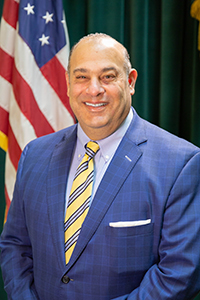
Introduced by: Senator David P. Tikoian
Status: Withdrawn at sponsor’s request (April 29, 2026)
Committee: Senate Judiciary
Date Introduced: February 27, 2026
Effective date: Upon passage
1) Purpose and intent
SB 2714 aims to modify the statutory framework governing abuse, neglect, and related conduct in two distinct areas:
- Revisions to the definitions used in the Abuse in Healthcare Facilities chapter (Chapter 23-17.8) to remove an affirmative “willful” intent requirement and broaden the scope of what constitutes abuse, mistreatment, and related noncompliant conduct.
- Revisions to the definitions used by the Office of Healthy Aging (Chapter 42-66) to redefine abuse, neglect, and related terms with respect to elderly persons and caregivers, notably removing the requirement of “willful” conduct.
Overall effect: The bill would expand or relax the mental-state requirement (removing “willful” elements) in key definitions, affecting how abuse, neglect, mistreatment, and related concepts are charged, investigated, and enforced in healthcare facilities and elder care settings.
2) Key provisions and changes
A. Section 23-17.8-1 — Definitions (Abuse in Healthcare Facilities)
- Revisions to define “Abuse” to include:
- (i)–(iii) Offenses that involve assault or similar offenses.
- (iv) Conduct harming or likely to harm a patient/resident, with a carve-out: if harmful conduct is part of care/treatment and in furtherance of patient safety, it may not be punishable under this statute.
- (v) A pattern of harassing conduct causing or likely to cause emotional/psychological harm (e.g., ridicule, derogatory remarks, curses, threats).
- Adds clarifications and cross-references to related state and federal regulatory definitions (42 C.F.R. Part 489).
- Includes definitions for:
- “High managerial agent” (key leadership roles with policy-making or supervisory authority)
- “Immediate jeopardy,” “Non-immediate jeopardy” (three levels: high, medium, low), with references to federal standards
- “Mistreatment” (misuse of medications, isolation, misuse of restraints) with specific prohibitions (punishment, staff convenience, non-treatment, conflicts with physician orders, improper quantities)
- “Neglect” (willful failure to provide care, failure to report health problems, neglect of basic needs), with a note that dependency on religious practices for healing is not negligence
- “Patient” vs. “Resident” definitions
- “Facility” and “Community residence” definitions to cover hospitals, long-term care facilities, assisted living, and community residences for individuals with intellectual/developmental disabilities
- Emphasis on alignment with federal standards and the broadening of conduct that qualifies as abuse or mistreatment.
B. Section 42-66-4.1 — Definitions (Office of Healthy Aging)
- Revisions to definitions related to elder abuse:
- “Abuse” includes physical, sexual, and emotional abuse by a caregiver
- Adds precise definitions for:
- Emotional abuse (pattern of mental harm via threats, intimidation, isolation, etc.)
- Physical abuse (willful infliction of pain or injury)
- Sexual abuse (non-consensual sexual contact and related acts, including threats)
- “Caregiver” definition (any person responsible for care)
- “Elderly person” defined as 60 years or older
- “Exploitation” (fraudulent or improper use of an elderly person’s resources)
- “Neglect” (willful failure to provide necessary goods/services, abandonment, denial of basic needs)
- “Protective services” (services to prevent/alleviate abuse, including legal intervention)
- “Self-neglect” (behavior risking one’s own health/safety)
- “Willful” meaning intentional and purposeful conduct
3) Who or what would be affected
- Healthcare facilities and associated staff, especially those in roles with high managerial authority, nursing leadership, and direct patient care, would be subject to revised definitions of abuse, mistreatment, and neglect.
- Community residences for individuals with intellectual or developmental disabilities (and their staff) would be affected by broader interpretations of abusive conduct and neglect.
- Elderly individuals and their caregivers under the Office of Healthy Aging would see changes in how abuse, neglect, and exploitation are defined and identified, potentially expanding the scope of protective services and reporting obligations.
- Regulatory and enforcement processes would reference revised standards aligned with federal regulation (42 C.F.R. Part 489).
4) Procedural and timeline aspects
- Effective date: The act would take effect upon passage.
- Status: As of the latest action, the bill was Withdrawn at the sponsor’s request (April 29, 2026). This means it did not progress to enactment in its current form; it may be reconsidered or reintroduced with revisions.
5) Practical implications
- Removing the willful intent requirement generally lowers the threshold for proving abuse/neglect, potentially increasing reporting, investigations, and enforcement actions.
- The inclusion of psychological/emotional harm and pattern-based harassment as abuse expands protection for patients and elderly individuals.
- Facilities may need to adjust training, reporting protocols, and incident categorization to align with the broadened definitions and to ensure compliance with state and federal standards.