

WeVote

Bill

Bill

HB 6012

AN ACT RELATING TO EDUCATION -- THE EDUCATION EQUITY AND PROPERTY TAX RELIEF ACT

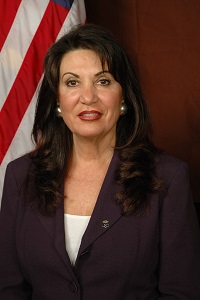
2025 Regular Session Introduced by Charlene Lima

Expands state-funded categorical aid beyond the foundation program and requires prorated distributions when funds run short, affecting districts, special ed, CTE, pre-K, and SROs.

04/29/2025 Committee recommended measure be held for further study
0
WeVote Research Nonpartisan
Bill Summary · HB 6012

Bill Summary — HB 6012

Title: AN ACT RELATING TO EDUCATION — THE EDUCATION EQUITY AND PROPERTY TAX RELIEF ACT
Status: Committee recommended measure be held for further study (04/29/2025)
Introduced: February 28, 2025 (Rep. Charlene Lima) — Referred to House Finance

Note: the packet provided also contains unrelated Michigan insurance bill language (prohibiting breed-based underwriting in residential property liability insurance). The summary below focuses on the Rhode Island education amendment that aligns with the bill title.

Purpose / Intent

The amendment clarifies and expands the list of categorical programs and state-funded expenses that are paid outside the basic foundation education aid under the permanent foundation education-aid program. It establishes funding priorities, cost-sharing rules, and administrative responsibilities for targeted supports (special education, CTE, pre-K, transportation, stabilization for certain districts, and regionalization incentives).

Key provisions

  • Adds/clarifies categories of direct state funding in §16-7.2-6, including:

    • Special education excess costs
    • Defines “extraordinary”/excess costs as those above four times the core foundation amount (core instruction + student success).
    • Requires the Department of Elementary and Secondary Education (DESE) to prorate reimbursements if requests exceed appropriations.
    • Directs DESE to collect cost data also at thresholds of 2x, 3x, and 5x the core foundation amount.
    • Career and Technical Education (CTE) costs
    • State funding to help with initial investment, equipment, facilities, and higher-than-average operating costs.
    • DESE to develop allocation criteria; prorate if demand exceeds funds.
    • Expanded access to voluntary, free, high-quality pre-kindergarten
    • DESE to recommend allocation criteria for any appropriated funds.
    • Central Falls, Davies, and Met Center Stabilization Fund
    • Establishes a stabilization fund to support these districts (Central Falls: support addressing local share concerns; Davies & Met Center: costs of stand-alone high school with academic and CTE programming).
    • Requires review of state and municipal shares and permits state reallocation of current appropriations during transition; municipality continues contribution after transition per §16-7-24.
    • DESE to recommend allocation criteria.
    • Excess transportation costs
    • Out-of-district non-public school transportation: state assumes costs for participating districts; DESE to prorate if necessary.
    • Transportation within regional school districts: state and regional district share student transportation costs equally, net of federal funds; DESE to prorate if necessary.
    • Regionalization bonus for regional districts
    • Eligibility: regional school districts (including Chariho).
    • Timing: bonus begins FY2012 for districts regionalized by July 1, 2010; for districts regionalized after that date, bonus begins in the first fiscal year after formation.
    • Amount: 2.0% of the state share of foundation aid in year one; 1.0% in year two; bonus ceases in year three.
    • Proration if requests exceed appropriations; Chariho specifics addressed.
    • State support for School Resource Officers (SROs)
    • Defines SROs as sworn law enforcement in a community-oriented assignment to schools.
    • Requires at least 40 hours of specialized school-policing training (text truncated in file; further detail may be in full bill).
  • Proration rule repeated across many categories: if total eligible requests exceed appropriated funding in a fiscal year, DESE must prorate distributions.

Who is affected

  • Rhode Island public school districts (especially regional districts, Central Falls, Davies, Met Center)
  • Students requiring special education services
  • Districts offering or creating CTE programs
  • Families and districts using out-of-district non-public transportation
  • Municipalities sharing local education costs
  • State budget and appropriations process (requires funding to meet new/existing categorical commitments)

Fiscal and procedural notes

  • The amendments create or clarify state-funded categorical obligations that will require annual appropriations; many programs include proration language when appropriations are insufficient.
  • DESE is assigned several implementation responsibilities (criteria, data collection, proration).
  • Legislative status: introduced 02/28/2025; referred to House Finance; scheduled for consideration 04/29/2025; committee recommended holding the measure for further study on 04/29/2025.

If you want, I can: (1) extract the complete SRO language (file was truncated), (2) draft possible fiscal-impact questions for the Finance Committee, or (3) compare this version to the current statute to highlight exact textual changes.

Compiled from official sources — confirm details with the bill’s official record.

Sign in to ask a question.