

WeVote

Bill

Bill

SB 1140

AN ACT RELATING TO COURTS AND CIVIL PROCEDURE -- COURTS -- FAMILY COURT

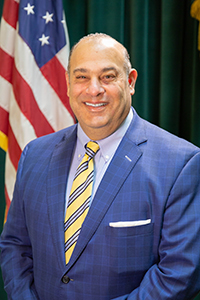
2025 Regular Session Introduced by David Tikoian

A two-year Hillsborough County pilot tests structured accountability, treatment, and monitoring for substance-using defendants on probation to reduce recidivism.

07/01/2025 Effective without Governor's signature
0
WeVote Research Nonpartisan
Bill Summary · SB 1140

SB 1140 — Criminal Offender Substance Abuse Pilot Program (Florida) — Summary

Status: Re-referred to Assignments (Rule 3‑9(a))
Introduced: February 6, 2025
Effective date (if enacted): July 1, 2025

Main purpose

Create a two‑year, county‑level pilot program to hold certain criminal defendants on community supervision accountable for substance use through enhanced monitoring, treatment coordination, and a structured program model intended to reduce recidivism and support recovery.

Key provisions

  • Creates new statutory section (s. 948.22, F.S.) establishing the "substance abuse accountability pilot program" in Hillsborough County operating from October 1, 2025, through September 30, 2027.
  • Eligibility:
    • Persons charged with or convicted of a felony or a first‑degree misdemeanor who are placed on probation, community control, or other community sanction (including supervised pretrial release) where abstaining from alcohol or controlled substances is a condition of release.
  • Enrollment and assignment:
    • Courts must identify eligible persons and designate a subset for potential inclusion.
    • Participants are chosen by random assignment.
    • Program capacity limited to 150 offenders at any one time.
    • Defendants must be explicitly informed—before pleading—that they may be randomly assigned to the pilot and all program terms must be explained prior to entering any plea that creates eligibility.
  • Program operation and governance:
    • The Hillsborough County Sheriff, in consultation with the Thirteenth Judicial Circuit Chief Judge, the state attorney, and the Department of Corrections, must design and implement the program.
    • Program must include a program coordinator responsible for staffing and administration; the sheriff may make subgrants to partner agencies to hire personnel.
    • Program elements (testing, treatment protocols, monitoring, data collection) are required though the bill text summarizes these as “specified elements.”
  • Sanctions, incentives, fees:
    • Participants remain in the program for the same duration as their term of probation.
    • Successful completion of half the participant’s required program period makes the participant eligible for early termination of probation.
    • A court may not order program participation as a substitute for mandatory ignition interlock device placement (where applicable).
    • Courts may reduce or waive program fees for indigent participants.
  • Evaluation and reporting:
    • Attorney General must complete an evaluation plan by June 30, 2028, determine metrics, and may contract with a third party for evaluations.
    • Final report (including participant counts, violations, and completions) due to Governor and Legislature by November 30, 2028.

Fiscal impact / Funding

  • Appropriates a nonrecurring $2.5 million from the Opioid Settlement Trust Fund to the Hillsborough County Sheriff (FY 2025–26) to establish and administer the pilot through September 30, 2027.

Who is affected

  • Eligible defendants under supervision in Hillsborough County (up to 150 concurrent participants).
  • Hillsborough County Sheriff’s Office (program lead), Thirteenth Judicial Circuit, state attorney, Department of Corrections, local treatment providers, and courts.
  • State budget via a one‑time $2.5M allocation from the Opioid Settlement Trust Fund.
  • Indigent defendants may receive fee relief; participants who complete program milestones may gain early probation termination.

Timeline / Procedural notes

  • Effective date: July 1, 2025.
  • Pilot operational period: October 1, 2025 – September 30, 2027.
  • AG evaluation plan due: June 30, 2028.
  • Final program report due: November 30, 2028.

This bill establishes a time‑limited, evidence‑oriented pilot to test whether structured accountability and treatment coordination for substance‑using probationers can improve outcomes and reduce supervision burdens. The required evaluation and reporting are intended to inform future policy decisions about expansion or modification.

Compiled from official sources — confirm details with the bill’s official record.

Sign in to ask a question.