Summary — HB 5334 (Mental Health Code amendments)
Status
- House Bill No. 5334 (amends 1974 PA 258, "Mental Health Code").
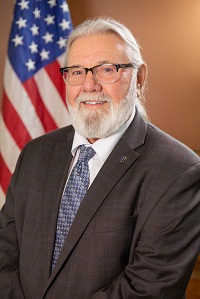
- Introduced by Rep. Matthew Bierlein. Read first time and referred to the House Committee on Health Policy (most recent entries dated 12/02/2025). Earlier docket entries show prior filings and referrals; this summary focuses on the bill text as introduced.
Purpose
- To require community mental health services programs (CMHSPs) to establish 24‑hour preadmission screening units (PSUs) that provide timely assessment and screening for individuals being considered for hospital admission, assisted outpatient treatment, or crisis services, and to set related standards for crisis stabilization units.
Key provisions and changes
- Preadmission screening units (PSUs)
- Each CMHSP must establish one or more PSUs with 24‑hour availability to assess individuals considered for voluntary hospital admission, assisted outpatient treatment, or crisis services.
- CMHSPs must employ mental health professionals or licensed bachelor’s social workers (per public health code) or contract with an agency that meets these requirements.
- PSU staff generally must be supervised by a registered nurse or other mental health professional with at least a master’s degree (with an exception described below).
- CMHSPs must provide PSU contact information (address and phone) to law enforcement, the department, courts, hospital ERs, and county-contracted private security firms.
- Timeliness and assessments
- A PSU must assess an individual no later than 3 hours after receiving notice from a hospital of the need to assess someone being considered for admission to a department-operated or CMHSP-contracted hospital. If clinically suitable, the PSU authorizes voluntary admission.
- If the PSU cannot complete the assessment within 3 hours, a “clinically qualified individual” may perform the assessment on behalf of the PSU; the PSU is responsible for that assessment’s cost.
- Telehealth may be used for assessments.
- Second‑opinion process
- If a PSU denies hospitalization, the individual (or applicant) may request a second opinion from the executive director. The executive director must arrange a psychiatric/physician/psychologist evaluation within 3 days (excluding Sundays/legal holidays). The executive director, together with the medical director, must issue a written decision (signed or verified).
- Crisis stabilization and crisis services
- PSUs may operate crisis stabilization units under chapter 9A. Crisis care must include an initial psychosocial assessment by a master’s‑level clinician and a psychiatric evaluation within a short timeframe (bill reduces reference to hours — see text). Crisis services may continue up to 72 hours; thereafter the individual must be provided the appropriate next level of care (e.g., outpatient, partial hospitalization, residential, inpatient, involuntary commitment as applicable).
- PSUs must provide information and referrals when an individual is not clinically suitable for hospitalization.
- Admission placement and choice
- If an individual is brought by law enforcement or ordered by a court, the PSU must assess and, if hospitalization criteria are met, designate the hospital for admission. The PSU shall consult with the individual and, if the individual agrees, a family member of the individual’s choice regarding preferred hospital.
- If an individual requests a hospital not under contract with the CMHSP and that hospital agrees, the PSU will refer to that hospital; any financial obligations to that hospital are not the responsibility of the CMHSP, the department, or state/county funding.
- Section 972 — Crisis stabilization unit certification standards
- The department must establish minimum certification standards for crisis stabilization units, including: capacity to receive and evaluate emergencies (without triggering federal EMTALA hospital obligations), implementation of voluntary/involuntary admissions consistent with sec. 409, and prohibitions against representing or billing as a hospital/inpatient provider (text truncated in version).
Who is affected
- Community mental health services programs (must create/operate PSUs).
- Hospitals and hospital emergency departments (must notify PSUs and receive PSU assessments).
- Patients and individuals in crisis considered for voluntary hospitalization or crisis services (benefit from timely assessments and referral pathways).
- Law enforcement, courts, county-contracted private security (receive PSU contact info; coordinate transport/assessment).
- Department of Health (responsible for crisis stabilization unit standards and oversight).
Timing and procedural requirements
- PSU assessment required within 3 hours of hospital notice.
- Second‑opinion evaluations must be arranged within 3 days (excluding Sundays/legal holidays).
- Crisis stabilization services limited to up to 72 hours before transfer to an appropriate level of care.
Potential impacts and considerations
- Seeks faster, standardized access to community mental health screening and crisis stabilization for voluntary admissions.
- Implementation will require CMHSP operational capacity (24/7 staffing, supervisory qualifications) and potential contracting/financial adjustments (PSUs bear costs if they cannot assess within 3 hours).
- Clarifies telehealth use and formalizes second‑opinion protections for denied admissions.
- Department rulemaking required to certify crisis stabilization units and set operational standards.
Note: The bill text contains edits to existing statutory language (amendments to MCL 330.1409 and 330.1972) and some phrasing irregularities in the introduced version; official enrolled or amended text may clarify final wording.