

WeVote

Bill

Bill

SB 3077

AN ACT RELATING EDUCATION -- THE EDUCATION EQUITY AND PROPERTY TAX RELIEF ACT

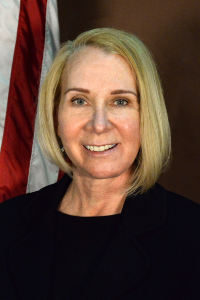
2026 Regular Session Introduced by Hanna Gallo

The bill expands state funding beyond core aid to cover various education costs (special ed excess costs, pre-K, CTE, regional transportation, SROs, regionalization bonuses) to eas

05/29/2026 Referred to House Finance
0
WeVote Research Nonpartisan
Bill Summary · SB 3077

Summary of SB 3077 (Rhode Island, 2026) — The Education Equity and Property Tax Relief Act

Purpose and intent

SB 3077 proposes amendments to Rhode Island’s Education Foundation program to expand and codify state funding for various education-related costs, with an emphasis on equity, support for regionalization, pre-kindergarten access, and targeted costs beyond the core foundation aid. The measure aims to relieve property tax pressures by increasing state funding for specified categories of education expenses and stabilizing funding for cities/districts facing unique cost drivers.

Key provisions and changes

  • Expansion of state funding beyond core foundation aid
    The act adds several categorical funding streams to be provided directly by the state, in addition to the base foundation aid:

    • (a) Special education excess costs: Reimbursement for extraordinary costs above a threshold (more than four times the core foundation amount, defined as core instruction plus student success). The department will prorate if demand exceeds available funds and will also collect data on costs exceeding 2x, 3x, and 5x thresholds.
    • (b) Career and Technical Education (CTE) costs: Funding to support initial investments for transforming or creating comprehensive CTE programs and pathways. The department will set allocation criteria and prorate if demand exceeds funds.
    • (c) Prekindergarten access: Funds to expand voluntary, free, high-quality pre-K for 3- and 4-year-olds, aligning with state pre-K models and Head Start. Criteria for allocations will be developed in coordination with the human services and Head Start offices.
    • (d) Central Falls Stabilization Fund: Establishes a dedicated fund to ensure appropriate funding for Central Falls due to local-share concerns. The fund will share costs (foundation aid and non-foundation costs like transportation, facility maintenance, retiree health benefits) between the state and Central Falls, with annual reviews to determine state vs. city contributions. A corresponding transition plan is referenced (end state after the transition period).
    • (e) Out-of-district non-public school transportation excess costs: State funding for transportation costs to non-public schools, with prorating if demand exceeds funds.
    • (f) Regional transportation excess costs: State funding for transportation within regional districts, with cost-sharing between state and regional district (equal share of net costs after federal reductions); prorating if funds are insufficient.
    • (g) Regionalization bonuses: Financial bonuses for regionalized districts (including Chariho) based on a staged schedule:
    • 2% of the state share of foundation aid in the first eligible fiscal year (for districts regionalized by 7/1/2010, or the first year after regionalization for others).
    • 1% in the second year.
    • The bonus ends in the third year.
    • The Chariho district bonus applies to the state share of funds for member towns.
    • Proration provisions apply if funds are insufficient.
    • (i) State support for School Resource Officers (SROs): Beginning in FY 2019, districts/municipalities that employ SROs at public middle and high schools can receive state reimbursement for 50% of the salaries/benefits of qualifying positions (subject to annual eligibility conditions):
    • SROs assigned to one school for smaller districts, or two SROs for larger schools, with caps on reimbursement for hires beyond requirements and for eliminating existing positions to create new ones.
    • (j) Funding of categorical programs: All categorical programs (a–g) are funded pursuant to the transition plan in § 16-7.2-7.
  • Pre-kindergarten emphasis
    The act explicitly includes expanded access to voluntary, free high-quality pre-K for 3- and 4-year-olds as part of the pre-K provision and directs collaboration with the Department of Human Services.

  • Effective date
    The act takes effect upon passage.

Who is affected

  • Public school districts and regional districts: Eligible for new state funding streams (special education excess costs, CTE, regional transportation costs, regionalization bonuses, SRO reimbursements, and pre-K expansion in coordination with other agencies).
  • Central Falls: Targeted stabilization funding to address local cost-sharing concerns.
  • Students: Potentially greater access to pre-K and improved support for special education, CTE, and safe school initiatives (SROs).
  • SRO programs: Qualification criteria and reimbursement for salaries/benefits may affect district staffing decisions.
  • State agencies: Department of Elementary and Secondary Education (DESE) would administer and prorate funds, collect data, and implement transition plans; collaboration with the Department of Human Services for pre-K-related funding.

Procedural and timeline considerations

  • Implementation timeline: Several provisions reference existing laws and transition plans; the act relies on annual appropriations and prorating if funding is insufficient. The SRO-related funding references FY 2019 as the start for eligibility for reimbursements, with a three-year window for the program.
  • Proration mechanism: Across multiple new funds, if total eligible costs exceed appropriated funds, DESE shall prorate payments to districts.
  • Transition plan: Section 16-7.2-7 governs the funding transition for these new categorical programs.

This summary focuses on the substantive changes SB 3077 would introduce, including new funding streams, targeted cost-sharing mechanisms, and the intended impact on equity and local tax relief through increased state support.

Compiled from official sources — confirm details with the bill’s official record.

Sign in to ask a question.