

WeVote

Bill

Bill

S 5174

American Food for American Schools Act of 2026

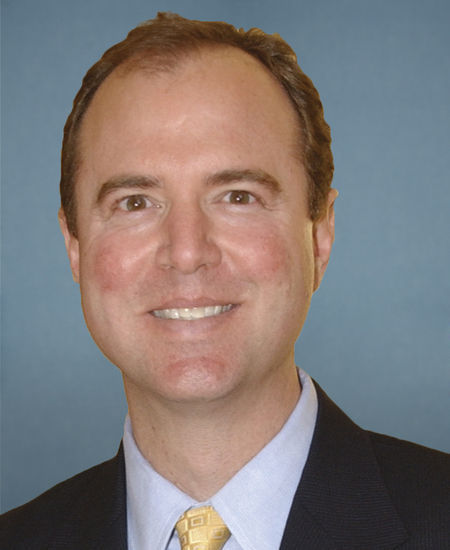
119th Congress Introduced by Adam Schiff and 1 co-sponsor

Strengthens Buy American rules for school meals by tightening domestic/foreign definitions, requiring pre-approval waivers, public disclosure, and penalties for noncompliant suppli

Introduced in Senate
0
WeVote Research Nonpartisan
Bill Summary · S 5174

Purpose and objective

  • Introduces the American Food for American Schools Act of 2026 (S. 5174) to amend the Richard B. Russell National School Lunch Act.
  • Primary aim: increase transparency around Buy American waivers and strengthen domestic sourcing requirements for school meals.

Key provisions and changes

  • Definition changes for domestic vs. foreign commodities or products:

    • Recasts definitions to specify that a domestic commodity or product includes:
    • U.S.-produced agricultural commodities
    • U.S.-processed food products substantially containing U.S. agricultural commodities
    • Fish or seafood harvested in U.S. waters (EEZ per Presidential Proclamation 5030) or by U.S.-flagged vessels
    • Foreign commodity or product is any commodity or product not meeting the domestic definition.
  • Buy American waiver requirements (new waiver framework):

    • School Food Authorities (SFAs) must request a waiver from the Secretary before purchasing foreign commodities or products, with limited exceptions.
    • Exceptions: waivers may be bypassed if foreign items are not produced/processed domestically in sufficient quantity or quality, or are not reasonably available domestically.
    • Waivers are limited to up to 5% of total annual commercial food costs for each meal component.
  • Public disclosure and reporting on waivers:

    • Requires a publicly available list of waivers on the Department of Agriculture (USDA) website.
    • The list must include:
    • Which SFAs received waivers and for which products
    • Details tied to each waiver
    • The Secretary must update:
    • Item (aa) of the list within 90 days after a waiver is granted
    • Item (bb) of the list annually
    • SFAs must notify parents/guardians at least once per school year about foreign commodities or products purchased under waivers.
  • Reporting and oversight:

    • SFAs must annually report to the State Educational Agency (SEA) details of foreign commodity purchases without waivers.
    • SEAs must compile and report these data to the USDA Secretary annually.
  • Contractor and noncompliance provisions:

    • All contracts between SFAs and suppliers for commodities/food products post-enactment must include a “covered provision” requiring compliance with Buy American requirements.
    • If a contractor does not comply, the supplier must repay the Secretary the amount of Federal funds used to purchase foreign commodities/products in noncompliance.
    • Noncompliant foreign commodities/products may be used by SFAs without a waiver, subject to other rules.
    • Annual reporting: SFAs must report noncompliance to the SEA; SEAs must report aggregated noncompliance to the Secretary.
    • The Secretary must publish a public list of all noncompliance instances.
  • Technical and conforming amendments:

    • Several stylistic and cross-reference corrections across multiple sections of the Richard B. Russell National School Lunch Act and related statutes (e.g., minor edits to terminology, editorial corrections, and unified accountability references).
    • Aligns related provisions with other Child Nutrition Act components and ensures consistency with existing regulatory language.
  • Additional notes:

    • The Act includes a rule-of-construction provision clarifying it does not alter existing requirements under the Agriculture Improvement Act of 2018.

Who and what would be affected

  • Affected entities:

    • School Food Authorities (SFAs) that operate the National School Lunch Program, School Breakfast Program, Summer Food Service Program, Child and Adult Care Food Program, Special Milk Program, and related school nutrition programs.
    • Food suppliers and vendors that contract with SFAs for commodities and food products.
    • State Educational Agencies (SEAs) and State lead educational authorities overseeing school nutrition programs.
    • Parents and guardians, who would be informed annually about foreign purchases.
  • Geographic and program scope:

    • Applies across programs funded by the Richard B. Russell National School Lunch Act and related Child Nutrition Act programs, potentially affecting procurement practices nationwide.

Procedural and timeline aspects

  • Effective date:

    • The bill provisions would apply after enactment, with waivers and contracts governed by the new requirements going forward from that date.
  • Public disclosure timeline:

    • Waiver list updates: itemized waiver data to be posted within 90 days of grant and annually thereafter.
  • Reporting cadence:

    • Annual reporting by SFAs to SEAs, and annual compilation and submission by SEAs to the Secretary.
  • Compliance enforcement:

    • Financial recoupment mechanism for noncompliant suppliers (repayment of Federal funds used for noncompliant foreign purchases) and public listing of noncompliance.

Summary

The American Food for American Schools Act of 2026 seeks to strengthen Buy American requirements in school nutrition programs by making waiver data publicly accessible, tightening definitions of domestic and foreign commodities, and ensuring procurement contracts include enforceable Buy American provisions. It enhances transparency for parents, increases oversight through annual reporting, and establishes penalties and public disclosure for noncompliance by suppliers. The act also makes several conforming and technical amendments to ensure consistency across related nutrition programs.

Compiled from official sources — confirm details with the bill’s official record.

Sign in to ask a question.