

WeVote

Bill

Bill

S 4347

America Grows Act of 2026

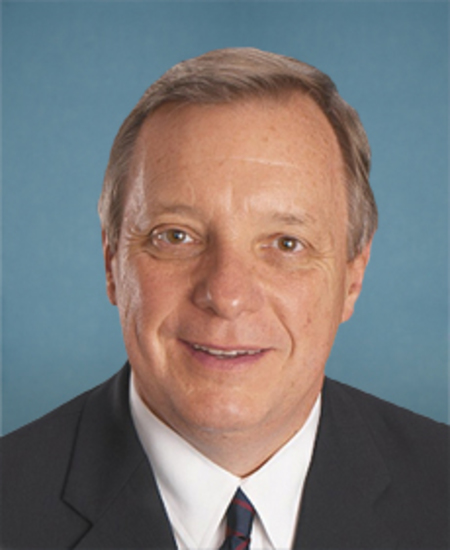
119th Congress Introduced by Dick Durbin and 2 co-sponsors

Automatically increases inflation-adjusted funding for ARS, ERS, NASS, and NIFA from 2027 onward, protecting it from sequestration and tying growth to prior-year levels plus CPI.

Introduced in Senate
0
WeVote Research Nonpartisan
Bill Summary · S 4347

Overview

  • Name: America Grows Act of 2026
  • Bill number: S.4347 (119th Congress, 2nd Session)
  • Introduced: April 20, 2026 by Senator Durbin, with Senators Moran and Slotkin as co-sponsors
  • Purpose: To prioritize and expand sustained funding for national agriculture research through automatic annual increases tied to prior-year funding and the Consumer Price Index (CPI)

What the bill seeks to do

  • Establish a structured, inflation-adjusted funding mechanism for key federal agriculture research agencies.
  • Ensure long-term growth in federal support for agricultural science and related statistical and economic research.
  • Provide statutory protection from sequestration for these funding amounts.

Key provisions and changes

Section 2 – Funding

  • Creates automatic funding for specified research agencies for fiscal years 2027 through 2037 and beyond, adjusted annually for inflation.
  • Funding recipients (subsection b) are:
    • Agricultural Research Service (ARS)
    • Economic Research Service (ERS)
    • National Agricultural Statistics Service (NASS)
    • National Institute of Food and Agriculture (NIFA)
  • Formula for annual funding (general outline):
    • FY 2027: Authorized at 105% of the new budget authority provided to each recipient for FY 2026, plus any CPI increase in FY 2026.
    • FY 2028–2036: Each year, 105% of the previous year’s appropriation to the recipient, plus CPI increase for the preceding year.
    • FY 2037 and beyond: The previous year’s amount increased by the CPI, continuing the trajectory.
  • Availability: Each annual appropriation remains available for obligation through the end of the fiscal year it is appropriated.

Section 3 – Sequestration exemption

  • Amends the Balanced Budget and Emergency Deficit Control Act to add appropriations made under Section 2(a) (the new funding stream) to the list of items exempt from sequestration orders.
  • Applies to sequestration orders issued on or after the date of enactment.

Section 4 – Budgetary effects

  • PAYGO considerations:
    • The act states that its budgetary effects will not be counted on statutory PAYGO scorecards or Senate PAYGO scorecards.

Who and what is affected

  • Affects four key federal agencies involved in agricultural research and data:
    • Agricultural Research Service (ARS)
    • Economic Research Service (ERS)
    • National Agricultural Statistics Service (NASS)
    • National Institute of Food and Agriculture (NIFA)
  • Practically, this would lock in a growth path for federal funding to these agencies, aligned with prior-year appropriations and CPI adjustments, reducing volatility and protecting funding from sequestration.

Procedural and timeline aspects

  • Implementing timeline is implicit in the funding formula, with:
    • FY 2027 as the first year of new funding (with 105% of FY 2026 funding, adjusted by CPI)
    • Annual automatic increases through FY 2037, and then continuing on CPI-based growth thereafter
  • The bill has been referred to the Senate Committee on Agriculture, Nutrition, and Forestry for consideration.
  • No provision in the text for immediate discretionary adjustments beyond the automatic formula, nor a sunset; the structure envisions ongoing, inflation-adjusted funding indefinitely (starting from 2027).

Potential impact and considerations

  • Stability and predictability: Agencies would have a predictable, inflation-adjusted funding path, aiding long-term research planning.
  • Inflation protection: Funding increases reflect CPI adjustments, helping maintain purchasing power for research activities.
  • Sequestration protection: Exemption from automatic spending reductions ensures continued operation of funded programs even during fiscal tightening.
  • Fiscal impact: The automatic increases imply ongoing budgetary obligations; the statutory PAYGO exemptions suggest the bill does not count toward PAYGO scoring, potentially affecting budgetary accounting.

If you’d like, I can add a quick pros/cons side note, or compare to current funding mechanisms and sequestration rules.

Compiled from official sources — confirm details with the bill’s official record.

Sign in to ask a question.