

WeVote

Bill

Bill

HB 3060

Allow local governments to hold property owners more accountable for upkeep of buildings

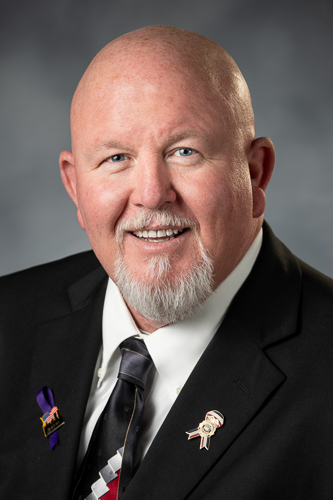
2025 Regular Session Introduced by Scot Heckert and 3 co-sponsors

Creates a state commission to study, analyze data, and propose policies to drastically reduce gun violence in disproportionately impacted areas.

To House Judiciary
0
WeVote Research Nonpartisan
Bill Summary · HB 3060

HB 3060 — Commission to End Gun Violence in Disproportionately Impacted Areas Act (Introduced)

Status: In committee upon adjournment (last action: 2025-06-28)
Introduced: February 2025 (filed with Clerk Feb 6; additional filings Feb 19)
Primary sponsor: Rep. Sonya M. Harper; multiple cosponsors added March 2025

Note: The bill text provided establishes a statewide commission focused on gun violence in high‑need neighborhoods. (The brief bill header in the packet referencing a “physician assistant licensure compact” appears to be a mismatch with the attached text; this summary follows the Act language concerning the Commission.)

Purpose

Creates the Commission to End Gun Violence in Disproportionately Impacted Areas to study root causes of gun violence and resulting trauma, analyze data, develop policy proposals, and make recommendations intended to “drastically reduce” gun violence in identified high‑impact areas.

Key definitions

  • “Disproportionately Impacted Area” — a census tract or comparable geographic area the Department of Commerce and Economic Opportunity determines:
    • has high rates of arrest, conviction, and incarceration related to gun violence; and
    • meets at least one socioeconomic threshold, such as:
    • poverty rate ≥ 20% (latest federal decennial census); or
    • 75% or more of children participating in the federal free lunch program (State Board of Education data); or
    • ≥ 20% of households receiving SNAP benefits; or
    • an average unemployment rate > 120% of the national average (for at least two consecutive calendar years prior to the Act’s effective date).

Commission composition and operations

  • Established as a state commission chaired by the Executive Director of the Illinois Criminal Justice Information Authority (or designee).
  • Ex officio members: heads (or designees) of multiple state agencies (e.g., Criminal Justice Information Authority, Children and Family Services, Commerce & Economic Opportunity, Human Services, State Board of Education, Illinois Housing Development Authority).
  • Governor-appointed seats (with Senate advice & consent) include a mix of elected officials representing impacted areas (county, state, federal), police representatives (including municipal and Chicago police), multiple nonprofit representatives (various budget sizes and street‑level outreach organizations), news media representatives from affected areas/markets, and 10 residents who have lived in disproportionately impacted areas that experienced high rates of gun violence for at least the previous 10 years.
  • Terms: 4 years; members serve until successors qualify. Members serve without pay but may be reimbursed for reasonable expenses. Vacancies filled by the Governor (with Senate confirmation).
  • Administrative support to be provided primarily by the Illinois Criminal Justice Information Authority; the Illinois State Police Division of Justice Services will also provide support.

Reporting and timeline

  • The Commission must submit a report to the Governor and the General Assembly no later than July 1, 2026, and annually thereafter.
  • Each report must include, at minimum, detailed findings and recommendations related to reducing gun violence in Disproportionately Impacted Areas.
  • Effective date: upon becoming law.

Practical effect / impact

  • Establishes a formal, multi‑agency and community‑centered body to centralize study, data analysis, and policy recommendations on gun violence concentrated in high‑need neighborhoods.
  • The bill itself does not appropriate funds or change criminal law; its primary effect is to produce recommendations and policy proposals that could guide future legislation, program design, or funding priorities.
  • By statutory design, the Commission elevates lived‑experience voices (resident appointees and grassroots organizations) alongside state agencies and law enforcement in recommending strategies to prevent and respond to gun violence.

Compiled from official sources — confirm details with the bill’s official record.

Sign in to ask a question.